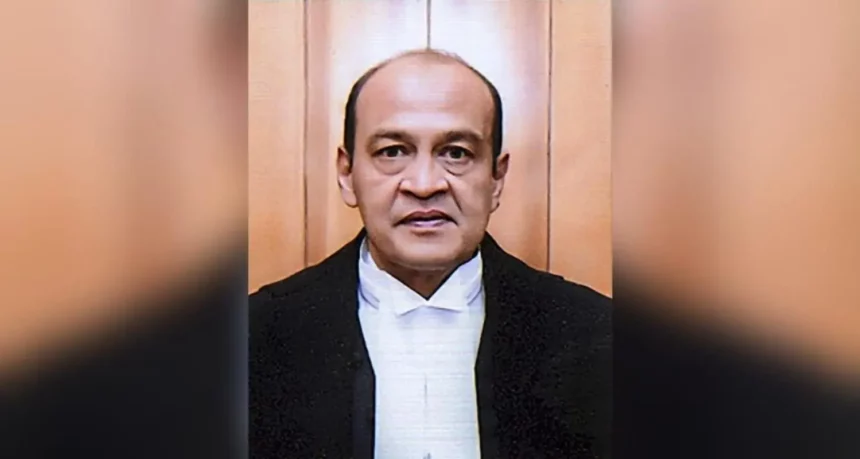
In a significant development ahead of the Monsoon session of Parliament, Allahabad High Court Judge Justice Yashwant Varma has approached the Supreme Court challenging the in-house inquiry report by a committee that recommended his impeachment over an alleged cash recovery incident at his official bungalow in New Delhi earlier this year. The move comes as the Centre was reportedly preparing to introduce an impeachment motion against Justice Yashwant Varma, sparking a rare and high-profile judicial controversy.
Justice Yashwant Varma Challenges Inquiry Process
Justice Yashwant Varma, through a writ petition filed in the Supreme Court, has questioned the findings of the three-member panel constituted by the then Chief Justice of India, Sanjiv Khanna, for allegedly drawing adverse conclusions without providing him with a fair and complete opportunity to present his defence. According to sources familiar with the petition, Justice Yashwant Varma has argued that the committee failed to investigate crucial facts surrounding the alleged recovery of cash on March 14, insisting that further investigation is essential to establish the authenticity, ownership, and context of the cash reportedly found at his residence.
The controversy began when a fire broke out at Justice Yashwant Varma’s Lutyens Delhi residence late at night on March 14, after which officials reportedly discovered a large stash of cash while controlling the fire. This incident triggered a preliminary inquiry by Delhi High Court Chief Justice D K Upadhyaya and led to Justice Yashwant Varma being relieved of his judicial responsibilities in the Delhi High Court.
Background of the Case and Political Implications
Following the inquiry, the Supreme Court collegium recommended Justice Yashwant Varma’s repatriation to his parent High Court in Allahabad on March 24. Two days prior, Chief Justice Khanna had constituted a committee to conduct an in-house inquiry and subsequently decided to make the Delhi High Court’s preliminary inquiry report public, which reportedly included photos and videos of the cash discovered during the incident.
Justice Yashwant Varma, however, has firmly denied any wrongdoing, stating that neither he nor his family members placed any cash in the storeroom where it was found. He has also argued that the evidence presented lacks context and that the investigation was insufficient to substantiate any charges warranting impeachment.
Last month, the former Chief Justice of India communicated the panel’s findings to President Droupadi Murmu and Prime Minister Narendra Modi, advancing the procedural steps toward initiating impeachment proceedings. Top government sources have indicated that the Centre is likely to move the impeachment motion during the Monsoon session of Parliament, which is scheduled to commence on July 21.
The impeachment of a judge requires a rigorous constitutional process, demanding cross-party consensus to meet the necessary threshold for removal. Historically, impeachment proceedings against judges in India have been rare, with most judges opting to resign before the process reaches its conclusion.
The case surrounding Justice Yashwant Varma has now emerged as a critical moment for the judiciary and Parliament, raising broader questions about transparency, judicial accountability, and the procedural fairness in cases that may lead to the removal of sitting judges.