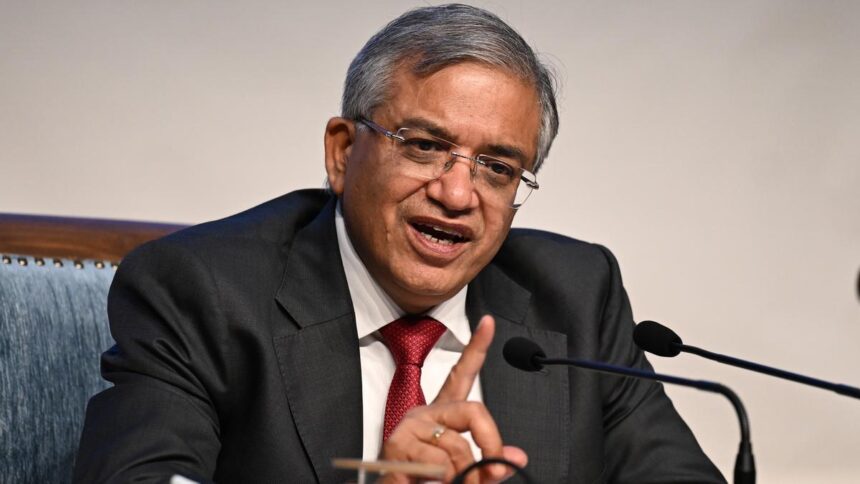
The recently concluded two-phase Bihar Assembly elections have drawn widespread attention not only for the resounding political outcomes but also for the unprecedented efficiency and meticulousness demonstrated by the Election Commission of India (ECI) under the leadership of Chief Election Commissioner (CEC) Gyanesh Kumar. With a historic voter turnout of 67.13 percent, including 71.6 percent participation from women and 62.8 percent from men, these elections have set a new benchmark for electoral administration in the country. The Commission’s special intensive revision (SIR) of electoral rolls, which removed deceased voters, duplicates, and entries of those permanently shifted, has been hailed as a decisive factor in ensuring transparent and accurate voting. Officials and political analysts alike have lauded this as the “best-ever performance” of the ECI, highlighting the crucial role played by rigorous electoral management in upholding democratic values and facilitating citizen participation. The Bihar elections have, therefore, emerged as a case study in both procedural integrity and effective implementation of voter registration protocols, with implications that extend far beyond the state itself.
Historic Voter Turnout and Special Intensive Revision Impact
The two-phase Bihar elections have been remarkable for their exceptionally high voter engagement and precise execution of the Special Intensive Revision process. For the first time in recent decades, Bihar witnessed the removal of 2.2 million deceased voters, the adjustment of 3.6 million voters who had permanently shifted, and the elimination of 700,000 duplicate entries, leaving a final electoral roll of 74.2 million eligible voters. The SIR process, meticulously overseen by CEC Gyanesh Kumar, ensured zero appeals, no repolls, and complete procedural compliance across districts, demonstrating a level of administrative efficiency that has rarely been achieved in Indian elections. Officials emphasized that the revision process had been conducted strictly according to established protocols, addressing both the inclusion of eligible voters and the removal of ineligible entries in a transparent and accountable manner.
The gender-wise analysis of voter turnout further underscores the significance of this electoral exercise. The high participation of women, at 71.6 percent, signals a growing engagement of female citizens in democratic processes and indicates the positive impact of targeted awareness campaigns and electoral facilitation measures undertaken by the ECI. Male voter turnout, at 62.8 percent, also reflects a robust engagement across demographic segments. Analysts have noted that the SIR’s accuracy in reflecting the true electorate played a crucial role in facilitating a smooth election process, reducing procedural conflicts, and preventing potential discrepancies that could have delayed the counting or led to disputes. The Bihar elections, therefore, stand as a testament to the effectiveness of comprehensive voter list management in enhancing the credibility and fairness of democratic processes.
The unprecedented level of procedural compliance and absence of repolls have reinforced the perception of Bihar as a model state for electoral governance. Political analysts and ECI officials alike have praised the seamless integration of technology, field verification, and administrative coordination, highlighting the positive impact of leadership in guiding the Commission through complex logistical and operational challenges. The SIR’s successful implementation, despite expectations of criticism from opposition parties, has further demonstrated the impartiality and dedication of the election machinery in maintaining the integrity of the electoral process. The meticulous verification of voter data, coupled with active monitoring and enforcement of procedural norms, ensured that the election outcome accurately reflected the will of the electorate without undue influence or administrative lapses.
Political Reactions and Wider Implications of the Poll Outcome
The conduct of the Bihar Assembly elections under CEC Gyanesh Kumar has elicited a range of responses from political leaders and parties, reflecting both the operational impact of the SIR and the broader political implications of a highly transparent electoral process. Opposition parties, particularly the Congress and Rashtriya Janata Dal (RJD), had anticipated challenges and lodged protests during the SIR process, alleging potential bias and irregularities. However, the absence of appeals and the flawless execution of electoral roll revisions effectively countered such claims, demonstrating the Commission’s commitment to impartiality and adherence to legal and procedural norms. Political leaders, while expressing their positions, also acknowledged that the rigorous revision of voter lists directly influenced the electoral dynamics and voter turnout patterns observed across the state.
Senior Congress leaders highlighted the perceived impact of the SIR on the election outcome, suggesting that the meticulous cleaning of electoral rolls had altered the voter base in a way that affected party performance. Statements by leaders such as Pawan Khera and Udit Raj emphasized the unprecedented role played by CEC Gyanesh Kumar in ensuring that only eligible voters participated in the election, thereby enhancing the fairness and accuracy of the democratic process. While opposition narratives questioned the process, the factual outcome of zero repolls, absence of appeals, and record participation reinforced the credibility of the Commission’s efforts.
Former Chhattisgarh Chief Minister Bhupesh Baghel publicly acknowledged the decisive role of CEC Gyanesh Kumar in shaping the electoral process, noting that the leadership and guidance provided by the Commission were critical in achieving such a comprehensive and conflict-free election. The Bihar elections have, therefore, not only highlighted procedural excellence but also underscored the political significance of efficient electoral management in maintaining trust and legitimacy in a democracy. Observers have pointed out that Bihar’s SIR process, under expert supervision and stringent protocols, serves as a model for other states to emulate, particularly in addressing issues related to voter roll accuracy, inclusion, and exclusion.
The wider implications of the Bihar elections extend beyond administrative success. The seamless execution of the SIR and high voter engagement contribute to strengthening public confidence in the democratic system, reinforcing the principle that elections are a fair reflection of citizen choice. By establishing accurate and verified voter lists, the ECI has mitigated risks of electoral malpractice, duplicate voting, and disputes, thereby fostering greater accountability and transparency in governance. The operational excellence displayed in Bihar also reinforces the notion that democratic institutions, when guided by capable leadership, can execute complex electoral processes with minimal disruption while maintaining high standards of fairness, impartiality, and citizen participation.
Analysts have further noted that the SIR and the record voter turnout in Bihar exemplify the synergy between procedural integrity and public engagement in a functioning democracy. The detailed and meticulous approach adopted by the ECI underlines the importance of proactive planning, extensive field verification, and robust monitoring mechanisms in executing elections at such a large scale. By setting new benchmarks in voter list management, the Bihar Assembly elections have demonstrated that institutional competence, transparent procedures, and leadership accountability are crucial for sustaining the credibility of electoral systems and ensuring that democratic principles are upheld at every stage of the process.