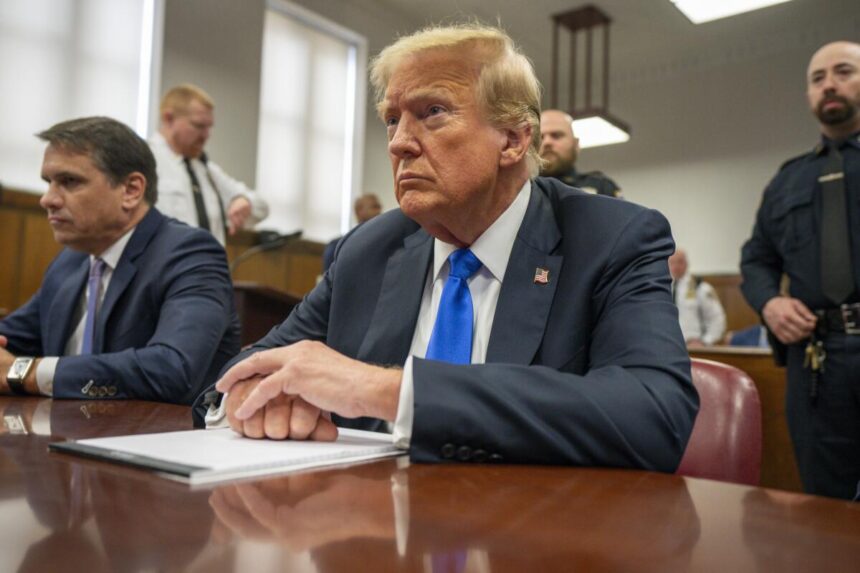
In a significant legal development, Judge Juan Merchan, who is overseeing the hush money case involving former President Donald Trump, has set January 10 as the sentencing date, just 10 days before Donald Trump’s inauguration on January 20. Donald Trump, the first former president ever convicted of a crime, is not expected to face jail time, with the judge indicating a preference for an unconditional discharge rather than incarceration.
The ruling comes after an 18-page decision in which Judge Merchan upheld Donald Trump’s conviction, rejecting various motions from Donald Trump’s legal team to have the case thrown out. The decision centers around Donald Trump’s conviction by a New York jury for 34 counts of falsifying business records in connection with a hush money payment made to adult film star Stormy Daniels in 2016. The payment was intended to prevent Daniels from revealing details of an alleged sexual encounter with Donald Trump in 2006.
Despite the potential for up to four years in prison, legal experts had not expected Merchan to impose a jail sentence, even before Donald Trump’s victory in the November presidential election. In his statement, Judge Merchan emphasized that the court’s inclination was not to impose incarceration. He noted that prosecutors also did not believe a jail term was a “practicable recommendation” in this case.
Donald Trump, who had faced intense scrutiny over the hush money scandal, responded sharply to the ruling. On his platform, Truth Social, he decried the decision as an “illegitimate political attack,” calling it a “Rigged Charade.” He further accused Judge Merchan of being a “radical partisan” and asserted that the ruling was “knowingly unlawful,” going against the Constitution.
Merchan’s decision marks a crucial moment in the legal proceedings, as it leaves Donald Trump’s legal future hanging in the balance as he prepares for his return to the White House. However, Donald Trump will be immune from prosecution once he is sworn in as president, a fact that Merchan acknowledged in his ruling. Despite the conviction, the judge ruled that it was essential to set the sentencing before January 20, 2025, the date Trump is set to take the oath of office once again.
Donald Trump’s legal team had sought to have the case dismissed on multiple grounds, including the argument that former U.S. presidents have broad immunity from prosecution for official acts carried out while in office. Merchan rejected this argument but noted that presidential immunity would likely apply once Donald Trump resumes the presidency. Therefore, the court moved forward with setting the sentencing date prior to his inauguration.
Donald Trump’s spokesperson, Steven Cheung, condemned the decision, calling it a violation of the Supreme Court’s immunity ruling and other legal precedents. He argued that the case should never have been brought to court in the first place, labeling it a “witch hunt.” Cheung also stated that Donald Trump must be allowed to continue the presidential transition process without obstruction from legal challenges, emphasizing that Donald Trump would continue fighting against what he referred to as “hoaxes” until they were resolved.
In addition to the state case in New York, Donald Trump faces two federal cases brought by special counsel Jack Smith, including accusations related to attempting to overturn the 2020 election results and removing classified documents from the White House. These federal cases were dropped under a Justice Department policy of not prosecuting a sitting president. Donald Trump also faces racketeering charges in Georgia for alleged efforts to interfere with the 2020 election results in the state, although that case is expected to be frozen while he is in office.
As the legal battles continue to unfold, the January 10 sentencing will be a pivotal moment for Donald Trump as he prepares for his second term in office. While the outcome of the sentencing itself may not involve jail time, the broader political and legal ramifications of his conviction will likely play a significant role in shaping the political landscape leading up to his inauguration.