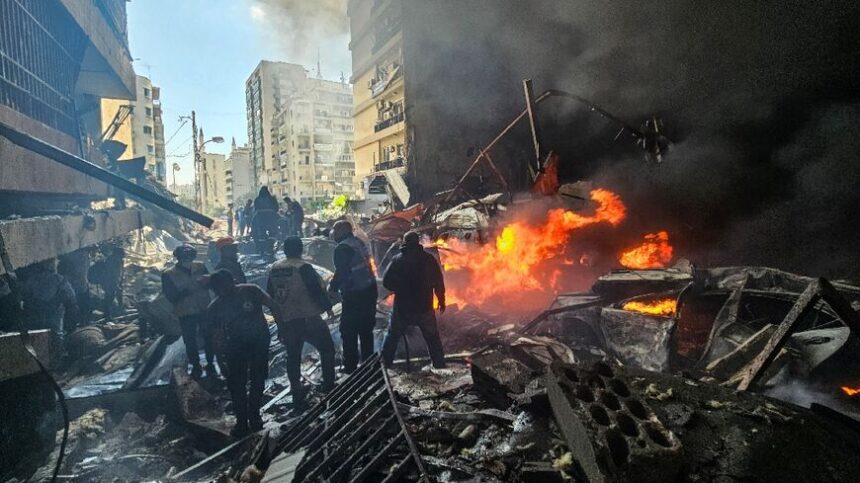
The fragile ceasefire agreement between the United States, Israel, and Iran has come under intense strain following a fresh wave of Israeli strikes on Lebanon, triggering a sharp escalation in tensions across West Asia and raising serious concerns about the durability of the truce. What was initially presented as a two-week pause in hostilities aimed at creating space for diplomacy has now evolved into a contentious geopolitical flashpoint, with conflicting interpretations over the scope of the agreement and accusations of violations threatening to derail ongoing peace efforts. As violence intensifies and diplomatic channels come under pressure, the situation has exposed deep divisions among the key stakeholders and underscored the complexity of achieving lasting stability in a region marked by overlapping conflicts and strategic rivalries.
Dispute Over Ceasefire Terms And Escalation Of Conflict In Lebanon
At the heart of the crisis lies a fundamental disagreement over whether Lebanon was included in the ceasefire agreement brokered between the United States and Iran. Israel has consistently maintained that the truce applies only to direct hostilities involving Iran and does not extend to its military operations against Hezbollah in Lebanon. This position has been backed by the United States, which has described the situation in Lebanon as a separate conflict, thereby allowing Israel to continue its military campaign despite the broader ceasefire framework.
Iran, however, has strongly contested this interpretation, asserting that the ceasefire was intended to cover all fronts, including Lebanon. Iranian officials, along with some international mediators, have accused Israel of violating the agreement by launching large-scale attacks on Lebanese territory shortly after the truce was announced. The disagreement has not only deepened mistrust between the parties but has also complicated efforts to maintain the ceasefire and advance diplomatic negotiations.
The escalation in Lebanon has been particularly severe, with Israeli airstrikes targeting multiple locations, including densely populated areas in Beirut and other cities. Reports indicate that hundreds of people were killed in a short span of time, making it one of the most intense phases of the conflict. Israel has justified its actions by stating that the strikes were aimed at Hezbollah infrastructure and leadership, emphasizing its commitment to neutralizing threats posed by the Iran-backed group.
However, the scale and timing of the attacks have drawn widespread international criticism, with several countries and organizations expressing concern over the humanitarian impact and the potential for further escalation. The strikes have also reignited hostilities, with Hezbollah resuming rocket attacks on Israeli territory in response, effectively undermining the ceasefire and pushing the region closer to a broader conflict.
The situation has been further complicated by the strategic calculations of the involved parties. Analysts suggest that Israel’s continued operations in Lebanon may be driven by both security concerns and political considerations, including the desire to maintain military pressure on Hezbollah and influence the broader regional balance of power. At the same time, Iran’s reaction to the strikes has been swift and assertive, with officials warning of serious consequences and taking measures such as restricting maritime activity in key waterways.
Global Reactions, Diplomatic Fallout, And Threat To Regional Stability
The developments in Lebanon have triggered a wave of international reactions, highlighting the global implications of the crisis. Several countries, including European powers, have condemned the escalation and called for an immediate cessation of hostilities, emphasizing the need for a comprehensive ceasefire that includes all conflict zones. The United Nations and other international bodies have also expressed concern, warning that the situation could spiral into a wider regional conflict if not addressed promptly.
One of the most significant consequences of the crisis has been its impact on global economic stability, particularly in relation to energy markets. Iran’s threat to restrict or halt shipping through the Strait of Hormuz, a critical artery for global oil supplies, has raised alarms among policymakers and investors alike. Any disruption in this vital waterway could have far-reaching implications for global energy prices and economic stability, underscoring the interconnected nature of geopolitical and economic risks.
Diplomatic efforts to salvage the ceasefire are ongoing, with talks being planned in neutral locations such as Islamabad. However, the success of these negotiations remains uncertain, given the deep divisions among the parties and the rapidly evolving situation on the ground. The involvement of multiple stakeholders, each with their own strategic interests and priorities, adds to the complexity of the diplomatic process.
The role of the United States has also come under scrutiny, as it attempts to balance its support for Israel with its broader objective of preventing a full-scale regional war. While the US has endorsed the ceasefire and encouraged de-escalation, its backing of Israel’s position on Lebanon has drawn criticism from some quarters, raising questions about the consistency and effectiveness of its diplomatic approach.
Meanwhile, Israel has signaled a willingness to engage in negotiations with Lebanon, indicating a potential path toward de-escalation. However, officials have also made it clear that military operations will continue until their security objectives are met, suggesting that any diplomatic breakthrough may take time to materialize.
The crisis has also highlighted the fragile nature of ceasefire agreements in conflict zones where multiple actors and overlapping disputes coexist. The lack of a clear and universally accepted framework for the ceasefire has allowed for differing interpretations, creating loopholes that have been exploited to justify continued military actions. This ambiguity not only undermines the effectiveness of the ceasefire but also erodes trust among the parties, making it more difficult to achieve lasting peace.
At a broader level, the unfolding situation underscores the persistent volatility of West Asia, where geopolitical rivalries, ideological conflicts, and security concerns intersect in complex and often unpredictable ways. The events surrounding the ceasefire and the escalation in Lebanon serve as a stark reminder of the challenges involved in managing such conflicts and the importance of sustained diplomatic engagement.
As tensions continue to rise, the focus remains on preventing further escalation and finding a viable path toward de-escalation. The coming days will be critical in determining whether diplomatic efforts can overcome the current impasse or whether the region will slide into a deeper and more prolonged conflict.