In a political atmosphere charged with speculation and intense scrutiny, Karnataka Deputy Chief Minister D.K. Shivakumar has firmly dismissed suggestions that he plans to step down as the state Congress president. As debates intensify over the future power structure within the Karnataka Congress unit and possible Cabinet changes, Shivakumar has reiterated that he remains a committed and disciplined member of the party. His remarks come at a time when renewed discussions about leadership adjustments and ministerial reshuffles have sparked fresh conversations both within the party and across political circles in New Delhi and Bengaluru.
Shivakumar Reaffirms Loyalty as Speculation Swirls Over Leadership Changes
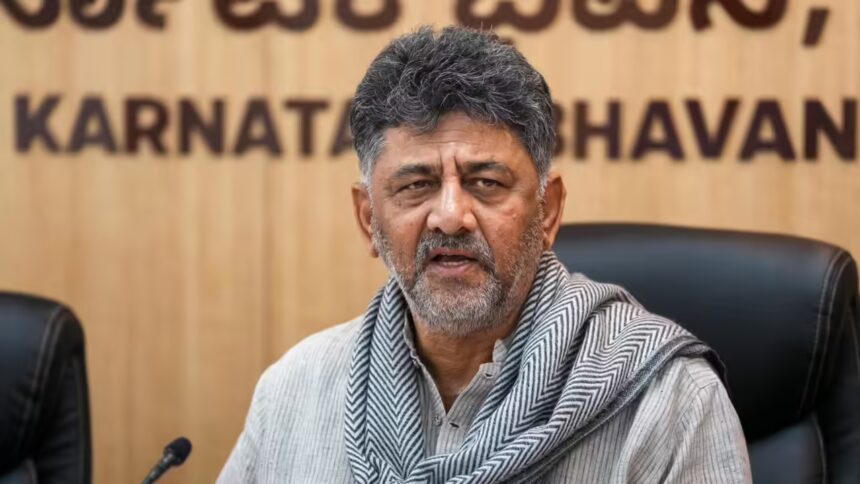
D.K. Shivakumar, one of Karnataka’s most influential political figures and a key strategist for the Congress, addressed reporters in New Delhi to deny what he called baseless rumours regarding his resignation. His response came after a weekend of heightened political drama triggered by Chief Minister Siddaramaiah’s meeting with senior Congress leader Rahul Gandhi in the national capital. The meeting had led to widespread conjecture that the party leadership was contemplating significant restructuring, including a potential reshuffle of the Karnataka Cabinet and elements of the state leadership hierarchy.
Shivakumar categorically stated that he has no intention of resigning from his role as the Karnataka Pradesh Congress Committee (KPCC) chief. According to him, the very idea of resignation has not been under consideration at any point. He emphasised that his commitment to the party is unwavering, rooted in years of political experience and organisational work that has contributed to rebuilding Congress in the state.
He took particular issue with the narrative that he might be using resignation threats to exert pressure on the party’s central leadership. He remarked that he has never resorted to such tactics and never will. Describing himself as a “disciplined soldier” of the Congress, Shivakumar repeated that he is prepared to undertake whatever responsibilities the party assigns to him. His work ethic, he indicated, is tied to serving the Congress to the best of his capabilities, without resorting to manoeuvres meant to destabilise internal structures.
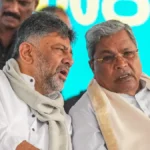
The rising conjecture regarding a leadership transition gained traction following Siddaramaiah’s brief but significant visit to New Delhi. Although the Chief Minister told reporters that his visit focused primarily on reviewing the results of the Bihar elections, political observers speculated that discussions around the Karnataka Cabinet reshuffle were also expected to have taken place. The Karnataka unit of the Congress has seen recurring debates about power-sharing arrangements, especially between Shivakumar and Siddaramaiah, who together led the party to a sweeping victory in the 2023 Assembly elections. While both leaders have publicly maintained cordiality and unity, the undercurrents of internal competition have been an open secret for years.
Shivakumar, speaking from Delhi, referred to media-driven conjecture as a major contributor to unnecessary political noise. He stressed that the responsibility of deciding on any Cabinet reshuffle lies solely with Chief Minister Siddaramaiah, who may initiate changes only after consulting with the party’s central leadership. According to constitutional norms and party protocols, the chief minister has the prerogative to evaluate the performance of ministers and propose adjustments when deemed necessary, a point Shivakumar reiterated multiple times to demonstrate his respect for administrative processes.
He clarified that his visit to the national capital had no political motive linked to leadership negotiations. Instead, he underscored that his purpose was logistical and related to ongoing organisational expansion. Shivakumar explained that he travelled to New Delhi to extend invitations to senior Congress leaders Mallikarjun Kharge and Rahul Gandhi for a major political event in Karnataka. This event includes the foundation-laying ceremony of 100 new Congress offices across various parts of the state and the launch of his new book titled “Gandhi-Bharat.” The book chronicles the historic Belagavi Congress session led by Mahatma Gandhi a century ago, as well as the detailed arrangements made by the party leadership to commemorate the centenary of that iconic event.
Describing the large-scale preparations underway, Shivakumar questioned why he would even consider resigning at such a crucial organisational moment. He emphasized the enormous responsibilities ahead of him, noting that stepping down would be impractical and counterproductive. His statements were direct and dismissive of suggestions that he was on the verge of withdrawing from the top leadership position.
Growing Intensity of Political Conversations Around Cabinet Reshuffle and Power Balance
The Karnataka Congress has, for months, been surrounded by speculation about a potential Cabinet reshuffle aimed at renewing the government’s momentum, balancing caste equations, and accommodating senior aspirants who were left out during the first round of ministerial appointments. In recent weeks, these conversations have resurfaced, driven largely by political observers who believe the party is preparing for mid-term course correction to ensure stability and performance ahead of the 2028 Assembly elections.
Karnataka Home Minister G. Parameshwara, a veteran Congress leader, appeared to add clarity to the discussions when he told reporters that there would likely be a Cabinet reshuffle soon. However, he firmly stated that a leadership change—often interpreted as replacing Shivakumar or Siddaramaiah—was not on the table. His comments offered a rare glimpse into the internal assessments underway within the state government and the party organisation.
According to reports from party insiders, dissatisfaction has been rising among some legislators who feel that regional representation within the Cabinet remains uneven. Several MLAs have hinted at the need for administrative adjustments to accommodate leaders from key districts that played a crucial role in the Congress’s electoral victory. A reshuffle could be aimed at improving governance, strengthening political alliances across communities, and addressing perceptions of imbalance between the Chief Minister’s loyalists and Shivakumar’s supporters.
However, Siddaramaiah, speaking to the media in Delhi, firmly stated that no discussion involving a Cabinet reshuffle took place during his meeting with Rahul Gandhi. He reiterated that the conversation focused on analysing the political atmosphere created by the Bihar Assembly election results. The Chief Minister’s remarks appeared to contrast with broader expectations that leadership adjustments were imminent, though observers note that political discussions are often conducted discreetly within the high command and not always shared publicly.
Within these overlapping narratives, Shivakumar’s rejection of resignation rumours becomes part of a larger political landscape marked by shifting expectations, strategic decision-making, and internal negotiations. His continued presence at the helm of the KPCC is crucial for the party’s organisational efforts, especially with the ambitious plan to inaugurate 100 new Congress offices. The scale of the project reflects the party’s intention to fortify its grassroots network in Karnataka—a state it considers vital to its national resurgence strategy.
Shivakumar’s comments about building and strengthening the party “day and night” reveal his desire to position himself as a long-term political force within Karnataka. By claiming responsibility for revitalising the party’s infrastructure, strengthening cadres, and delivering electoral success, he seeks to reinforce his legitimacy as a central figure in state politics. His statement that the Congress will return to power in the 2028 Assembly elections further underscores his confidence in both the organisation he leads and the governance being carried out under Siddaramaiah’s leadership.
Beyond the speculation and political manoeuvring, the situation reflects the Congress party’s attempt to balance internal differences while navigating external challenges. Karnataka remains the only large state where the Congress holds power on its own, making political stability essential for the party’s national narrative. Shivakumar’s reaffirmation of loyalty could help the leadership maintain unity in a state where factional competition—though publicly downplayed—has historically existed.
In the midst of these developments, preparations for the “Gandhi-Bharat” book launch and the inauguration of the new Congress offices showcase the dual dynamics of political symbolism and practical organisational expansion. The commemoration of the Belagavi session serves not only as a tribute to a key moment in India’s freedom struggle but also as an attempt to connect the historical legacy of the Congress with its modern political journey. Through this initiative, Shivakumar aims to strengthen ideological engagement among party workers while building a sense of continuity between past achievements and present ambitions.