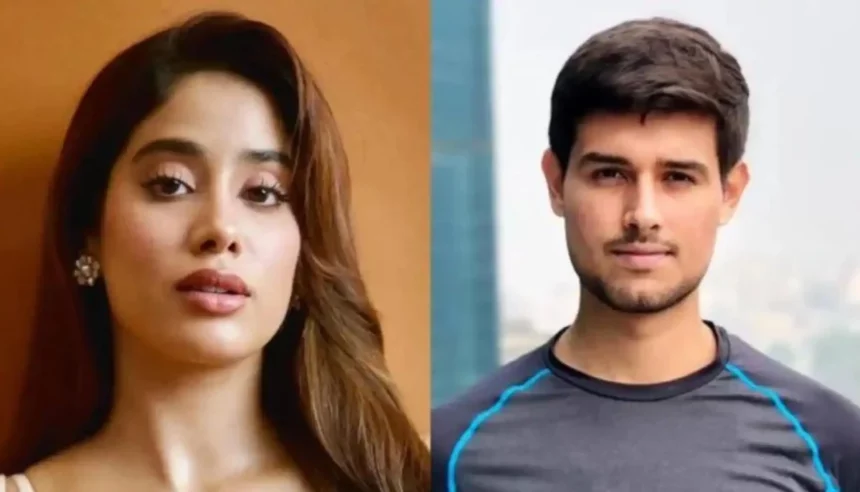
Content creator Dhruv Rathee addressed widespread backlash over his remarks on the appearance of several bollywood actresses, particularly Janhvi Kapoor, asserting that his comments were taken out of context and falsely linked to her condemnation of a lynching incident in bangladesh, turning a broader social discussion into a targeted controversy.
The issue erupted after rathee released a youtube video discussing cosmetic procedures in the film industry and their societal impact. Soon after the video went live, a section of viewers accused him of mocking janhvi kapoor in response to her christmas-day instagram post condemning violence against bangladeshi hindus. The criticism intensified across social media platforms, prompting rathee to release a clarification video in which he rejected the allegations and criticised what he described as blind acceptance of misleading narratives.
rathee explains his intent and rejects political linking of remarks
In his response video shared on social media, dhruv rathee directly addressed the claims that his remarks about janhvi kapoor were connected to her stand on the bangladesh lynching incident. Reading out a headline that accused him of targeting the actress for political reasons, he questioned the logic behind the accusation and urged viewers to think critically before accepting such claims.
Rathee said that it was unrealistic to assume he could research, shoot, edit, and publish a detailed half-hour video within hours of janhvi kapoor’s instagram post. He argued that the timeline itself disproved the allegation and suggested that the narrative had been amplified by politically motivated social media posts. Using sharp language, he criticised what he described as blind faith in “it cell” messaging and appealed to viewers to use their reasoning abilities rather than accepting viral claims at face value.
He further stated that he had, in fact, posted content condemning violence against bangladeshi hindus himself, making it illogical to accuse him of attacking someone for raising the same issue. Rathee maintained that he does not indulge in indirect criticism and prefers to speak openly if he has a disagreement. According to him, the video in question was focused entirely on plastic surgery and its wider impact on society, not on questioning or criticising any individual actress.
Rathee emphasised that in the entire video, he did not ask a single question directed at janhvi kapoor personally. Instead, he said the discussion centred on how cosmetic enhancements among celebrities influence beauty standards, body image, and public perception, especially among young audiences. He argued that turning this discussion into a personal or political attack diluted the core issue he was trying to raise.
reactions, celebrity context, and wider debate on discourse
The controversy gained further traction because rathee’s video named several prominent actresses, including Deepika Padukone, Bipasha Basu, Shruti Haasan, Shilpa Shetty, Kajol, and Priyanka Chopra, while discussing cosmetic procedures. Fans of several actresses pushed back strongly, accusing rathee of singling out women and engaging in unnecessary commentary on their bodies.
The backlash around janhvi kapoor intensified because of the timing. On christmas, the actress had posted a strongly worded message condemning a lynching incident in bangladesh, calling it barbaric and warning against hypocrisy and extremism in all forms. Some social media users alleged that rathee’s comments were aimed at undermining her credibility after she spoke out on the issue, an allegation he has firmly denied.
Adding another layer to the controversy, janhvi kapoor’s close friend orry reacted publicly, claiming that the actress might not even know who rathee is and accusing the youtuber of being anti-national. His remarks further polarised the debate, drawing in supporters and critics from across ideological lines.
The episode has reignited broader conversations about the tone and boundaries of online commentary, particularly when it involves public figures and sensitive social issues. Supporters of rathee argue that discussing cosmetic surgery and its societal consequences is a legitimate topic and that conflating it with political motives distracts from meaningful dialogue. Critics, however, maintain that public discussions about women’s appearance, especially by influential male creators, must be handled with greater sensitivity.
As the debate continues, the incident highlights how quickly online discourse can escalate when entertainment, politics, and social issues intersect. It also underscores the challenges faced by content creators navigating an environment where intent, timing, and interpretation are often reshaped by viral narratives and ideological divisions.