New Delhi, January 23, 2026 | Delhi’s public healthcare system has received a major boost with Delhi University granting academic and regulatory approval for the establishment and operation of the Department of Medical Genetics at Maulana Azad Medical College (MAMC) and Lok Nayak Hospital. The approval also includes two DM (Medical Genetics) super-speciality seats, significantly strengthening advanced, precision-based healthcare services in the national capital.
Health Minister Pankaj Kumar Singh said the development marks a crucial step in expanding Delhi’s advanced healthcare ecosystem, particularly in the areas of clinical genetics, precision medicine and the treatment of rare diseases. He described the initiative as a landmark move towards ensuring world-class, technology-driven healthcare services through government hospitals.
Major Step Towards Precision and Preventive Healthcare
According to the Health Minister, the introduction of the Medical Genetics department places Delhi at the forefront of precision and preventive healthcare in the public sector. Genetic science enables early detection of diseases, accurate diagnosis and targeted treatment, which can significantly improve patient outcomes across all age groups.
He said the government’s objective is to make cutting-edge medical care accessible to every citizen of Delhi, reducing dependence on private facilities or treatment outside the city. The new department integrates future-ready medical specialities into the public health system, reinforcing Delhi’s position as a growing medical hub.
Focus on Rare Diseases and Lifelong Genetic Care
The Medical Genetics department will address genetic disorders across the entire human lifespan—from fetal and neonatal stages to adulthood and old age. It will play a particularly critical role in paediatrics and the management of rare and complex diseases, areas that often require highly specialised diagnostic and therapeutic approaches.
Medical genetics is among the fastest-growing fields in modern medicine. The department will enable advanced diagnostics, early risk assessment and targeted clinical interventions, making high-quality genetic care available within Delhi’s public hospitals.
Advanced Therapies and Fetal Interventions
The new department will facilitate state-of-the-art treatment approaches such as gene therapy, antisense oligonucleotide therapy and in-utero therapeutic procedures. These advanced techniques allow treatment of certain genetic conditions during pregnancy and early stages of life, improving long-term health outcomes.
By combining advanced diagnostics with targeted therapies, the initiative aims to bring global standards of care into Delhi’s public healthcare framework, benefiting patients who previously had limited access to such specialised services.
Strengthening Cancer Genetics and Personalised Treatment
By working closely with departments such as fetal medicine, paediatrics, adult medicine and oncology, the Medical Genetics department will also accelerate progress in cancer genetics. Genetic markers are increasingly being used for disease prediction, personalised therapy and precision oncology.
Officials said this integration will improve individualised treatment strategies, enhance long-term clinical outcomes and contribute to more effective cancer care within government hospitals.
Academic Growth and Skilled Workforce Development
With the approval of two DM Medical Genetics super-speciality seats, MAMC and Lok Nayak Hospital have further strengthened their academic and clinical capabilities. Both institutions now join a select group of government centres in India offering structured training and tertiary-to-quaternary genetic services.
The move will help develop a new generation of skilled genetic specialists while ensuring advanced care for patients suffering from complex and rare disorders. It is expected to significantly enhance research, training and service delivery in genetic medicine.
Inauguration Reflects Government Commitment
The department was inaugurated by Chief Minister Rekha Gupta, underlining the Delhi government’s commitment to strengthening public healthcare infrastructure and introducing next-generation medical specialities for citizens.
Reacting to the development, Health Minister Pankaj Kumar Singh termed the establishment of the Medical Genetics department a historic achievement for Delhi’s healthcare system. He said advanced diagnostics, gene-based therapies and specialised training would help the city move decisively towards precision and preventive medicine.
Blood Donation Camp on Netaji Jayanti
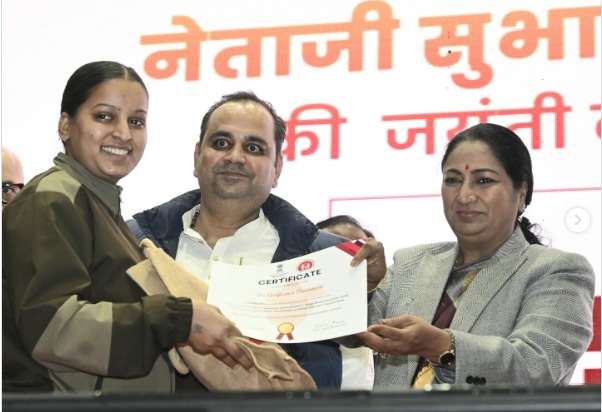
Later in the day, on the occasion of Netaji Subhas Chandra Bose’s birth anniversary, Chief Minister Rekha Gupta and Health Minister Pankaj Kumar Singh visited a mega blood donation camp organised at Thyagaraj Stadium.
The Health Minister said the enthusiastic participation of citizens in the camp was deeply inspiring, with large numbers voluntarily registering to donate blood. He described the initiative as a symbol of service and patriotism, reflecting the responsibility of citizens towards society.
He added that the Delhi government will continue organising such camps to ensure timely availability of blood for patients. The distribution of helmets to blood donors, he said, also reinforced the message of road safety, strengthening the commitment to both service and public welfare.