New Delhi:
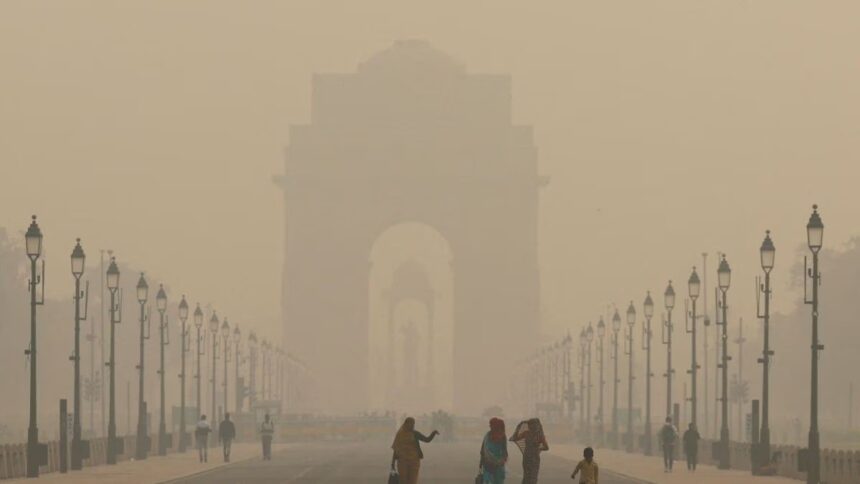
Delhi recorded a significant improvement in air quality in 2025, marking its best performance in eight years, with substantial reductions in particulate matter levels and a sharp decline in severe pollution days. According to official data highlighted by Environment Minister Manjinder Singh Sirsa, the national capital achieved its lowest annual average PM2.5 level at 96 µg/m³ and PM10 level at 197 µg/m³, reflecting the impact of sustained, science-led and multi-sectoral interventions by the Delhi government.
The year 2025 emerged as a milestone in Delhi’s long fight against air pollution. The city recorded nearly 200 days with Air Quality Index (AQI) below 200, representing a 15 per cent improvement compared to recent years and the highest number of relatively clean air days since 2018, excluding the COVID-impacted year of 2020. Out of these, 79 days fell under the ‘Good’ or ‘Satisfactory’ categories with AQI below 100. The average AQI from January to November stood at 187, the lowest in eight years, while the number of severe pollution days, defined by AQI above 400, dropped to just eight, the lowest on record.
Under the leadership of Chief Minister Rekha Gupta, the Delhi government elevated air pollution to its top priority after assuming office in 2025. The government adopted a comprehensive strategy focused on addressing pollution at its source through structural reforms, strict enforcement and continuous monitoring across sectors such as transport, construction, industry and waste management. The approach combined policy action with technological interventions and citizen participation to deliver measurable outcomes.
Environment Minister Manjinder Singh Sirsa said the improvement in air quality validated the government’s science-based strategy. He stated that the public mandate received in 2025 translated into a clear commitment to clean air, and the record number of good AQI days demonstrated that sustained and data-driven action can yield tangible results. He added that the government remains committed to long-term solutions rather than short-term or cosmetic measures.
Dust pollution, a major contributor to particulate matter, was tackled through an expanded dust mitigation programme. Mechanised road sweepers were deployed extensively, while 405 anti-smog guns were installed along roads and on high-rise buildings. Mist sprayers were mounted on electric poles in high-traffic areas to suppress dust, and strict norms were enforced at construction sites. Thousands of inspections were conducted, and penalties were imposed on violators to ensure compliance.
Vehicular emissions were addressed through stringent enforcement measures, including the ‘No PUC, No Fuel’ policy, which barred vehicles without valid pollution certificates from refuelling. Non-compliant vehicles, including those not meeting BS-VI norms, were penalised, and open trucks carrying construction and demolition waste without proper covering faced heavy fines. In the last 24 hours alone, more than 12,000 vehicular challans were issued, taking the total number of challans issued since October 1, 2025, to over 12 lakh.
Industrial pollution control witnessed a zero-tolerance approach. Polluting units operating in industrial and non-conforming areas were identified through ward-level surveys and shut down where violations were found. Even government agencies were penalised for non-compliance, signalling strict enforcement across all sectors. Waste management also saw significant improvements on the ground. Garbage collection frequency was doubled, and bio-mining of legacy waste averaged 35 metric tonnes per day, accelerating efforts to dismantle waste mountains at landfill sites.
The government also explored innovative measures to strengthen its pollution control strategy. Trials of cloud seeding were initiated, and open challenges were floated to invite new technologies capable of mitigating pollution. Digital platforms such as the Green Delhi app were used to encourage citizen participation and reporting of pollution-related issues.
According to the Environment Minister, the reduction in PM10 from 212 µg/m³ in 2024 to 197 µg/m³ in 2025, and PM2.5 from 104 µg/m³ to 96 µg/m³ over the same period, demonstrates sustained progress despite increasing urbanisation and rising vehicular density. He said that while the achievements of 2025 are encouraging, they mark only the beginning of a longer journey towards consistently clean air.
Looking ahead to 2026, the Delhi government has committed to further strengthening its air pollution control framework through stricter implementation of the Graded Response Action Plan, expanded use of technology, and deeper engagement with citizens. The government reiterated that clean and breathable air is a fundamental right of every resident and that it will continue to pursue permanent, structural solutions to secure a healthier future for the city.
As part of its daily enforcement and civic action, the government reported the removal of over 12,000 metric tonnes of garbage from streets, sweeping of more than 6,200 kilometres of roads, sprinkling of water on nearly 1,700 kilometres of road length, action against dozens of illegal dumping sites, diversion of non-destined trucks at city borders, and decongestion of multiple traffic hotspots, underscoring the scale and intensity of its ongoing clean air drive.