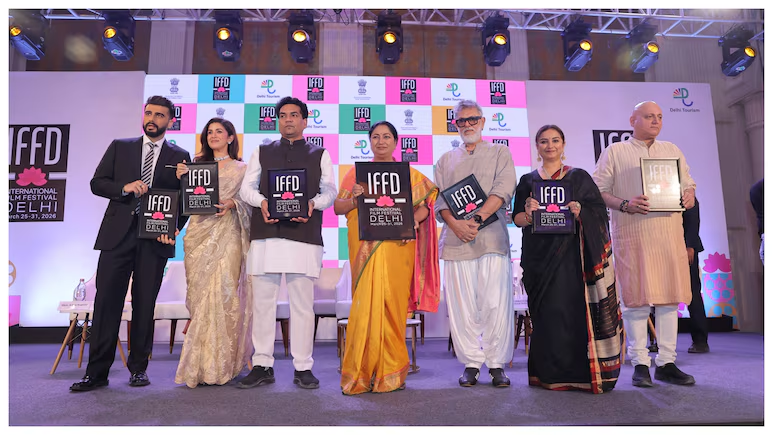
The Delhi Government has announced the launch of its first-ever international film festival, marking a significant cultural milestone for the capital. The event, titled Delhi International Film Festival 2026, will be held from March 25 to March 31 at Bharat Mandapam. Tourism Minister Kapil Mishra confirmed that the festival is being organised by the Delhi Government and the Delhi Tourism Department. The initiative is being carried out under the leadership of Chief Minister Rekha Gupta. The festival aims to position Delhi as a global cultural and entertainment destination.
The announcement highlights the government’s broader vision to promote the creative economy and cultural infrastructure in the national capital. According to Kapil Mishra, the festival has been designed with multiple objectives that align with national priorities related to cultural growth and economic development. The initiative is also seen as a step towards strengthening Delhi’s global image. By hosting such an event, the government aims to attract international attention. It also seeks to create opportunities for artists and filmmakers.
Promoting Creative Economy and Global Talent
One of the key objectives of the festival is to advance the concept of the orange economy and creator economy by transforming Delhi into a hub for live entertainment and creative industries. The government aims to provide a global platform for emerging talents associated with theatre, filmmaking, direction, cinematography, animation and artificial intelligence. Young creators will have the opportunity to showcase their work to international audiences. This exposure is expected to boost their careers and encourage innovation.
The festival has already received more than 2,000 entries from countries around the world, reflecting strong global interest. Out of these submissions, around 140 films have been selected for screening during the event. The selection includes a diverse range of genres and styles, offering audiences a comprehensive cinematic experience. The presence of international entries is expected to enhance cultural exchange. It will also help position Delhi as an emerging destination for global film events.
Showcasing Infrastructure and Cultural Strength
Another important objective of the festival is to highlight Delhi’s world-class infrastructure for hosting international events. Over the past decade, significant investments have been made in developing venues such as Bharat Mandapam, Yashobhoomi, Kartavya Path and other landmark locations. These facilities are capable of hosting large-scale global events. The government aims to demonstrate these capabilities through the successful organisation of the film festival.
The festival also seeks to promote Delhi as a preferred destination for film shooting. By showcasing modern infrastructure and diverse locations, the government hopes to attract filmmakers from across the world. This could lead to increased investment in the local film industry and create new employment opportunities. The initiative aligns with broader efforts to boost tourism and economic activity. It also strengthens Delhi’s position on the global cultural map.
Celebration of Indian Cinema Diversity
In addition to international films, the festival will highlight the diversity of Indian cinema by featuring films from multiple regional industries. Selected films from Tamil, Telugu, Gujarati, Marathi, Bhojpuri, Punjabi, Haryanvi, North-Eastern and Bengali cinema will be screened. This inclusion reflects the richness and diversity of India’s cultural landscape. It also provides a platform for regional filmmakers to reach wider audiences.
The festival will also include screenings of major Bollywood productions, adding to its appeal among cinema lovers. One of the key attractions is expected to be the screening of “Dhurandhar 2,” which is anticipated to draw significant attention. By combining international and domestic content, the festival aims to cater to a broad audience base. This approach is expected to enhance its popularity and impact.
Government Initiatives and Cultural Promotion
The Delhi Government has undertaken several initiatives over the past year to promote art, culture and tourism in the capital. These include large-scale events such as drone shows at India Gate during Diwali and extensive arrangements for festivals like Chhath Puja and Kanwar Yatra. Cultural celebrations such as Teej have also been supported to preserve traditional heritage. These efforts reflect a broader strategy to strengthen cultural engagement.
Innovative initiatives like Bhajan Clubbing in Delhi University have been introduced to connect younger audiences with traditional forms of expression. Plans are also underway to organise similar events at other institutions, including Jawaharlal Nehru University. These initiatives aim to bridge the gap between tradition and modernity. The film festival is part of this larger cultural push. It represents a step towards integrating creative industries with tourism development.
Outlook and Cultural Impact
The Delhi International Film Festival 2026 is expected to play a significant role in shaping the city’s cultural landscape. By bringing together filmmakers, artists and audiences from across the world, the event will foster cultural exchange and collaboration. It will also create new opportunities for creative professionals. The success of the festival could pave the way for future editions and establish Delhi as a regular host for global cultural events.
As the festival begins on March 25, expectations are high regarding its impact and reach. The combination of international participation, diverse programming and strong government support is likely to make it a landmark event. The initiative reflects a long-term vision to position Delhi as a global hub for culture, creativity and entertainment. The coming days will determine how effectively the festival achieves its objectives and contributes to the city’s cultural growth.