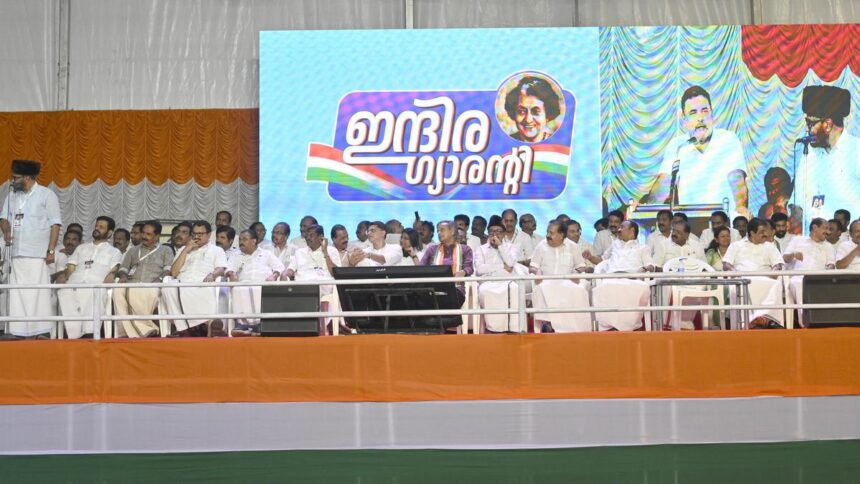
Senior Congress leader Rahul Gandhi is set to launch his campaign for the Kerala Assembly Elections 2026 on March 25 with a major rally in Kozhikode, marking the beginning of an intensive statewide political push ahead of the April 9 polls. The rally, scheduled at Kozhikode Beach, is expected to draw large crowds and signal the formal start of the Congress-led United Democratic Front’s election campaign. Party leaders view this event as a strategic opening to mobilize grassroots support and energize party workers across constituencies. The campaign kickoff is also expected to set the tone for political messaging in the coming weeks.
The announcement was confirmed by senior Congress leader Ramesh Chennithala, who heads the election campaign committee and is overseeing preparations for the upcoming polls. According to him, Rahul Gandhi will use the rally to outline the core promises of the United Democratic Front, including the proposed “guarantee card,” which is expected to highlight welfare commitments and governance priorities. The presence of national and state-level leaders at the rally is also anticipated, adding political weight to the event. The leadership aims to present a unified front and project confidence ahead of the election.
Campaign Strategy and Political Messaging
The Congress-led alliance is focusing on building a narrative centered on governance, economic growth and welfare delivery as part of its election strategy. The proposed guarantee card is expected to serve as a key campaign tool, outlining specific commitments to voters across different socio-economic groups. The party aims to differentiate its agenda by emphasizing accountability and targeted policy measures. Leaders believe that clearly defined promises can help build trust among voters in a competitive electoral environment. The Kozhikode rally is expected to serve as a platform to introduce these commitments.
Rahul Gandhi’s campaign approach is likely to include a combination of mass rallies, constituency visits and direct engagement with voters at the grassroots level. The emphasis will be on connecting with different sections of society, including youth, farmers and working-class communities. By focusing on local issues alongside broader policy themes, the campaign aims to create a balanced narrative that resonates with diverse voter groups. Early momentum is seen as a critical factor in shaping voter perception and influencing electoral outcomes. The campaign launch is therefore being carefully planned to maximize impact.
Electoral Context and Competitive Landscape
The Kerala Assembly elections are expected to witness a closely contested political battle, with multiple alliances vying for voter support. The Congress-led United Democratic Front is aiming to strengthen its position and challenge the incumbent government by presenting an alternative vision for development and governance. The involvement of Rahul Gandhi in the campaign highlights the importance of the state in the party’s broader political strategy. It also reflects the leadership’s commitment to investing resources and attention in key electoral battles.
Political observers note that voter sentiment in Kerala is influenced by a range of factors, including economic conditions, governance performance and local issues. The campaign period is expected to see intense political activity, with parties focusing on rallies, outreach programs and media engagement. The Kozhikode rally is likely to shape initial narratives and set the direction for subsequent campaign efforts. The effectiveness of communication strategies and ground-level organization will play a crucial role in determining electoral outcomes.
Campaign Momentum and Organisational Push
The rally marks the beginning of a series of campaign activities planned across the state, including roadshows, public meetings and targeted outreach initiatives. Party workers are being mobilized to ensure strong participation and visibility in each constituency. Organisational coordination is being strengthened to support campaign logistics and messaging. The leadership aims to maintain consistent engagement with voters throughout the election period. Sustained momentum is considered essential for building electoral advantage.
The campaign is also expected to leverage digital platforms and media outreach to expand its reach and influence public discourse. By combining traditional campaigning methods with modern communication strategies, the party seeks to maximize its impact across different demographics. The coming weeks will be critical in determining how effectively these efforts translate into voter support. The Kozhikode rally is therefore seen as a starting point for a broader and more intensive campaign phase.
Outlook and Political Significance
The launch of the campaign in Kozhikode carries symbolic and strategic significance, given the region’s political importance and influence in state politics. The rally is expected to send a strong signal about the party’s preparedness and intent to compete effectively in the elections. It also reflects a broader effort to re-energize the party’s base and attract undecided voters. The outcome of the election will depend on how well each party communicates its vision and addresses voter concerns.
As the campaign progresses, issues such as governance, economic development and welfare delivery are likely to dominate political discourse. The role of leadership, organisational strength and campaign strategy will be key factors in shaping the electoral landscape. The Kozhikode rally represents an important milestone in this process, setting the stage for the weeks ahead. The political environment in Kerala is expected to remain dynamic as parties intensify their efforts to secure voter support.