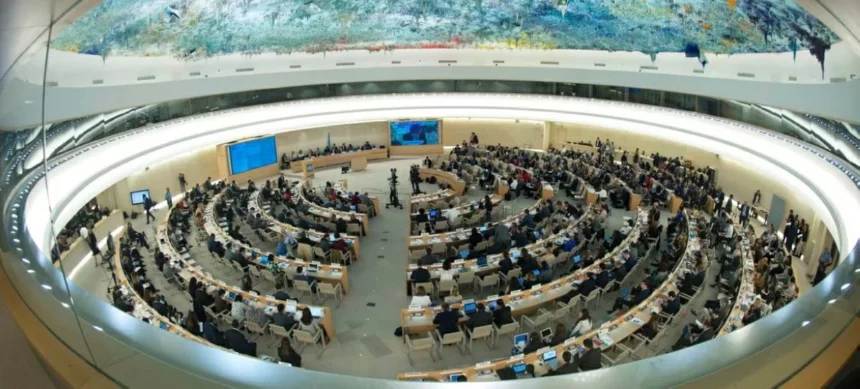
The United Nations Human Rights Council is set to hold a rare urgent debate in Geneva on Wednesday to address the growing crisis stemming from Iran’s recent strikes across multiple Gulf countries and their impact on civilian populations. The session, approved following a formal request by Bahrain on behalf of the Gulf Cooperation Council nations along with Jordan, reflects mounting global concern over the humanitarian consequences of the conflict. The urgency of the debate underscores the seriousness of the situation as regional tensions continue to escalate rapidly. International observers view this as a critical moment for multilateral institutions to respond.
The debate is expected to focus on the protection of civilians, the safeguarding of critical infrastructure and adherence to international humanitarian law. With increasing reports of damage to residential areas, energy installations and public facilities, the issue has moved beyond traditional military conflict into a broader humanitarian domain. The council’s involvement indicates a shift from purely geopolitical discourse to one that emphasizes human rights and civilian safety. This development highlights the evolving nature of modern conflicts where non-combatants often bear the brunt of escalation. The session is likely to attract widespread international attention.
The current phase of the conflict can be traced back to February 28, when military actions involving the United States and Israel targeted Iranian positions, prompting retaliatory strikes by Iran. These counterattacks extended beyond Israel into several Gulf nations, transforming what was initially a bilateral confrontation into a wider regional crisis. The expansion of hostilities has raised concerns about the potential for further escalation and instability. The involvement of multiple actors has complicated diplomatic efforts.
The spillover of conflict into the Gulf region has significant implications for global energy security and economic stability. Many of the affected countries play a crucial role in international oil supply chains, and disruptions in the region can have far-reaching consequences. Attacks on energy infrastructure and maritime routes have intensified fears of supply disruptions and price volatility. These concerns add an economic dimension to the crisis, making it a matter of global significance. The council’s debate is therefore expected to address not only humanitarian issues but also broader strategic concerns.
Civilian Impact and Gulf Concerns
Representatives from Gulf nations have emphasized that the strikes have had a direct and severe impact on civilian populations and infrastructure. Countries including Bahrain, Kuwait, Oman, Qatar, Saudi Arabia and the United Arab Emirates have reported damage to residential areas, public utilities and essential services. These nations maintain that they are not active participants in the conflict and have not engaged in offensive military operations. Despite this, they claim to have suffered significant losses.
Bahrain’s ambassador has highlighted that the attacks resulted in casualties among innocent civilians and disrupted critical infrastructure. He reiterated that Gulf Cooperation Council states and Jordan have consistently advocated for dialogue and de-escalation. According to him, these countries have made efforts to remain neutral and avoid involvement in the conflict. However, continued strikes have undermined these efforts and increased regional insecurity. The situation has created a sense of vulnerability among affected populations.
The humanitarian impact extends beyond immediate casualties, affecting access to essential services such as electricity, healthcare and transportation. Damage to infrastructure can have long-term consequences for communities, particularly in densely populated urban areas. Vulnerable groups, including children and the elderly, are often disproportionately affected. International organizations have expressed concern about the potential for a worsening humanitarian crisis if hostilities continue. The debate will likely address these issues in detail.
The question of civilian protection is central to international humanitarian law, which mandates the distinction between military and civilian targets. Allegations of violations of these principles are expected to be a key focus of the discussion. The council will examine whether the actions taken comply with established legal frameworks. This aspect of the debate is likely to influence international opinion and future diplomatic actions.
Draft Resolution and Diplomatic Divide
A draft resolution has been introduced before the 47-member council, condemning Iran’s strikes and calling for an immediate cessation of attacks against Gulf countries and Jordan. The resolution emphasizes the need to protect civilian lives and infrastructure, highlighting concerns over strikes targeting energy facilities and attempts to disrupt the Strait of Hormuz. It also calls for accountability and reparations for damages caused by the attacks.
The Strait of Hormuz is one of the world’s most critical maritime chokepoints, through which a significant portion of global oil supply passes. Any disruption in this region can have severe economic consequences. The resolution’s reference to this issue underscores the broader implications of the conflict. It reflects concerns not only about immediate damage but also about long-term stability in global energy markets. This adds another layer of urgency to the debate.
However, the draft resolution has sparked controversy due to its omission of references to the United States and Israel. Iran has criticized this as a selective approach that fails to acknowledge the initial triggers of the conflict. This omission has become a focal point of diplomatic disagreement, with some countries questioning the neutrality of the resolution. The debate is expected to reveal deep divisions among member states.
The outcome of the vote on the resolution will be significant in determining the council’s stance on the conflict. A strong consensus could lead to increased diplomatic pressure, while a divided outcome may weaken the council’s influence. The dynamics of the vote will provide insight into the broader geopolitical alignments within the international community.
Iran’s Response and Counter Claims
Iran has strongly rejected the accusations presented at the council, describing the request for an urgent debate as unjust and disconnected from reality. Iranian representatives argue that the conflict was initiated by external aggression and that their actions are a legitimate exercise of self-defence. This position is based on their interpretation of international law, which allows for defensive measures in response to attacks.
Tehran has also accused Gulf states of facilitating military operations by allowing their territories to be used by external forces. According to this argument, such involvement makes certain facilities in these countries legitimate targets. This claim has been firmly rejected by Gulf nations, which maintain that they have not participated in the conflict. The disagreement highlights the complexity of assigning responsibility in modern conflicts.
Iran has urged the council to adopt a balanced and comprehensive approach, taking into account the full context of the conflict. It has warned against oversimplifying the situation and ignoring the sequence of events that led to the current escalation. Iranian officials have emphasized that they did not initiate hostilities and have called for a fair assessment of all parties involved. These arguments are expected to play a central role in the debate.
The divergence in narratives between Iran and Gulf states reflects broader geopolitical tensions in the region. These differences complicate efforts to reach consensus and highlight the challenges faced by international institutions in addressing such conflicts. The council’s ability to navigate these competing perspectives will be critical.
Additional Debate on Humanitarian Issues
In a parallel development, another urgent debate has been proposed focusing on the protection of children and educational institutions in conflict zones. This request, submitted by Iran along with China and Cuba, refers to an airstrike on a school in Minab. The incident has been described as a serious violation of international humanitarian and human rights law.
The proposal highlights the broader humanitarian impact of the conflict, particularly on vulnerable populations. Children are among the most affected groups in armed conflicts, facing risks to their safety, education and well-being. Attacks on schools and educational facilities can have long-lasting consequences, disrupting learning and development. The council is expected to consider this issue separately.
The inclusion of this request underscores the multifaceted nature of the crisis, which involves not only geopolitical tensions but also significant humanitarian challenges. Addressing these issues requires a comprehensive approach that goes beyond immediate conflict resolution. The council’s response to this proposal will be closely monitored by the international community.
Outlook
The urgent debate at the United Nations Human Rights Council represents a critical moment in the international response to the escalating crisis in the Gulf region. It provides a platform for affected countries to present their concerns and seek accountability while highlighting the importance of protecting civilians in conflict situations. The discussion is expected to shape global discourse and influence future diplomatic efforts.
As the situation continues to evolve, the need for dialogue and de-escalation remains paramount. The council’s actions, including any resolutions adopted, will play a key role in determining the direction of international engagement. While challenges remain, the debate underscores the importance of multilateral cooperation in addressing complex global issues. The coming days will be crucial in shaping the trajectory of the crisis and its broader implications.