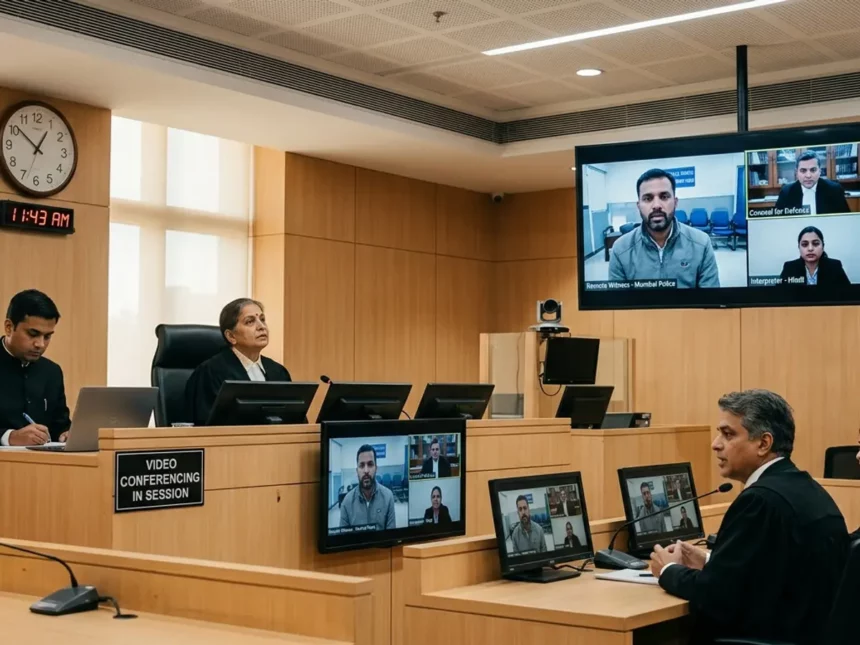
A serious disruption occurred during virtual court proceedings before a division bench headed by Chief Justice Devendra Kumar Upadhyaya and Justice Tejas Karia, raising fresh concerns about cybersecurity vulnerabilities in judicial digital infrastructure.
The incident unfolded during the hearing of the court’s supplementary list, when an unidentified user joined the video conferencing platform and began sharing explicit pornographic content. The unexpected intrusion forced court officials to immediately shut down the virtual session.
Repeated Intrusion Raises Security Concerns
According to details emerging from the proceedings, the unidentified participant entered the virtual hearing under a suspicious username and shared their screen, displaying obscene material. Court staff acted swiftly by terminating the session.
However, when the virtual court resumed shortly afterward, the same user reportedly rejoined and repeated the act. This forced authorities to shut down the video conferencing platform once again.
The situation escalated further when, upon a third attempt to resume proceedings, the intruder allegedly managed to disrupt the hearing again by sharing inappropriate content. During the disturbance, a voice was reportedly heard warning that the system had been hacked.
These repeated interruptions disrupted judicial proceedings significantly and raised alarm over the safety and reliability of virtual court systems.
Court Administration Takes Immediate Action
Following the incident, the Delhi High Court administration moved quickly to address the situation. A formal complaint has been filed with the cybercrime unit of Delhi Police, specifically the Intelligence Fusion and Strategic Operations (IFSO) division.
Authorities are now expected to conduct a detailed investigation to determine whether the incident was the result of a targeted cyberattack, unauthorized access, or a lapse in platform security protocols.
As a precautionary measure, when virtual proceedings resumed later, access to participants was restricted, and both audio and video functions were limited to prevent further disruptions.
Concerns Raised Over Institutional Integrity
The incident drew strong reactions within the legal community. During the post-lunch session, Additional Solicitor General Chetan Sharma raised the matter before the Chief Justice, describing the events as “disconcerting.”
He noted that similar incidents may have occurred in more than one courtroom, suggesting a broader concern about system vulnerability. Sharma emphasized that such disruptions have the potential to undermine the dignity, sanctity, and integrity of judicial proceedings.
He also urged the court to issue directions for immediate removal of such content and to prevent its further dissemination.
Court’s Response and Observations
Responding to the concerns, Chief Justice Upadhyaya stated that administrative instructions had already been issued to address the matter. He clarified that as per court rules, recording and dissemination of court proceedings are strictly regulated and unauthorized sharing is prohibited.
The Chief Justice highlighted that any violation of these norms would invite action under established legal provisions. He also indicated that authorities would take necessary steps if it is found that any content from the proceedings was recorded or misused.
Cybersecurity in Virtual Courts Under Scrutiny
The incident has once again brought attention to the growing challenges of cybersecurity in virtual court systems. Since the increased adoption of digital platforms for hearings, especially after the pandemic, courts across the country have relied heavily on video conferencing tools.
While virtual hearings have improved accessibility and efficiency, they have also introduced new risks related to data security and unauthorized access.
Experts suggest that stronger safeguards, including enhanced authentication protocols, restricted access controls, and real-time monitoring systems, are essential to prevent such incidents.
Need for Stronger Digital Safeguards
The disruption highlights the urgent need for robust cybersecurity frameworks within judicial institutions. Measures such as secure login credentials, participant verification, and encrypted communication channels can help mitigate risks.
Additionally, regular audits of digital systems and training for court staff on handling cyber threats can strengthen overall preparedness.
The incident also underscores the importance of collaboration between judicial authorities and cybersecurity agencies to ensure a secure digital environment.
Broader Implications
Beyond the immediate disruption, the incident raises important questions about the reliability of virtual platforms in sensitive institutional settings. Courts, being pillars of justice, require secure and uninterrupted functioning.
Any breach, even if temporary, can impact public confidence in the system. Ensuring the integrity of judicial proceedings is therefore critical, especially in an era where digital transformation is rapidly reshaping traditional processes.
Investigation and Way Forward
With the complaint now filed, the Delhi Police cyber unit is expected to trace the origin of the intrusion and identify those responsible. If the act is found to be deliberate, strict legal action is likely to follow.
The findings of the investigation may also lead to policy changes and improved security protocols for virtual hearings across courts in India.
Conclusion
The disruption of virtual proceedings at the Delhi High Court due to obscene content being played mid-hearing has highlighted significant cybersecurity concerns. While swift action by court authorities helped contain the situation, the incident serves as a reminder of the vulnerabilities associated with digital platforms.
As courts continue to embrace technology, ensuring the security and integrity of virtual proceedings will remain a top priority. Strengthening digital safeguards and addressing potential risks proactively will be essential to maintaining trust in the judicial system.