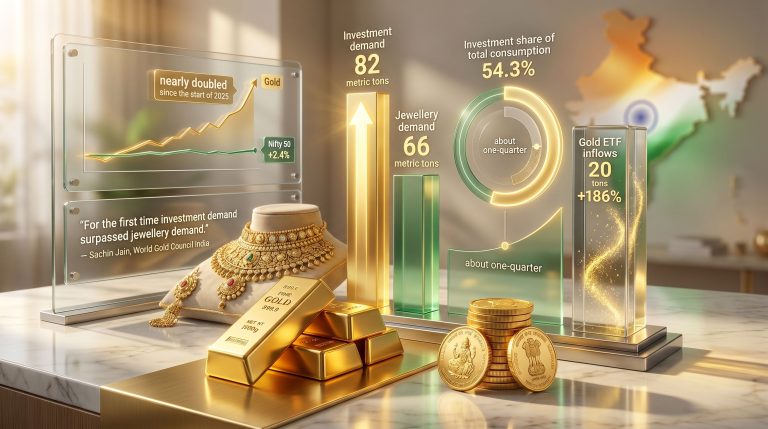
India’s relationship with gold is undergoing a notable transformation. Traditionally seen as a symbol of wealth, culture, and celebration through jewellery, gold is now increasingly being viewed as a strategic financial asset. According to the World Gold Council, the March quarter of 2026 marked a historic shift, with investment demand for gold surpassing jewellery demand for the first time in the country.
This shift reflects changing consumer behaviour driven by economic pressures, global geopolitical developments, and evolving investment preferences. As gold prices remain elevated and uncertainty continues in global markets, Indian households and investors are reassessing how they engage with the precious metal.
Investment Demand Surges, Jewellery Consumption Declines
The most striking development in the first quarter of 2026 has been the sharp rise in investment demand for gold. Demand for bars and coins surged by 52% year-on-year, reaching 82 metric tonnes. This growth highlights a strong preference among investors for physical gold as a store of value.
In contrast, jewellery demand declined by 19.5% to 66 tonnes during the same period. The drop reflects the impact of high gold prices on traditional consumption patterns, particularly among price-sensitive consumers.
For decades, jewellery dominated gold demand in India, especially during festivals, weddings, and cultural occasions. However, the latest data indicates a structural shift, with more consumers opting for investment-oriented forms of gold rather than decorative purchases.
Rising Prices Reshape Consumer Behaviour
One of the primary drivers behind this shift is the sustained increase in gold prices. As prices rise, affordability becomes a key concern for consumers, particularly in the mass market segment.
Many buyers are now opting for lighter jewellery, lower-carat products, or studded designs that require less gold content. This allows them to maintain cultural and social traditions while managing costs.
At the same time, investors are increasingly turning to gold bars and coins, which typically carry lower making charges and premiums compared to jewellery. This makes them a more cost-effective option for those looking to invest in gold.
The trend also reflects a growing awareness of gold as a financial asset, rather than just a consumption good.
Geopolitical Uncertainty Fuels Safe-Haven Demand
Global geopolitical tensions have played a significant role in boosting gold investment demand. Uncertainty related to international conflicts, economic instability, and fluctuations in currency markets has reinforced gold’s status as a safe-haven asset.
Investors often turn to gold during periods of uncertainty, as it is perceived to retain value and provide protection against market volatility. The current global environment has strengthened this perception, leading to increased demand.
In addition, concerns about inflation have further driven interest in gold. As inflation erodes the purchasing power of money, gold is seen as a hedge that can preserve wealth over time.
Central Bank Activity Supports Market Trends
Central banks around the world have also contributed to the strong demand for gold. In the first quarter of 2026, central banks purchased a net 244 tonnes of gold, despite some increase in selling activity.
This continued accumulation reflects the importance of gold in global financial systems and reinforces its role as a reliable store of value.
India itself holds one of the largest official gold reserves globally, ranking among the top countries in terms of holdings. Additionally, Indian households collectively hold vast amounts of gold, far exceeding the reserves of many central banks.
Changing Dynamics in Indian Gold Market
The Indian gold market is witnessing a clear divergence in consumer behaviour across different income groups.
High-income consumers continue to purchase heavier and more elaborate jewellery, often driven by cultural preferences and long-term value considerations. For this segment, gold remains both a status symbol and a store of wealth.
On the other hand, middle- and lower-income consumers are becoming more cautious. Many are reducing their jewellery purchases or shifting to alternative options such as lighter designs or gold-plated items.
A growing number of consumers are also choosing to invest directly in gold through bars and coins, reflecting a shift toward financial prudence.
Role of Exchange and Recycling
Another notable trend is the increase in the exchange of old jewellery for new pieces. This practice allows consumers to offset the cost of new purchases by leveraging existing gold holdings.
Recycling of gold has become an important component of the market, helping to sustain demand even as new purchases decline.
This trend also highlights the long-term value of gold, as households are able to repurpose their assets in response to changing economic conditions.
Rise in Gold-Backed Loans
The surge in gold investment demand has been accompanied by a significant increase in gold-backed loans. Outstanding retail bank loans secured against gold jewellery rose by 124% year-on-year, reaching ₹4.3 trillion by the end of February 2026.
This growth reflects the continued importance of gold as a financial asset that can be leveraged for liquidity. For many households, gold serves as a reliable source of credit during times of need.
The expansion of gold-backed lending also indicates the integration of traditional assets into modern financial systems.
Outlook for Gold Demand in 2026
Looking ahead, the outlook for gold demand in India remains influenced by several key factors.
Investment demand is expected to remain strong, supported by ongoing geopolitical risks, inflation concerns, and limited alternative investment opportunities. Bars and coins are likely to continue attracting interest from investors seeking stability.
However, jewellery demand may remain under pressure due to high prices. While overall spending is expected to stay resilient, consumers are likely to remain cautious and price-sensitive.
The trajectory of gold prices will play a crucial role in shaping demand. Factors such as global economic conditions, currency movements, and monetary policy decisions will influence price trends.
Impact of Global Monetary Policy
Decisions by major central banks, particularly the US Federal Reserve, are expected to have a significant impact on gold markets. Interest rate policies can influence investor behaviour and affect the attractiveness of gold as an investment.
Higher interest rates may reduce the appeal of non-yielding assets like gold, while lower rates can support demand. As a result, monetary policy developments will be closely watched by market participants.
Asia’s Role in Driving Demand
Asia, including India, is expected to remain a key driver of global gold demand. The region’s cultural affinity for gold, combined with economic growth and rising incomes, continues to support demand.
Geopolitical risks and economic uncertainties further enhance gold’s appeal in the region, reinforcing its role as a preferred investment and consumption asset.
Conclusion
The first quarter of 2026 marks a significant turning point in India’s gold market, with investment demand surpassing jewellery consumption for the first time. This shift reflects changing consumer preferences, driven by rising prices, economic uncertainty, and evolving financial awareness.
While jewellery will continue to hold cultural importance, gold’s role as an investment asset is becoming increasingly prominent. As global and domestic factors continue to influence market dynamics, the balance between consumption and investment demand will shape the future of India’s gold market.
The evolving trends highlight a broader transformation in how Indians perceive and use gold, signaling a move toward more strategic and financially driven decision-making.