New Delhi, December 22, 2025
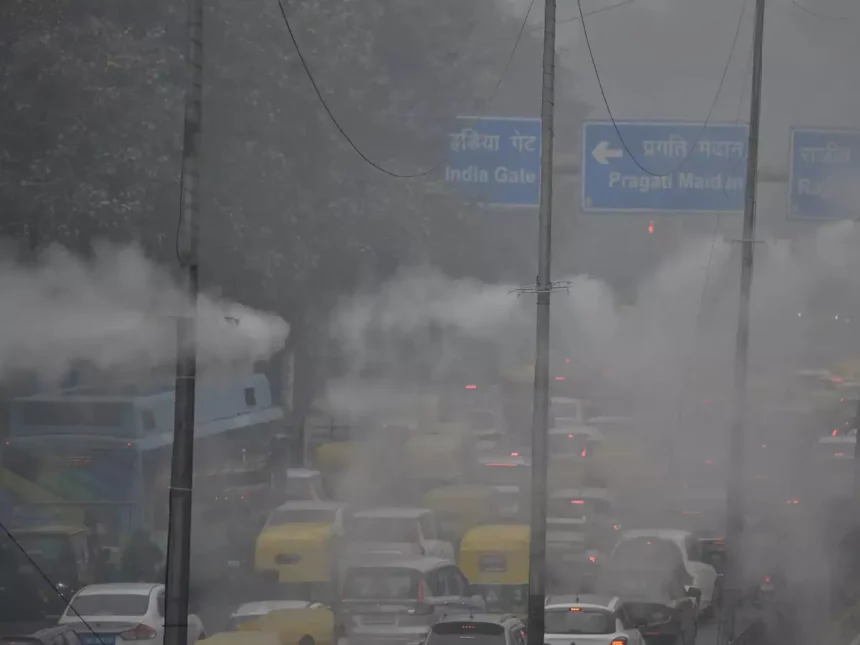
The Delhi Government has intensified its action against polluting industries across the capital, warning of immediate sealing of units found violating environmental norms as part of its ongoing fight against air pollution. Under the leadership of Chief Minister Rekha Gupta, the government has accelerated a multi-layered strategy to curb emissions, with strict enforcement under Stage IV of the Graded Response Action Plan (GRAP-4) beginning to show tangible results on the ground.
Environment Minister Manjinder Singh Sirsa said that from today, enforcement drives against polluting industries have been further strengthened across Delhi. Any industrial unit found flouting air pollution standards will be sealed immediately without leniency. He added that industries failing to apply for mandatory Online Environmental Clearance Mechanism certification by the December 31 deadline will also face strict action.
According to the Minister, the stringent GRAP-4 measures implemented over the past four days have led to visible improvements in air quality in several parts of the city. Enforcement agencies have been instructed to maintain sustained pressure to ensure that these gains are not diluted. “There will be no tolerance for complacency in the mission to clean Delhi’s air,” Sirsa said.
Highlighting the transport sector crackdown, the Environment Minister said that since the implementation of the “No PUC, No Fuel” rule, more than two lakh vehicles have undergone Pollution Under Control testing. Of these, around 10,000 vehicles failed to meet the prescribed emission standards. He said the figures clearly indicate that strict enforcement is underway and also underscore the extent of vehicular pollution in the capital.
To strengthen the PUC framework, the Delhi Government is upgrading all PUC centres with modern, high-capacity equipment to reduce waiting time and ensure more accurate emission testing. In addition, a third-party inspection mechanism is being introduced to enhance transparency and credibility in the certification process. Technical teams from the Transport Department are carrying out continuous on-ground monitoring to prevent malpractice and ensure uniform implementation of norms.
The crackdown on polluting industries is being carried out in close coordination with civic and regulatory bodies. The Municipal Corporation of Delhi and the Delhi Pollution Control Committee are jointly identifying illegal and unauthorised industrial units operating within the city. Officials said all such units are liable for closure as the government aims to ensure full compliance with environmental regulations to safeguard public health.
Dust control has also emerged as a major focus area of the government’s pollution mitigation strategy. Round-the-clock mechanical cleaning and water sprinkling are being carried out on roads, particularly in high-traffic and construction-heavy zones, to suppress dust emissions. Simultaneously, large-scale bio-mining operations are underway at landfill sites, where nearly 35,000 metric tonnes of legacy waste are being scientifically processed and removed every day. These measures are aimed at flattening long-standing waste dumps and reducing dust-related pollution.
Sirsa also outlined progress in the government’s plan to rejuvenate Delhi’s water bodies, many of which have either disappeared or been encroached upon over the years. The government has set a target to revive at least 50 per cent of such long-vanished water bodies and restore them to their original ecological form in the coming period. According to the Minister, the revival of natural water bodies plays a crucial role in controlling local dust pollution and improving the city’s overall environmental health.
On compliance with workplace restrictions under GRAP-4, Sirsa warned that private offices failing to adhere to the 50 per cent work-from-home directive will face action. He said while citizen convenience is important, public health remains non-negotiable and all stakeholders must strictly follow pollution-control directions during periods of severe air quality.
Responding to reports of technical issues with Automatic Number Plate Recognition cameras, the Environment Minister said the Transport Department is examining the matter. He alleged that inefficiencies in existing systems are a legacy issue and said complaints have surfaced even in areas where better performance was expected.
Taking a political swipe, Sirsa criticised the former Chief Minister, accusing him of remaining absent during periods of crisis and reappearing only for public events. He said those who governed Delhi for a decade and left behind a legacy of pollution, mismanagement and corruption have no moral authority to comment on the city’s environmental challenges.
The Environment Minister thanked Delhi’s residents and government officials for their cooperation and appealed for continued public participation. He said the government is moving ahead with determination to make Delhi’s air cleaner and safer, stressing that sustained enforcement and collective responsibility are essential to securing a healthier capital.