New Delhi | February 13, 2026
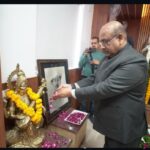
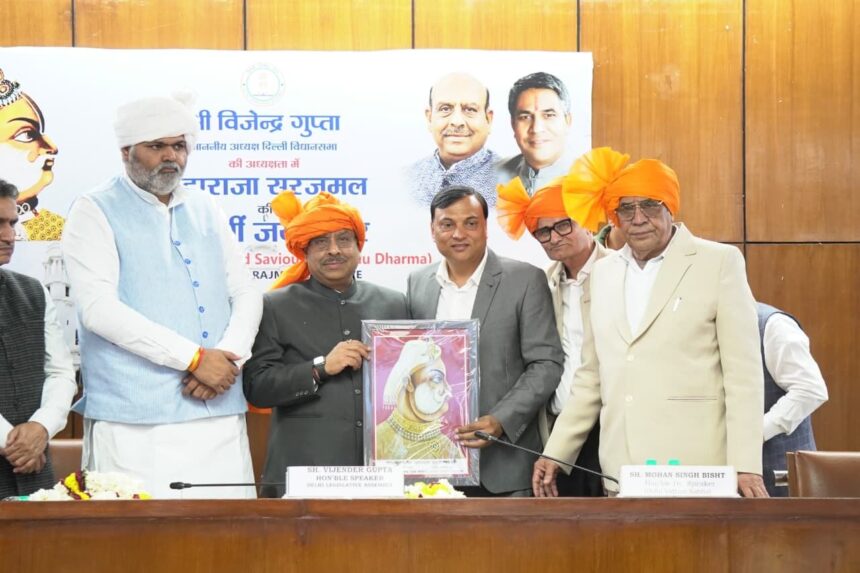
A commemorative ceremony marking the 319th birth anniversary of Maharaja Surajmal was held at the Delhi Assembly premises, focusing on his legacy of leadership, unity, and commitment to public welfare. Delhi Assembly Speaker Vijender Gupta paid floral tributes to Maharaja Surajmal and described him as a symbol of courage, foresight, and people-centric governance.
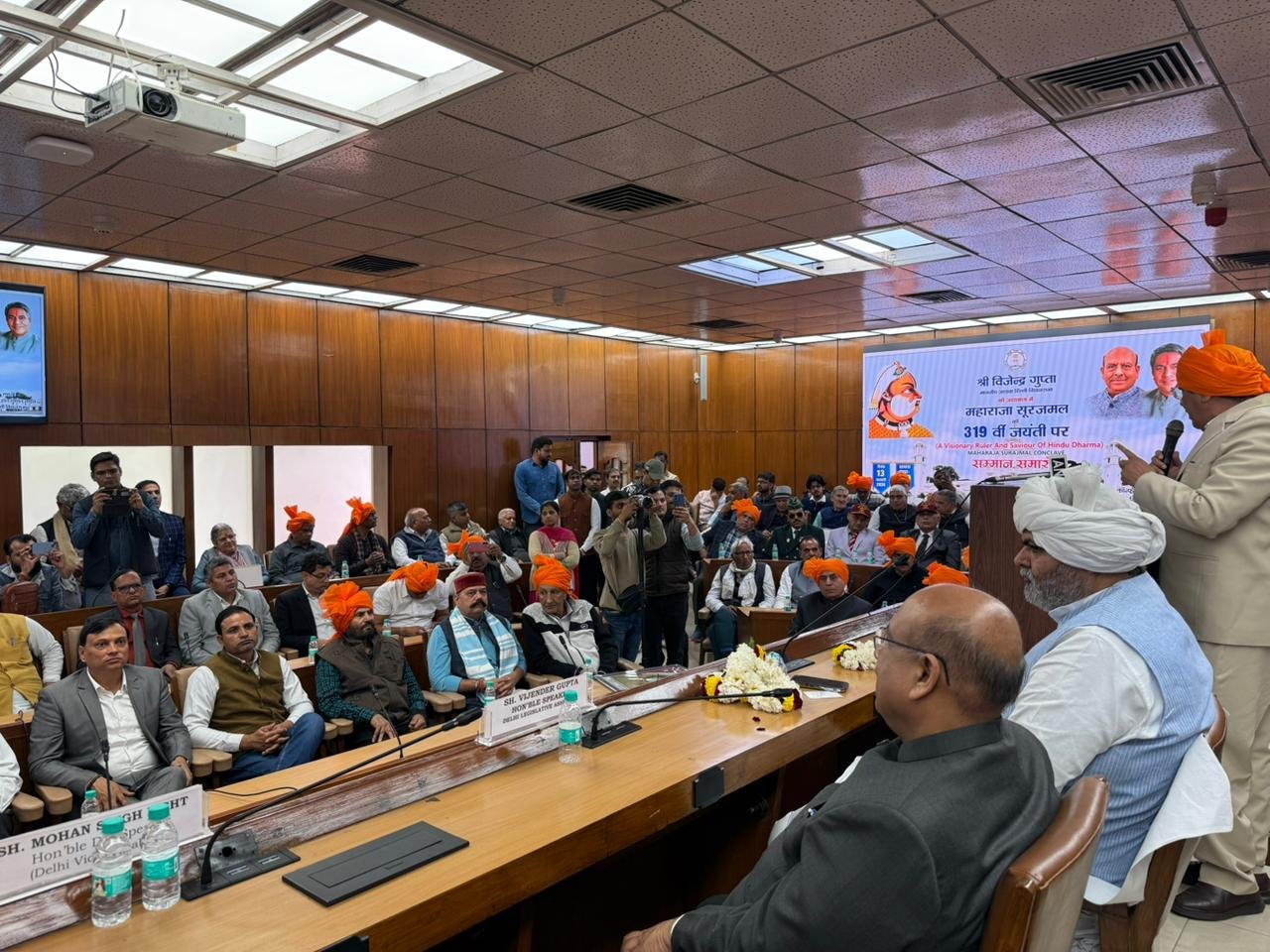
Addressing the gathering, Vijender Gupta said Maharaja Surajmal was not merely a ruler of his era but a visionary leader whose principles continue to inspire society. He emphasized that true leadership lies not in authority alone but in strategic thinking, social cohesion, and unwavering responsibility toward citizens and the nation.
Reflecting on the political landscape of 18th-century northern India, he noted that Maharaja Surajmal successfully safeguarded sovereignty and stability during challenging times. The Lohagarh Fort was cited as a testament to his military acumen, administrative efficiency, and innovative defense strategies. His influence across regions including Delhi, Agra, Mathura, and Aligarh left a lasting imprint on the socio-political fabric of northern India.
The historical significance of the Delhi Assembly building was also highlighted during the event. Vijender Gupta recalled that the structure, built in 1912, has witnessed India’s democratic evolution and remains closely associated with the nation’s institutional journey. Observing Maharaja Surajmal’s birth anniversary within this historic space was described as a meaningful continuation of India’s democratic and cultural heritage.
Deputy Speaker of the Delhi Assembly Mohan Singh Bisht stated that Maharaja Surajmal’s life exemplified courage, resilience, and dedication to public welfare. He added that remembering such historical figures strengthens collective responsibility and encourages society to uphold ideals of unity, service, and integrity.
MLA Surya Prakash Khatri observed that Maharaja Surajmal’s leadership transcended regional boundaries. He noted that commemorating his birth anniversary within the Assembly complex reinforces the relevance of his ideals in contemporary public life and nurtures a shared sense of pride in regional and national heritage.
The ceremony witnessed participation from social organizations, rural representatives, and citizens from various regions. Speakers unanimously agreed that Maharaja Surajmal’s legacy remains deeply relevant, offering guidance for democratic governance, ethical leadership, and social harmony. The event served as a reminder that learning from history is essential to building a more inclusive and resilient future.