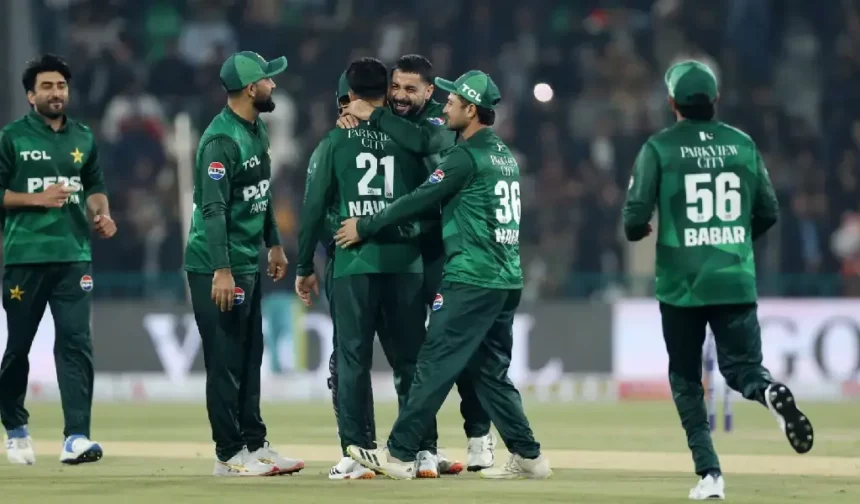
In a thrilling display of skill and determination, Pakistan ended a seven-year T20I winless streak against Australia by defeating a second-string Australian side in the first T20 International of their three-match series at Gaddafi Stadium, Lahore. The victory, achieved through a disciplined bowling attack and strategic batting, provides Pakistan with a vital boost of confidence as the team prepares for the ICC T20 World Cup 2026. After years of Australian dominance in head-to-head encounters, this comprehensive performance not only breaks a long-standing drought but also signals Pakistan’s readiness to compete at the highest level on the international stage.
Historic Triumph and Tactical Brilliance in Lahore
The opening T20I saw Pakistan deliver a complete performance, showcasing both individual brilliance and collective teamwork. The significance of this win lies not only in the result but in the manner in which it was achieved. For seven years, Pakistan had struggled to secure a T20I victory against Australia, whose consistent performances had created a psychological edge over the visiting team. The last Pakistani triumph against the Aussies came on October 28, 2018, in Dubai, when they won by 33 runs. Since that match, Australia had maintained control in bilateral encounters, leaving Pakistan to search for a strategy that could finally tilt the balance.
In the Lahore match, Pakistan’s spinners emerged as the cornerstone of victory, taking wickets at crucial intervals and applying relentless pressure on the Australian batting lineup. Shaheen Afridi and Saim Ayub struck early, with Ayub producing a beautifully bowled carrom ball to dismiss Matthew Short in the third over. Travis Head, who appeared poised to anchor the chase, was dismissed for 23 after a spectacular catch by Babar Azam at long-off, showcasing Pakistan’s fielding excellence. Despite resistance from Cameron Green and Josh Philippe, the mounting pressure of a climbing required run rate and disciplined bowling eventually led to the Australian innings collapsing to 126 for eight by the 18th over. Abrar Ahmed delivered a match-winning spell, claiming two wickets for just ten runs in four overs, while Mohammad Nawaz maintained economy and control, conceding only 25 runs. The combined efforts of these spinners highlighted Pakistan’s strategic planning and adaptability, reflecting the growing depth and maturity within the team.
This triumph was not merely about breaking a historical drought but also demonstrated Pakistan’s ability to perform cohesively under pressure. Every bowler and fielder contributed to containing the opposition, while the batsmen had earlier set a competitive total, ensuring that Pakistan’s overall strategy was balanced and well-executed. The interplay between aggressive bowling and disciplined fielding ultimately created a scenario where the opposition was unable to recover, marking a significant milestone in Pakistan’s T20 history. The tactical acumen displayed by the team, from the captaincy to execution, will serve as a blueprint for upcoming international challenges and underscores the readiness of Pakistan’s squad to compete against top-tier teams in major tournaments.
Impact on Team Morale and T20 World Cup Prospects
Beyond the immediate victory, the match has profound implications for team morale and Pakistan’s broader preparation for the ICC T20 World Cup 2026. After a period of inconsistent results and high-pressure scenarios against Australia, this win injects confidence and reinforces the importance of strategic discipline and collective effort. With the T20 World Cup on the horizon, the team’s ability to execute plans against strong oppositions is vital. Analysts and fans alike have noted that such victories not only boost the players’ self-belief but also serve as an inspiration for the cricketing infrastructure in Pakistan, reinforcing the value of nurturing talent and emphasizing strategic planning at every level.
The Pakistan Cricket Board (PCB) is now closely observing the momentum generated by this win, as decisions regarding the country’s participation in the ICC T20 World Cup 2026 remain pending. Reports suggest that the team may use the tournament as a platform to stage a symbolic protest, with players potentially wearing black armbands during matches, reflecting ongoing political and sporting considerations. Regardless of these external factors, the team’s performance against Australia underscores a readiness to compete at the highest level and demonstrates that Pakistani players possess the mental fortitude and technical skill to succeed under pressure.
The significance of this win also extends to future series, as Pakistan now holds a 1-0 lead in the three-match T20I series, placing the team in a favorable position to secure further victories and strengthen its rankings. The strategic use of spinners, intelligent batting rotations, and cohesive teamwork provides a template for managing games effectively, especially against strong oppositions like Australia. Fans and cricketing experts have highlighted that the combination of young talent and experienced campaigners within the team is likely to yield continued success, provided discipline and focus are maintained.
Moreover, this victory has rekindled public enthusiasm and engagement with Pakistan cricket, as fans celebrate not just the result but the methodical and confident approach displayed by the players. The balance of aggression and patience in both batting and bowling reflects a team capable of making tactical adjustments mid-game, a crucial attribute for tournament play where adaptability often determines outcomes. By demonstrating composure in high-pressure situations, Pakistan has sent a clear message to both domestic supporters and international competitors: the team is evolving, competitive, and prepared to challenge traditional hierarchies in the T20 format.
Pakistan’s win against Australia in the first T20I at Gaddafi Stadium is a landmark achievement, representing a break from a seven-year streak of defeat and highlighting the strategic depth, skill, and determination of the national team. The performance, marked by dominant spin bowling, disciplined fielding, and timely batting contributions, not only provides immediate satisfaction but also reinforces the team’s readiness for future challenges, including the ICC T20 World Cup 2026. This match serves as a case study in team cohesion, tactical intelligence, and the significance of building confidence through historic wins, setting the stage for continued excellence and demonstrating the potential of Pakistan cricket to compete with the world’s best.