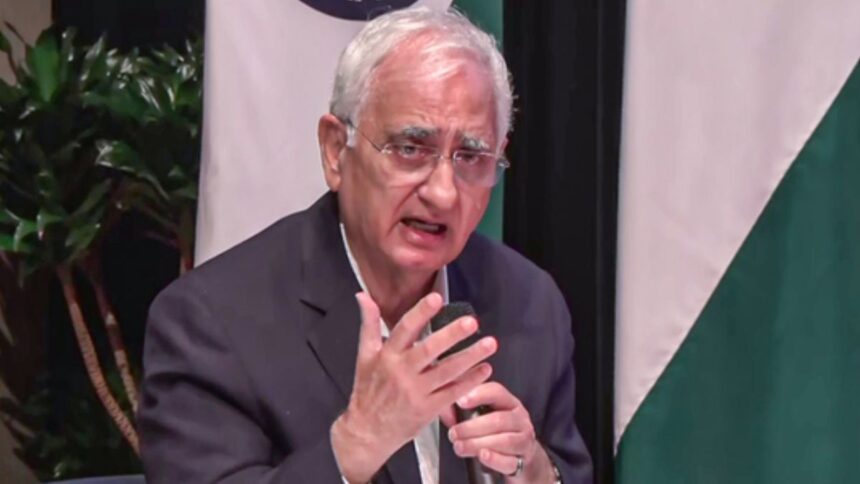
In a significant departure from the Congress party’s traditional stance, senior leader Salman Khurshid praised the Narendra Modi government’s decision to abrogate Article 370, calling it a turning point that brought prosperity to Jammu and Kashmir. His remarks came during a visit to Indonesia, where he addressed think tanks and academic groups as part of an all-party delegation led by JD(U) MP Sanjay Jha, aimed at exposing Pakistan’s role in terrorism on a global stage.
Khurshid Hails End of Special Status in Kashmir
Speaking about Kashmir’s past challenges, Khurshid referred to Article 370 as a “major problem” that perpetuated a sense of separation between the region and the rest of India. Applauding the move to revoke the article in August 2019, he noted that the decision was followed by democratic participation and visible development. “There was a 65% voter turnout in the subsequent election. An elected government is now in place in Kashmir, and people have started experiencing the benefits of peace and prosperity,” he said.
Khurshid emphasized that reversing such progress would be counterproductive, hinting that a growing number of voices, even within the opposition, acknowledge the positive change. His statement is especially notable given the Congress party’s longstanding criticism of the Modi government’s handling of Jammu and Kashmir post-abrogation.
Congress Leaders’ Mixed Signals on Foreign Visits
Salman Khurshid is not the first Congress leader to express views differing from the party’s official line during foreign delegations. Earlier, senior leaders like Shashi Tharoor and Manish Tewari also highlighted India’s firm stand on issues relating to Pakistan, with Tharoor taking a strong position against Islamabad’s narrative during trips to Guyana and Panama.
During his Indonesia visit, Khurshid also said the Indian delegation received more support than expected from local counterparts. “They showed a keen interest in India’s position. The Pakistani Army Chief’s narrative was outright rejected in our discussions,” he added.
Khurshid further reiterated India’s position on Pakistan-occupied Kashmir (PoK), referencing Parliament’s unanimous resolution that the territory must be returned to India. He also mentioned that any meaningful dialogue with Pakistan would only happen after the country ceases its support for terrorism, and hinted that measures like suspending the Indus Waters Treaty could be part of India’s broader strategic posture.