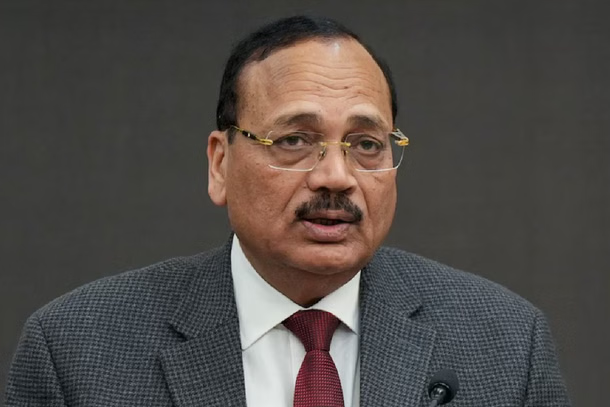
A sharp courtroom exchange involving Chief Justice of India Justice Surya Kant has triggered intense debate across legal, political, and social circles after the Supreme Court judge made strong remarks about individuals who, according to him, attack institutions and the judicial system under the guise of activism.
The observations came during a Supreme Court hearing related to the designation of a lawyer as a Senior Advocate. During the proceedings, a bench comprising Chief Justice Surya Kant and Justice Joymalya Bagchi strongly criticised the petitioner lawyer’s conduct, including alleged social media posts and his approach toward seeking the prestigious legal designation.
In one of the most widely discussed moments from the hearing, the Chief Justice remarked that some unemployed youngsters become “media”, “social media users”, RTI activists, and other forms of activists “like cockroaches” and then begin targeting the system.
The comments immediately generated widespread reactions because of both the language used and the broader concerns raised about professional conduct, institutional criticism, and the growing influence of social media activism within public discourse.
The courtroom observations also extended beyond the petitioner’s behaviour, touching upon issues related to legal ethics, professional recognition, and even concerns surrounding the authenticity of law degrees held by some practising lawyers.
Heated Courtroom Exchange Draws Attention
The hearing became tense when the bench questioned the petitioner lawyer’s conduct while pursuing the Senior Advocate designation. The judges appeared particularly displeased with what they described as an aggressive pursuit of the recognition and certain alleged comments made on social media platforms.
“The entire world may be eligible to become senior advocate, but at least you are not entitled,” the bench reportedly told the petitioner during the proceedings.
The Chief Justice further remarked that Senior Advocate designation is an honour conferred by the court based on merit, legal standing, and professional integrity — not something that should be pursued aggressively as a status symbol.
The bench questioned whether the designation had increasingly become ornamental rather than a recognition of legal excellence and courtroom contribution.
At one point during the hearing, the judges also asked the petitioner whether he had any other meaningful litigation work apart from pursuing the designation itself, reflecting the court’s dissatisfaction with the manner in which the request was being presented.
The exchange quickly gained public attention after details of the remarks emerged from the courtroom, especially because of the unusually sharp language used by the Chief Justice.
Remarks on Activism and Social Media Spark Debate
The most controversial aspect of the hearing came when Chief Justice Surya Kant commented on individuals who, according to him, attack institutions and systems through activism and media platforms.
“There are youngsters like cockroaches, who don’t get any employment or have any place in profession. Some of them become media, some of them become social media, RTI activists and other activists and they start attacking everyone,” the Chief Justice remarked during the proceedings.
He also referred to “parasites of society who attack the system” while questioning the petitioner’s conduct and alleged association with such criticism.
The comments have sparked immediate reactions online, with legal observers, political commentators, and social media users debating the implications of the remarks.
Supporters of the judiciary argued that the Chief Justice was expressing frustration over increasing attacks on institutions, irresponsible online commentary, and declining professional standards in certain sections of public discourse.
Critics, however, questioned the use of strong metaphors and argued that activism, media scrutiny, and RTI mechanisms remain essential components of democratic accountability.
The remarks quickly became one of the most discussed legal developments of the day across television debates, legal forums, and digital platforms.
Concerns Raised Over Professional Conduct
Apart from the controversial remarks, the hearing also highlighted the judiciary’s concerns regarding professional ethics and courtroom conduct among legal practitioners.
The bench strongly indicated that professional behaviour, dignity, and integrity remain central considerations in awarding Senior Advocate designation.
Legal experts note that Senior Advocate status in India carries significant prestige within the legal profession. It is granted by courts to advocates who demonstrate exceptional legal ability, professional standing, and contribution to the justice system.
The court’s observations during the hearing reflected a broader concern that the process should not be reduced to aggressive lobbying or public campaigning.
According to courtroom accounts, the Chief Justice warned that even if the Delhi High Court were to grant Senior Advocate designation to the petitioner, the Supreme Court could consider setting it aside because of concerns surrounding his conduct.
The comments underline the judiciary’s increasing emphasis on ethical standards and professional responsibility within the legal profession.
Supreme Court Raises Questions Over Lawyers’ Degrees
Another major issue that emerged during the hearing was the Supreme Court’s concern regarding the authenticity of educational qualifications held by certain lawyers.
During the proceedings, Chief Justice Surya Kant reportedly said the court was considering asking the Central Bureau of Investigation (CBI) to verify the degrees of several lawyers because serious doubts existed regarding their genuineness.
The bench also criticised the Bar Council of India, suggesting that regulatory action often becomes difficult because of institutional and electoral considerations.
The remarks have once again brought attention to long-standing concerns surrounding fake educational credentials and professional verification processes within various sectors.
Legal analysts say any large-scale verification drive involving practising advocates would represent a major development for India’s legal system and could potentially trigger wider scrutiny regarding educational authenticity across professional institutions.
The comments also reflect growing judicial concern over maintaining standards and credibility within the legal profession at a time when courts are already dealing with rising caseloads and increasing public scrutiny.
Petition Withdrawn After Court’s Observations
Following the sharp observations made by the bench, the petitioner lawyer apologised to the court and requested permission to withdraw the plea related to Senior Advocate designation.
The Supreme Court subsequently allowed the withdrawal request, effectively bringing the matter to a close.
However, the larger debate triggered by the hearing continues to dominate discussions within legal and political circles.
The incident has once again highlighted how courtroom remarks from senior judges can rapidly shape national conversations, particularly when they touch upon sensitive themes involving activism, media criticism, professional ethics, and institutional trust.
Debate Over Institutional Criticism Continues
The controversy surrounding the Chief Justice’s remarks also reflects a larger national debate about the balance between institutional criticism and institutional respect.
India’s judiciary, media, activists, and civil society organisations often interact within highly charged public discussions involving governance, accountability, constitutional rights, and transparency.
Supporters of strong institutional protections argue that excessive online criticism and politically motivated campaigns can weaken public confidence in democratic systems.
Others maintain that media scrutiny, RTI activism, and public criticism remain essential democratic tools necessary for accountability and transparency.
The courtroom comments have therefore become part of a wider conversation about the role of dissent, criticism, and professional conduct in contemporary India.
Legal experts believe the debate is likely to continue for several days because the remarks touched multiple sensitive issues simultaneously — from activism and social media culture to legal ethics and institutional credibility.
Regardless of differing opinions, the hearing has once again demonstrated how statements made inside India’s highest court can instantly become part of the national political and social conversation.