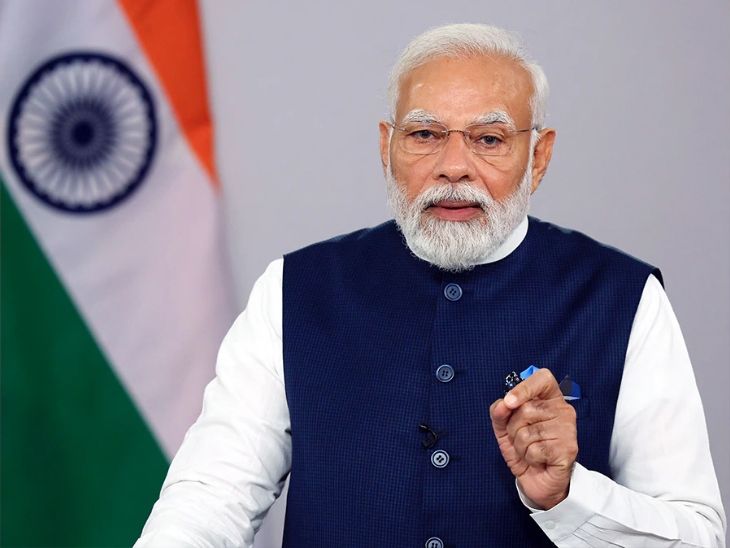
Prime Minister Narendra Modi on Friday firmly dismissed media reports suggesting that the central government was considering imposing a new tax, cess, or surcharge on foreign travel to deal with rising fiscal pressure and higher crude oil import costs.
The clarification came after reports and graphics circulating widely on social media claimed that discussions were taking place at the “highest levels” of government regarding a possible temporary levy on overseas travel. The reports alleged that the proposed measure was being explored as a way to manage the economic impact of geopolitical tensions and elevated global energy prices.
Responding directly to the speculation, Prime Minister Modi described the claims as “totally false” and stated that there was absolutely no truth in the reports.
“This is totally false. Not an iota of truth in this. There is no question of putting such restrictions on foreign travel,” the prime minister said in a post on X.
He further emphasised that the government remains committed to improving both “Ease of Doing Business” and “Ease of Living” for citizens, signalling that no such restrictive financial measure is under consideration.
The clarification quickly drew national attention because the rumours had sparked confusion and concern among travellers, business groups, tourism operators, and social media users throughout the day.
Viral Reports Triggered Public Confusion
The controversy began after claims surfaced online suggesting that the Centre was evaluating the possibility of introducing a temporary one-year cess or surcharge on international travel.
According to the widely circulated reports, the proposed levy was allegedly being discussed as part of broader fiscal management efforts linked to rising global uncertainties, crude oil price volatility, and geopolitical tensions affecting government expenditure.
The reports further claimed that the collected amount would go directly to the Centre and would not form part of the divisible tax pool shared with states.
As screenshots and posts rapidly spread across social media platforms, many users began questioning whether outbound travel could become significantly more expensive in the coming months.
Travel industry stakeholders also started monitoring developments closely because any additional tax burden on international travel could potentially affect tourism demand, airline bookings, and overseas business travel.
However, the speculation lost credibility almost immediately after the prime minister personally intervened to deny the claims publicly.
Political analysts noted that direct clarifications from the prime minister on economic rumours are relatively rare, making the response particularly significant.
Government Reaffirms Focus on Ease of Living
Prime Minister Modi’s statement also carried a broader economic message beyond simply rejecting the reports.
By reiterating the government’s commitment to “Ease of Doing Business” and “Ease of Living,” the prime minister attempted to reassure citizens and businesses that the administration remains focused on economic convenience, investment growth, and reducing unnecessary burdens on the public.
The phrase “Ease of Living” has frequently appeared in the government’s policy communication over recent years, particularly in discussions surrounding digital governance, infrastructure expansion, taxation reforms, and citizen-focused services.
Similarly, “Ease of Doing Business” has remained a central pillar of India’s economic policy strategy aimed at attracting investment, improving entrepreneurship, and simplifying regulatory systems.
Experts believe the government was keen to prevent unnecessary panic or confusion, especially at a time when India’s travel, aviation, and tourism sectors are witnessing strong post-pandemic growth.
International travel demand among Indian consumers has expanded significantly over the last few years, supported by rising incomes, easier visa access, and growing business connectivity with global markets.
Any perception of new taxation on foreign travel could therefore have generated negative reactions across multiple sectors linked to aviation, hospitality, and tourism.
No Official Finance Ministry Proposal Emerged
Before the prime minister’s statement, the Finance Ministry had not issued any official confirmation or clarification regarding the reports.
The absence of formal communication initially fuelled speculation online, with several social media accounts claiming that the government was studying temporary revenue-generating measures amid changing global economic conditions.
However, government sources later indicated that no such proposal had been officially discussed or approved.
Economic experts pointed out that while governments globally do examine various fiscal options during periods of economic uncertainty, introducing a special levy on foreign travel would likely have triggered widespread debate because of its potential impact on consumers and businesses.
India’s aviation and travel industries have only recently recovered strongly after years of disruption caused by the pandemic. Airlines, travel operators, and tourism-related businesses have experienced steady growth due to rising passenger traffic and increasing international connectivity.
Analysts believe policymakers would remain cautious about introducing measures that could negatively affect travel demand or consumer sentiment.
Social Media Rumours Continue to Influence Public Debate
The incident once again highlighted how quickly unverified economic reports can spread through social media and create nationwide discussions within hours.
Experts say financial and taxation-related rumours often generate strong public reactions because they directly affect consumer spending, business planning, and household budgets.
In recent years, governments and institutions worldwide have faced increasing challenges in managing misinformation and speculative reporting on digital platforms.
The speed at which such claims circulate often forces authorities to issue rapid clarifications in order to prevent confusion or panic.
Prime Minister Modi’s direct intervention helped shut down speculation quickly, but analysts say the episode reflects the growing influence of social media-driven narratives in shaping public discourse around economic policy.
Several users online welcomed the clarification, while others criticised the circulation of unverified reports without official confirmation.
Political observers noted that the government’s rapid response was likely intended to maintain public confidence and avoid unnecessary economic speculation.
Travel and Aviation Industry Reacts Positively
The travel and aviation sectors responded positively after the prime minister’s statement dismissed the rumours.
Industry stakeholders believe any additional surcharge on foreign travel could have increased costs for passengers already dealing with fluctuating airfare prices linked to fuel costs and seasonal demand.
Travel companies, airlines, and hospitality operators have been benefiting from strong demand for international tourism, student travel, and overseas business movement.
The absence of any new travel tax proposal therefore came as a relief for businesses connected to outbound tourism and aviation services.
Market experts also noted that consumer confidence plays a major role in travel spending decisions. Sudden reports about additional taxes or surcharges can sometimes influence booking behaviour even before official confirmation emerges.
The quick clarification helped stabilise sentiment and prevent unnecessary speculation within the sector.
Economic Stability Remains a Key Focus
The broader discussion surrounding the rumours also reflected growing public attention toward India’s economic management amid global uncertainty.
Rising crude oil prices, geopolitical tensions, and fluctuating international markets continue to influence economic discussions worldwide. Governments across multiple countries are closely monitoring fiscal pressures linked to energy costs, inflation, and global trade disruptions.
India, as one of the world’s largest energy importers, remains particularly sensitive to changes in crude oil prices because they affect inflation, transportation costs, and fiscal calculations.
However, analysts say the government currently appears focused on balancing economic growth, consumer spending, and investment confidence rather than introducing restrictive taxation measures.
Prime Minister Modi’s statement was therefore interpreted not only as a denial of the travel tax rumours but also as an attempt to reinforce confidence in the government’s broader economic direction.
The strong response effectively ended speculation surrounding the issue and reassured travellers that no such proposal is under consideration at this stage.