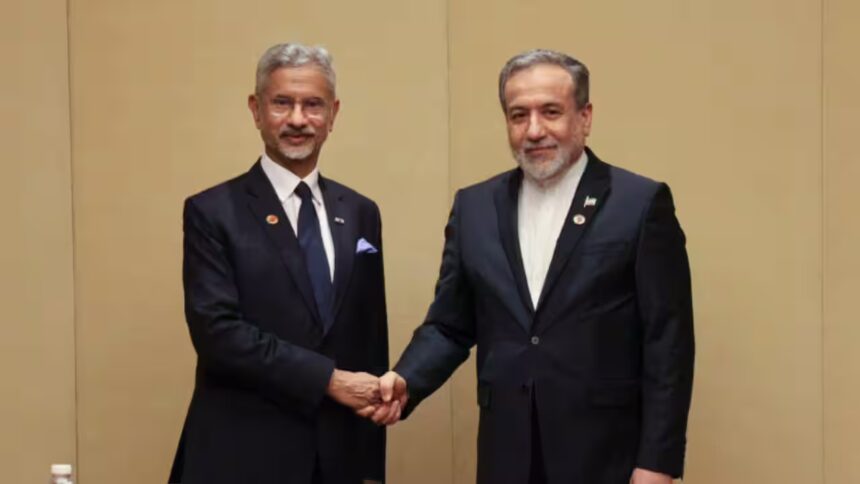
Iranian Foreign Minister Abbas Araghchi on Friday said India can play a “greater role” in ensuring peace and stability in West Asia as geopolitical tensions continue to dominate global diplomatic discussions.
Addressing a press conference in New Delhi during his official visit to India, Araghchi stressed that there is no military solution to issues involving Iran and called for dialogue, diplomacy, and regional cooperation to address the growing instability in the region.
The Iranian minister’s remarks come at a time when West Asia remains under intense global focus because of rising security concerns, maritime tensions, energy supply uncertainties, and ongoing diplomatic negotiations involving major world powers.
Araghchi’s comments highlighting India’s potential diplomatic influence are being viewed as strategically significant, especially given India’s growing international profile and its balanced relationships across competing geopolitical blocs.
Iran Signals Support for Diplomatic Solutions
During the media interaction, Abbas Araghchi reiterated Iran’s position that dialogue remains the only practical path toward long-term stability in the region.
“There is no military solution to anything related to Iran,” the minister said while discussing regional tensions and international concerns surrounding West Asia.
The statement is likely aimed at reinforcing Iran’s preference for diplomatic engagement amid growing global anxiety over military escalation and disruptions to energy supply routes.
The Iranian foreign minister also stated that Iran is prepared to help ensure the safe passage of vessels through the strategically important Strait of Hormuz, one of the world’s most critical maritime trade routes for oil and energy transportation.
However, he acknowledged that the current situation in the Strait of Hormuz remains “very complicated,” reflecting the fragile security environment in the region.
The Strait of Hormuz is considered one of the most strategically important waterways globally because a significant portion of the world’s crude oil shipments passes through the narrow maritime corridor connecting the Persian Gulf to international waters.
Any disruption in the region has the potential to impact global energy markets, shipping costs, and international trade flows.
India’s Growing Global Influence Highlighted
Araghchi’s remarks about India’s possible role in promoting peace come as New Delhi continues expanding its diplomatic and strategic engagement across West Asia.
India has traditionally maintained strong ties with multiple countries in the region, including Iran, Saudi Arabia, Israel, and the United Arab Emirates, while simultaneously strengthening relations with Western powers.
This balanced diplomatic positioning has increasingly allowed India to emerge as an important voice in international discussions related to regional stability, energy security, and economic cooperation.
Analysts believe Iran’s outreach toward India reflects recognition of New Delhi’s rising geopolitical influence and its ability to maintain communication channels across rival regional blocs.
India is also one of the world’s largest energy consumers, making stability in West Asia critically important for its economic interests.
Any major disruption in oil supply routes or regional trade networks directly affects fuel prices, inflation management, and broader economic planning for countries heavily dependent on energy imports.
Experts note that India’s expanding diplomatic footprint, combined with its economic importance, gives it growing leverage in regional peacebuilding conversations.
Strait of Hormuz Remains Global Concern
One of the major points discussed by the Iranian foreign minister was the evolving situation in the Strait of Hormuz.
The waterway remains vital for global oil transportation, with millions of barrels of crude oil passing through it every day. Any geopolitical instability in the region can immediately trigger concerns in international financial markets and energy sectors.
Araghchi stated that Iran is ready to assist in ensuring safe maritime movement but acknowledged that the overall situation remains highly sensitive and complex.
Global markets closely monitor developments around the Strait of Hormuz because even temporary disruptions can influence international crude oil prices and create wider economic uncertainty.
Rising tensions in the region have already led to increased concerns over shipping security, naval deployments, and maritime trade risks.
Energy-importing nations, including India, remain particularly attentive to developments because fluctuations in oil prices directly impact domestic fuel costs and inflation.
India-Iran Relations Continue Strategic Importance
The Iranian foreign minister’s visit also highlights the continuing strategic relevance of India-Iran relations despite shifting global geopolitical dynamics.
India and Iran share historical civilisational links and longstanding cooperation in areas including energy, trade, connectivity, and regional security.
Projects such as the Chabahar Port have played an important role in strengthening strategic connectivity between India, Iran, and Central Asia.
Although international sanctions and geopolitical pressures have complicated aspects of bilateral cooperation in recent years, diplomatic engagement between the two countries has continued.
Analysts believe Iran values India’s independent foreign policy approach and its ability to engage constructively with multiple global powers simultaneously.
For India, maintaining stable relations with Iran remains important from both strategic and energy-security perspectives.
West Asia Conflict Continues to Shape Global Diplomacy
Araghchi’s comments come amid broader international concern over instability in West Asia and its potential global consequences.
The region continues to witness complex diplomatic negotiations involving major powers, regional alliances, energy security concerns, and military tensions.
Global attention has also intensified because of fears that prolonged instability could affect energy markets, international trade routes, and broader geopolitical balances.
Several countries have been urging diplomatic solutions to avoid escalation and protect maritime trade flows through critical waterways.
Iran’s latest outreach toward India may therefore be viewed as part of wider diplomatic efforts aimed at expanding international engagement and reducing regional tensions through dialogue.
Political analysts believe India’s neutral and balanced diplomatic posture could allow it to play a constructive role in future peace and stability discussions involving West Asia.
India’s Position Gains International Recognition
The Iranian minister’s remarks also underline the growing recognition of India’s role in international diplomacy under changing global power dynamics.
Over the past decade, India has significantly expanded its presence in multilateral forums, strategic partnerships, and global economic discussions.
New Delhi has increasingly positioned itself as a country capable of maintaining dialogue with competing powers while protecting its own strategic interests.
Experts say this diplomatic flexibility has strengthened India’s credibility as a potential bridge-builder in sensitive geopolitical situations.
As tensions continue across several global regions, countries seeking broader diplomatic support are increasingly engaging with India because of its economic strength, strategic relevance, and expanding global influence.
Araghchi’s statement that India can play a “greater role” in West Asia peace efforts therefore reflects both geopolitical realities and the changing balance of international diplomacy.