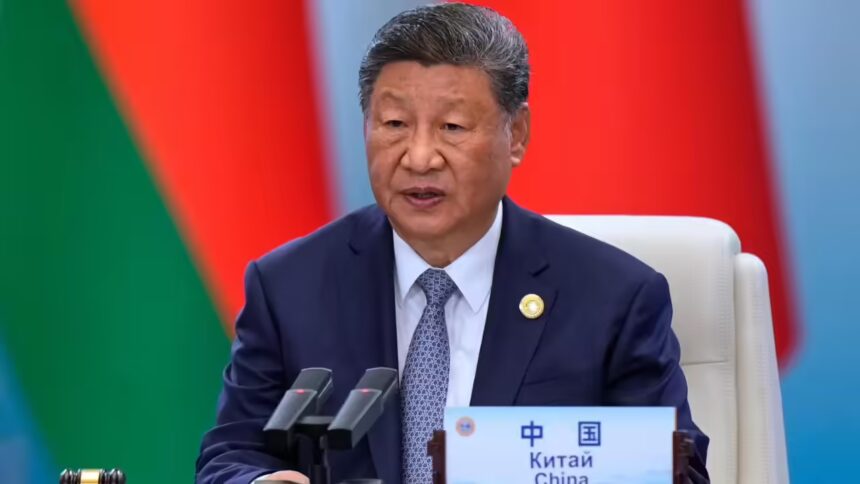
At the 25th Shanghai Cooperation Organisation (SCO) Summit held in Tianjin, China, Chinese President Xi Jinping delivered a notable address calling for global unity, fairness, and collective opposition to what he described as bullying behavior and Cold War mentality. Speaking before an assembly of Eurasian leaders, including Russian President Vladimir Putin and Indian Prime Minister Narendra Modi, Xi emphasized the importance of cooperation, mutual respect, and the preservation of international norms amid the turbulent geopolitical landscape of the 21st century. His remarks reflected not only China’s vision for multilateral collaboration but also came against the backdrop of ongoing tensions with the United States under President Donald Trump, highlighting Beijing’s strategic push for a rules-based global order where emerging powers like China, India, and Russia assert greater influence. Xi’s speech at the plenary session reinforced the Shanghai spirit, emphasizing fairness, justice, and regional stability as essential components in responding to global challenges and maintaining the SCO’s relevance in contemporary geopolitics.
Commitment to Fairness and Opposition to Bullying
In his address, Xi Jinping articulated a strong critique of coercive international behavior, urging leaders to actively resist attempts to divide nations into competing camps or impose dominance through economic, political, or military means. He stressed that global turbulence and transformations in political, economic, and security spheres require a cooperative approach where fairness and justice guide decision-making. Xi specifically called upon all SCO member states to uphold the principles of the organization, work collectively to counteract any Cold War mindset, and reject behaviors that disrupt stability or compromise the sovereignty of nations.
The timing of Xi Jinping’s remarks was particularly significant given the ongoing tensions with the United States over trade disputes, tariffs, and broader geopolitical competition. Under President Donald Trump, the U.S. imposed substantial tariffs on Chinese goods, with levies exceeding 100 percent in certain sectors, triggering a major trade confrontation between the two nations. Although a partial agreement was later reached, lingering strains have persisted, highlighting the fragility of global trade relations and the challenges posed by unilateral economic measures. Xi’s address served as both a reaffirmation of China’s commitment to multilateralism and an implicit critique of U.S. policies, framing coercive measures such as tariffs as examples of bullying behavior that undermine international trust and cooperation.
Xi Jinping highlighted that such unilateral approaches not only exacerbate tensions but also create ripple effects across the global economy, affecting trade flows, energy markets, and geopolitical alliances. By advocating for dialogue, negotiation, and adherence to international norms, Xi reinforced China’s vision of a multipolar world order where the sovereignty and interests of all nations are respected. He argued that constructive engagement, rather than coercion, should define contemporary diplomacy, positioning China as a mediator and stabilizing force in regional and global affairs. The SCO, he emphasized, provides a platform where nations can collectively address security challenges, economic development, and political disputes without succumbing to divisive or aggressive tactics.
India, Russia, and China Reaffirm Cooperation Amid U.S. Tensions
Xi Jinping’s remarks also underscored the renewed emphasis on cooperation between India, Russia, and China in the face of external pressures, particularly from the United States. Following the imposition of 50 percent tariffs on Indian goods due to New Delhi’s purchase of Russian oil during the Ukraine conflict, both Beijing and Moscow openly criticized Washington’s approach. China described these additional levies as “bullying,” highlighting the perceived inequities in the application of economic pressure and the importance of protecting sovereignty and trade autonomy. The SCO summit provided an opportunity for China, India, and Russia to demonstrate alignment on these issues and collectively promote a vision of diplomacy based on equality and respect rather than coercion.
India-China relations also received attention during the summit, with Xi Jinping describing the collaboration between the “elephant” and the “dragon” as vital for regional stability. He stressed that both nations, as major Asian powers, share responsibility in ensuring Eurasian security, facilitating trade, and countering attempts to divide or destabilize the region. The renewed emphasis on partnership between India and China signals a pragmatic approach to balancing regional power dynamics while maintaining autonomy from Western influence, particularly amid U.S. actions that have targeted both countries economically and politically.
The SCO summit, attended by ten member states and sixteen observers or dialogue partners, remains a key platform for such multilateral engagement. It allows member nations to collectively address challenges ranging from terrorism to trade security, while also providing space to articulate positions on global governance. Xi Jinping’s speech reinforced the idea that constructive multilateral frameworks are essential for addressing both conventional and emerging threats, emphasizing dialogue, collaboration, and adherence to principles as central to the SCO’s mission.
Xi’s focus on fairness, justice, and opposition to bullying extends beyond trade disputes and includes broader geopolitical considerations. His remarks implicitly referenced the ongoing conflict in Ukraine and the various international responses to it, highlighting the importance of resisting polarizing narratives and promoting negotiation rather than confrontation. By framing global challenges in terms of shared responsibility and cooperative problem-solving, Xi positioned the SCO as a credible forum for promoting stability, mitigating conflict, and fostering economic development across Eurasia.
The Chinese president also referenced recent diplomatic visits and engagements, such as Foreign Minister Wang Yi’s trip to India, which aimed at expanding cooperation amid what Beijing described as “overwhelming bullying” and challenges to free trade. These diplomatic efforts reflect China’s strategic intent to strengthen ties with regional partners and counteract external pressures, demonstrating that bilateral and multilateral engagements are mutually reinforcing components of its foreign policy.
Xi Jinping’s address further emphasized the Shanghai spirit, which underpins the SCO’s ethos. This spirit prioritizes mutual respect, equality, and the non-imposition of dominance, creating a framework for collaboration among diverse member states. By invoking these principles, Xi highlighted the SCO’s potential to provide a counterbalance to unilateralism and coercion, offering a platform for negotiation, conflict resolution, and regional development. His remarks implicitly called on all members to resist external pressures that threaten collective security and to uphold a cooperative vision that benefits the broader international community.
Through his speech, Xi also signaled China’s intent to maintain strong engagement with both India and Russia, ensuring that shared interests in security, trade, and regional stability are pursued collectively. The emphasis on partnership among these Eurasian powers reflects a strategic alignment aimed at strengthening regional influence, mitigating external pressures, and promoting a stable multipolar world order. By presenting the SCO as a forum for dialogue and principled cooperation, Xi reinforced China’s commitment to multilateral diplomacy and its leadership role in shaping the trajectory of regional and global governance.
The speech at Tianjin encapsulated China’s broader diplomatic posture: advocating for dialogue over coercion, promoting fairness in international relations, and asserting the centrality of sovereign equality in shaping global policies. Xi’s critique of bullying behavior was both a response to specific U.S. actions and a broader statement on the type of international order China seeks to cultivate, emphasizing inclusivity, shared responsibility, and collaborative problem-solving.
Xi Jinping’s remarks also highlighted the SCO’s ongoing relevance in global affairs. By addressing economic, security, and geopolitical challenges in a multilateral forum, he showcased the organization’s capacity to facilitate constructive engagement, mediate disputes, and provide a counter-narrative to unilateralist policies. His speech reinforced the concept that collective action, grounded in principles of fairness and justice, is more effective than coercion in promoting long-term stability and sustainable development.
Moreover, Xi’s call to resist bullying and uphold multilateral principles resonated with other member states, including India and Russia, signaling a shared commitment to shaping international norms in a manner that prioritizes equity and mutual respect. His emphasis on constructive engagement and principled diplomacy underscored the importance of alliances based on trust, collaboration, and shared strategic interests, offering a framework for balancing competing pressures while safeguarding national sovereignty.
In essence, Xi Jinping’s address at the SCO Summit reflected China’s strategic vision for Eurasia and the wider world: a commitment to cooperation, principled diplomacy, and opposition to coercion, with an emphasis on fair and just governance. By reinforcing the Shanghai spirit and promoting adherence to multilateral principles, Xi positioned the SCO as a pivotal platform for addressing the complex challenges of the modern era, asserting China’s leadership role in advancing a collaborative, multipolar, and rules-based international order.
The SCO Summit 2025 thus served not only as a venue for formal dialogue on security, trade, and regional cooperation but also as a stage for articulating China’s diplomatic narrative, emphasizing fairness, opposition to bullying, and the strengthening of multilateralism in global affairs. Xi Jinping’s address underscored the need for principled engagement, regional partnership, and collective responsibility, reflecting a vision of diplomacy that balances strategic interests with the imperatives of global stability and equitable international relations.