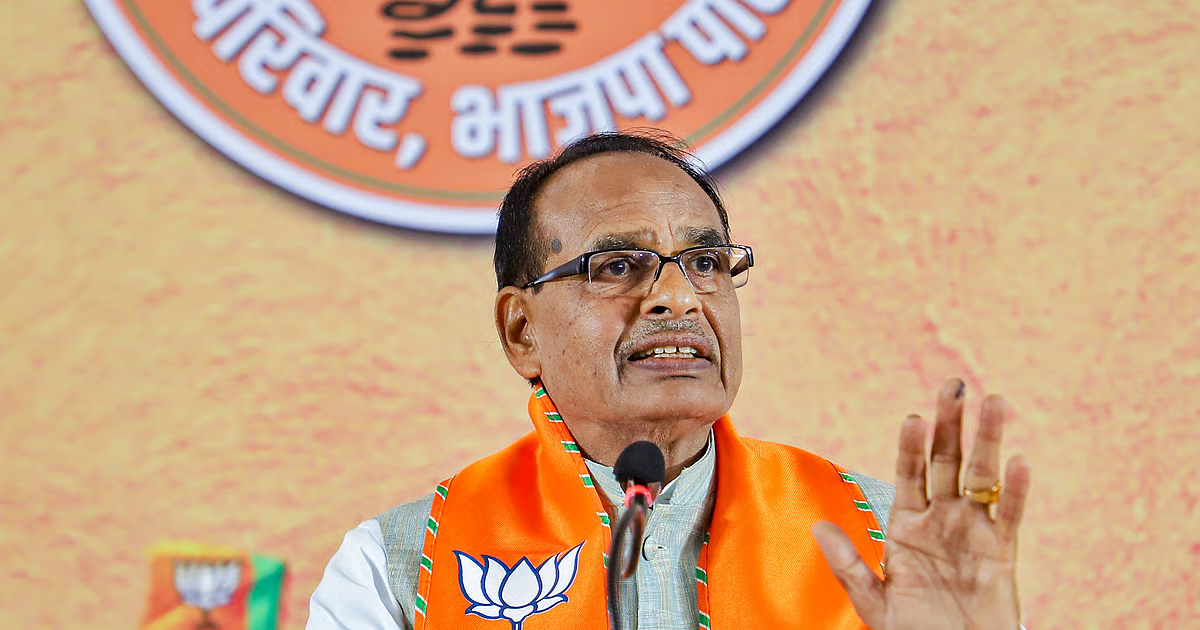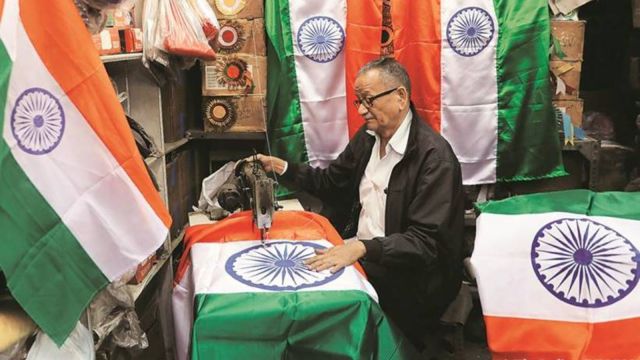
Chhattisgarh Waqf Board chairman Salim Raj has called upon mosques, madrasas, and dargahs across the state to hoist the Indian Tricolour on Independence Day as a gesture of patriotism, unity, and brotherhood. Issuing a circular ahead of the national celebration, Raj described the initiative as a chance for Indian Muslims to showcase their unwavering love for the country and its flag, countering any lingering doubts about their patriotism. While the appeal has received positive responses from a majority of institutions, some have expressed reservations, sparking a debate that touches on issues of national identity, religious expression, and communal harmony.
Call for Unity and Patriotism Ahead of Independence Day
On Monday, the Chhattisgarh Waqf Board circulated a directive to all mosques, madrasas, and dargahs in the state, urging them to raise the national flag outside their main gates on August 15. The circular read: “On the auspicious occasion of this national festival, the national flag should be hoisted at the main gate of all mosques/madrasas/dargahs situated in Chhattisgarh state. Understand the importance of Independence Day and maintain the dignity of this occasion by showing patriotism, mutual unity and brotherhood.”
Raj, who is also a BJP leader, clarified that the initiative was entirely his own idea and not a party directive. He linked it to the ongoing Har Ghar Tiranga campaign, stating that there should be no objection to hoisting the Indian flag outside religious places. According to him, the patriotism of Indian Muslims has often been unfairly questioned because of the actions of Pakistani Muslims, and this initiative is an opportunity to dispel such doubts.
“This is an occasion to prove that Indian Muslims love the Tricolour and the country. We want to make it clear that our identity as Indians is above all else. The flag can be hoisted outside the main gate, which is a respectful and visible gesture,” Raj said.
Over the past week, Raj has been in conversation with Mutwallis (caretakers of religious places) to discuss the matter. According to his estimates, more than 70 percent of mosques, madrasas, and dargahs in the state have responded positively and agreed to participate. “Several hundreds of mosques and dargahs said they would hoist the flag, while some have objected,” he noted.
Raj drew historical parallels to India’s first war of independence in 1857, pointing out that freedom was won when people from all communities fought side by side. “The flag is about freedom and not religion,” he emphasised. He further described flag hoisting as a symbol of respect and pride, saying that those who do not love the country and the Tricolour “have no right to live on the land of mother Bharat.”
Mixed Reactions and the Debate on National Symbols
While Raj’s call has been widely welcomed, it has also sparked objections from some quarters within the Muslim community. According to sources familiar with the discussions, concerns range from the perception of politicisation of religious spaces to differing interpretations of religious customs regarding the display of symbols. Some feel that religious institutions should remain focused on spiritual and educational activities, avoiding actions that could be perceived as aligning with specific political campaigns.
However, Raj maintains that the initiative is not about politics but about strengthening the bond between citizens and the nation. “The Har Ghar Tiranga movement is about every household, every institution, and every place of gathering showing its love for the nation. If we can proudly display the flag at our homes, why not at religious places that serve as central points for the community?” he argued.
The Waqf Board chairman’s remarks have resonated with many in the Muslim community who view the Tricolour as a unifying emblem. They believe that such gestures, particularly on a day like Independence Day, can help bridge divides and reaffirm the shared identity of all Indians, regardless of religion. Supporters also point out that religious places have historically been involved in social and national causes, from hosting relief efforts to mobilising community participation in democratic events.