New Zealand’s political landscape was thrown into sharp focus this week as the debate over recognizing a Palestinian state intensified, culminating in a parliamentarian being ejected and Prime Minister Christopher Luxon delivering strong criticism of Israeli Prime Minister Benjamin Netanyahu. The discussions come as more of New Zealand’s international allies move toward recognizing Palestinian statehood, highlighting the growing global pressure on countries to take a position on the Israel-Palestine conflict.
Prime Minister Christopher Luxon Condemns Israeli Actions in Gaza
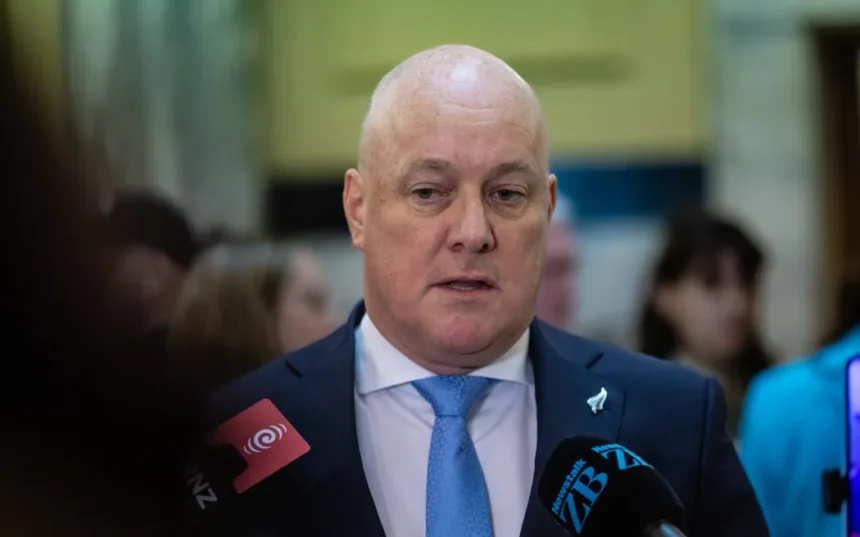
Speaking to local media on Wednesday, New Zealand Prime Minister Christopher Luxon described the recent events in Gaza as “utterly, utterly appalling” and condemned Israeli actions as unacceptable. He specifically called out Benjamin Netanyahu, stating, “I think Benjamin Netanyahu has gone way too far, I think he has lost the plot, and I think what we are seeing overnight, with the attack on Gaza City, is utterly, utterly unacceptable.” Christopher Luxon emphasized that the Israeli leader was ignoring the international community and its calls for restraint, marking one of the strongest verbal condemnations of Benjamin Netanyahu from a foreign leader in recent weeks.
Christopher Luxon’s comments reflect growing international concern over Israel’s military actions and the humanitarian consequences in Gaza. While New Zealand has yet to formally recognize a Palestinian state, the prime minister’s remarks signal disapproval of Israel’s approach, suggesting a careful reevaluation of diplomatic relations and policies may follow. Foreign Minister Winston Peters added that over the next month, the government would gather more information and consult with international partners before making a decision, aiming for a measured and informed position rather than rushing to judgment.
Parliamentary Debate and the Ejection of Green Party MP Chlöe Swarbrick
The parliamentary debate turned intense on Tuesday, drawing attention from both domestic and international observers. Chlöe Swarbrick, co-leader of New Zealand’s Green Party, was ordered to leave the chamber after accusing government MPs of lacking a “spine” during discussions on recognizing Palestine. The debate was prompted by the government’s statement that it was still evaluating its stance on Palestinian statehood, even as countries like Australia, Canada, the UK, and France announced plans to recognize a Palestinian state at an upcoming UN conference in September.
Swarbrick criticized the government for being a “laggard” and an “outlier,” arguing that New Zealand was falling behind its international peers. She called on government members to support a bill proposed by her party in March, which seeks to “sanction Israel for its war crimes” and is backed by all opposition parties. Swarbrick’s statement that if “six of 68 government MPs had a spine, we could stand on the right side of history” prompted Speaker Gerry Brownlee to declare the comment “completely unacceptable” and demand an apology. When Swarbrick refused, she was temporarily removed from parliament.
This incident highlights the growing pressure on New Zealand’s government to take a definitive stance on Palestinian recognition, as opposition parties, including Labour and Te Pati Māori, actively support the move. Labour parliamentarian Peeni Henare noted that New Zealand has historically upheld strong principles and values, and that the current hesitancy risks leaving the country behind on an important international issue.
International and Domestic Implications
Benjamin Netanyahu has expressed strong disapproval of the growing international momentum to recognize Palestinian statehood. In statements earlier this week, he criticized European countries and Australia for “falling into that rabbit hole,” calling the movement “disappointing” and “shameful.” Benjamin Netanyahu defended Israel’s actions in Gaza, claiming that force was being applied judiciously.
Domestically, the debate has become a flashpoint in New Zealand politics, revealing tensions within the governing coalition and between the government and opposition. While Christopher Luxon condemns the humanitarian impact of Israel’s operations, his government is still cautious about officially recognizing Palestine, citing the need for thorough assessment and consultation with international partners. The decision, expected in September, will likely shape New Zealand’s diplomatic posture and influence public perception of its commitment to human rights and international law.
The ejection of Swarbrick and the broader parliamentary discussions have drawn public attention to the complexities of foreign policy decision-making, balancing moral stances with geopolitical considerations. The government’s careful approach contrasts with the rapid recognition moves by allies, intensifying debates on whether New Zealand should accelerate its own policy actions in support of Palestinian statehood.
By highlighting both humanitarian concerns and diplomatic strategy, the debate underscores New Zealand’s challenge in navigating international expectations while maintaining national political stability. The clash between moral imperatives and measured policy-making continues to dominate the political discourse as September approaches, when the government is expected to announce its position on Palestinian recognition.