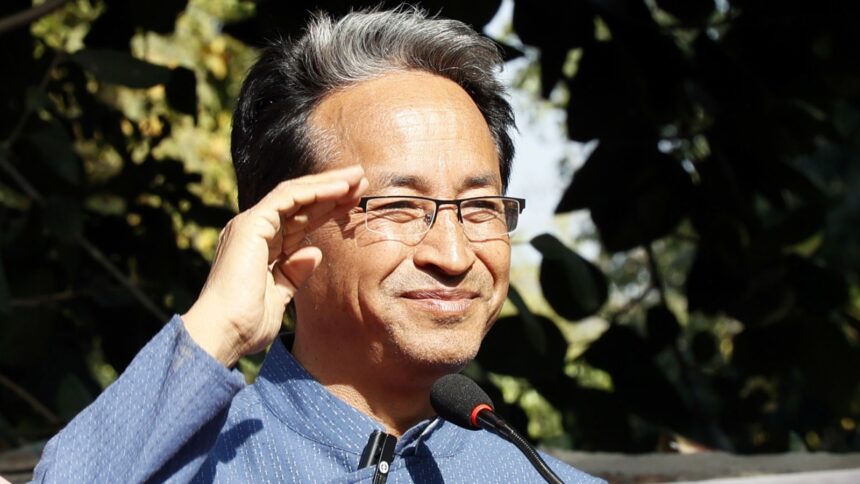
Activist Sonam Wangchuk was released from detention after the central government revoked the order under the National Security Act (NSA), nearly six months after he was taken into custody following protests in Ladakh. The decision, announced by the Union Ministry of Home Affairs, resulted in Wangchuk’s release from Jodhpur Central Jail on Saturday afternoon. Authorities said the revocation of the detention order was taken after careful consideration and with the objective of creating an environment of peace, stability and constructive dialogue in the region.
The release comes just days before an important hearing in the Supreme Court scheduled for March 17, where the legality of Wangchuk’s detention was being challenged. His wife, Gitanjali J Angmo, had filed a habeas corpus petition before the court, seeking his release and questioning the validity of the detention order under the National Security Act.
According to officials, Wangchuk was released from the jail at around 1.30 pm following the government’s order revoking the detention. The decision effectively ended nearly half a year of detention that began in September 2025, when the activist was taken into custody after protests in Ladakh turned violent.
In its statement, the Ministry of Home Affairs said the government remains committed to maintaining peace and encouraging dialogue among stakeholders in Ladakh. The statement emphasised that the revocation of the detention order was part of the broader effort to create conditions conducive to discussions about the region’s concerns and aspirations.
Background of the Detention and Protests in Ladakh
Sonam Wangchuk was detained on September 26, 2025 under the provisions of the National Security Act, two days after protests in Leh escalated into violence. The demonstrations were linked to demands from sections of Ladakh’s population seeking statehood for the region and inclusion under the Sixth Schedule of the Constitution, which provides protections for tribal areas.
During the protests on September 24, clashes between protesters and security forces resulted in police firing that led to four deaths. Authorities alleged that Wangchuk had played a role in instigating the protests, which prompted the administration to take preventive action under the National Security Act.
The NSA is a law that allows the government to detain individuals without formal charges for a specified period if they are considered a threat to public order or national security. The legislation is often used in situations where authorities believe preventive detention is necessary to maintain stability or prevent potential disturbances.
Following his detention, Wangchuk was transferred to Jodhpur Central Jail. Officials stated that the detention order was issued by the District Magistrate of Leh after assessing the law and order situation in the region.
Earlier, the Ladakh administration defended the use of the National Security Act in the Supreme Court. In an affidavit submitted to the court, the administration said that the detention order had been issued after careful evaluation and “subjective satisfaction” that Wangchuk’s activities could affect public order and the security of the state.
The administration also maintained that all constitutional safeguards required under the law were followed during the process of detention. According to the affidavit, the detention was necessary in view of the serious law and order situation that had developed in Leh following the protests.
The Ministry of Home Affairs noted in its statement that Wangchuk had already undergone nearly half of the permitted detention period under the NSA before the decision was taken to revoke the order.
Government’s Position and Ongoing Dialogue in Ladakh
While announcing the revocation of Wangchuk’s detention, the central government reiterated its commitment to addressing the concerns of the people of Ladakh through dialogue and consultation with various stakeholders.
According to the Home Ministry, the government has been engaging with community leaders, civil society representatives and other stakeholders in the region to understand their concerns and explore possible solutions. Officials said that constructive engagement and peaceful discussions remain the preferred path for resolving issues related to governance and development in the region.
The ministry also noted that ongoing protests and bandhs in Ladakh had affected several sections of society, including students, job seekers, businesses, tourism operators and the overall local economy. The statement suggested that creating a stable and peaceful environment is necessary to facilitate meaningful dialogue and economic recovery.
The government reiterated that it remains committed to providing safeguards and development opportunities for the region. It expressed hope that the issues raised by residents of Ladakh would be addressed through established institutional mechanisms, including the High-Powered Committee formed to examine the region’s concerns.
In the past, Ladakh police officials had raised concerns about Wangchuk’s activities. Shortly after the detention in September 2025, the then Director General of Police of Ladakh stated that Wangchuk had allegedly encouraged movements similar to political uprisings in other countries. Authorities also referred to investigations related to possible foreign funding and alleged violations of the Foreign Contribution Regulation Act.
The police had also mentioned links involving a Pakistani individual of interest who was allegedly in contact with Wangchuk, though investigations into those claims were still underway at the time.
Since the protests and subsequent detention, several administrative changes have taken place in the Union Territory. Leadership positions within the Ladakh administration were reshuffled, including the appointment of a new Director General of Police and a new Chief Secretary.
More recently, Vinai Kumar Saxena was appointed as the Lieutenant Governor of Ladakh. Reacting to the government’s decision to revoke Wangchuk’s detention, Saxena described the move as a positive step toward building an atmosphere of trust and stability in the region.
He emphasised that issues concerning Ladakh should be resolved through dialogue and cooperation among stakeholders rather than through agitation or confrontation. According to him, constructive discussions between government authorities and community representatives remain essential for addressing the region’s aspirations and ensuring long-term peace and development.
The decision to release Sonam Wangchuk marks a significant development in the ongoing discussions surrounding Ladakh’s political and administrative future. The government’s emphasis on dialogue and stability indicates that further engagement with stakeholders is expected as authorities attempt to address the concerns raised by various groups in the region.