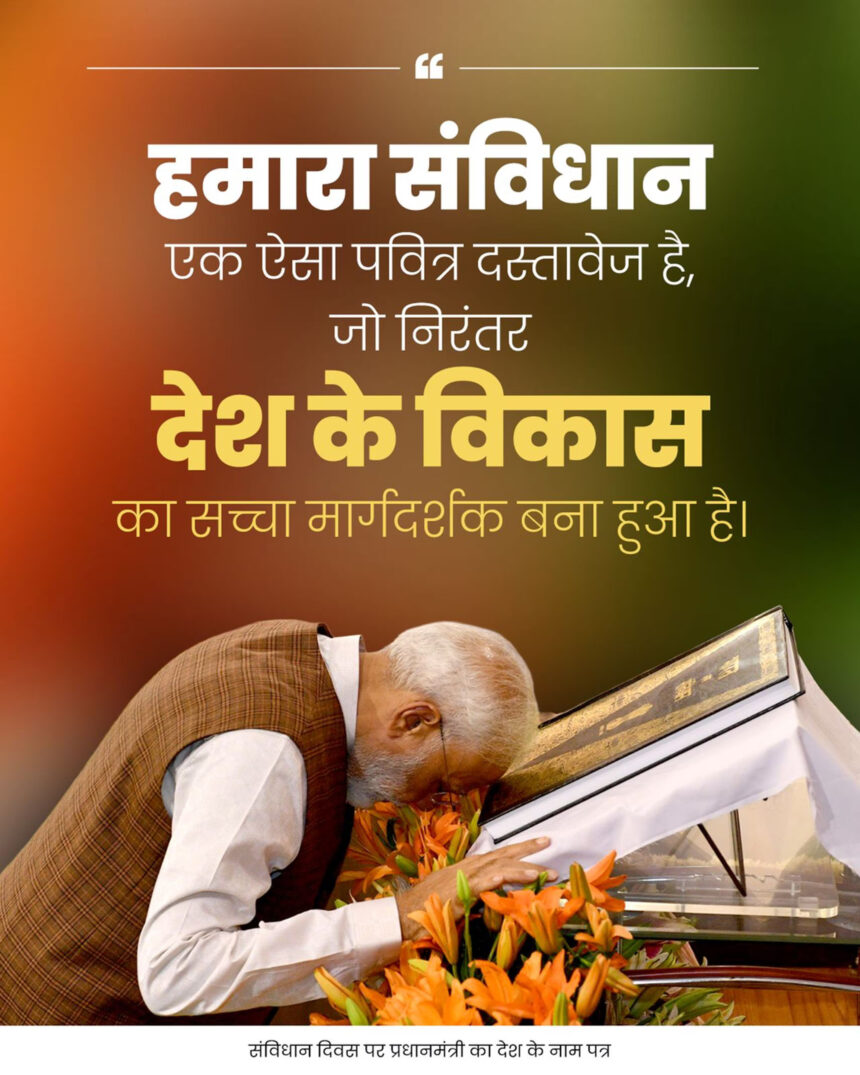
Every 26th November, India comes together to celebrate Constitution Day, a day that reminds every citizen of the sacred framework that has guided our nation’s progress since 1949. The Constitution of India, adopted by the Constituent Assembly on this historic day, is not merely a legal document; it is a testament to the vision, courage, and foresight of countless individuals who shaped the nation’s democratic identity. From empowering citizens with rights to delineating responsibilities, it has provided the foundation for a modern, inclusive, and progressive India. Over the decades, the Constitution has inspired millions to dream, achieve, and contribute to the country’s development, including leaders who rose from humble beginnings to serve the nation with dedication.
Honouring the Architects of the Constitution and Their Enduring Vision
Constitution Day is a moment to recall the dedication of the architects of India’s Constitution, whose foresight and commitment continue to guide the nation. Dr. Rajendra Prasad, the first President of India, presided over the Constituent Assembly with integrity and wisdom, ensuring that the debates and deliberations produced a document that would endure for generations. The monumental efforts of Dr. B.R. Ambedkar, chairman of the Drafting Committee, laid the foundation for a Constitution that was not only democratic in spirit but also deeply rooted in social justice. His vision ensured that India would emerge as a nation committed to equality, freedom, and opportunity for all citizens, regardless of caste, creed, or economic background.
It is also important to remember the contributions of numerous women members of the Constituent Assembly, whose insights and interventions enriched the document, ensuring that gender equality and social inclusivity became intrinsic to the nation’s framework. These individuals collectively envisioned a Constitution that would serve as the guiding light for India’s democratic journey, offering both rights and responsibilities to its citizens. The Constitution, in its essence, is more than a legal text; it represents the dreams of a nation determined to create a society where justice, liberty, and equality are not mere ideals but tangible realities.
Reflecting on personal experiences, leaders like Prime Minister Narendra Modi have often highlighted how the Constitution has empowered individuals from all walks of life. Coming from a humble and economically disadvantaged family, he recounts how the Constitution allowed him to rise and serve the nation, illustrating the transformative power embedded in India’s democratic framework. Every citizen, in some measure, can relate to this narrative, as the Constitution provides the tools to participate fully in nation-building, to aspire, and to contribute meaningfully.
Celebrating Milestones and the Legacy of National Heroes
Constitution Day holds even greater significance in 2025, as the nation simultaneously commemorates several historic milestones. This year marks the 150th birth anniversary of two extraordinary personalities, Sardar Vallabhbhai Patel and Bhagwan Birsa Munda, both of whom left an indelible mark on India’s journey. Sardar Patel’s visionary leadership ensured India’s political unification, and his determination guided critical decisions, including the integration of Jammu & Kashmir and the abrogation of Article 370, thereby securing full constitutional rights for all citizens in the region. Bhagwan Birsa Munda’s life remains an enduring symbol of courage, resilience, and the fight for justice for tribal communities, reinforcing India’s commitment to empowerment and equality for all marginalized groups.
In addition, this year celebrates the 150th anniversary of the iconic national song Vande Mataram, which continues to resonate with the collective spirit of Indian citizens across generations. Its words inspire a deep sense of patriotism and responsibility, reinforcing the values enshrined in the Constitution. Simultaneously, the 350th martyrdom anniversary of Sri Guru Teg Bahadur Ji reminds the nation of the sacrifices made to uphold principles of courage, compassion, and moral strength. These commemorations, intertwined with Constitution Day, serve as reminders that the progress of the nation is closely linked to the fulfillment of duties, the preservation of rights, and the active participation of every citizen in the democratic process.
The Constitution explicitly outlines the duties of citizens in Article 51A, emphasizing that social and economic progress can only be achieved when every individual understands and fulfills their responsibilities. Mahatma Gandhi, throughout his life, stressed that rights are inseparable from duties; a citizen who performs their duty diligently creates the foundation for rights to flourish. The lessons from these national heroes and constitutional provisions converge to remind citizens that democracy is a shared responsibility. Every act of adherence to constitutional principles, every engagement in civic duties, and every contribution to societal development reinforces the nation’s stability, resilience, and growth.
Looking back, the country has marked several key milestones in celebrating the Constitution. In 2010, when the Constitution completed 60 years, the occasion was observed with a sense of respect, though national attention was limited. To honour it, the ‘Samvidhan Gaurav Yatra’ in Gujarat symbolized collective gratitude, with the Constitution being placed on an elephant and citizens from various walks of life participating in the procession. This act was not merely ceremonial; it represented the deep connection between the Constitution and the people it serves, reminding citizens of the ongoing responsibility to uphold its values.
When the Constitution turned 75 years, the celebrations were even more inclusive, with special sessions of Parliament and nationwide programs designed to engage citizens across regions and communities. These events highlighted the Constitution as a living document, guiding contemporary policy, and inspiring active citizenship. The participation of the public in such programs underscores the central role that awareness, reverence, and understanding play in sustaining India’s democratic fabric.
The significance of Constitution Day extends beyond ceremonial observances. It serves as a platform to instill civic consciousness, particularly among the youth. Encouraging first-time voters to participate in democratic processes and organizing school and college-level ceremonies reinforces the importance of being active citizens. This approach ensures that young Indians understand that democracy is not only about rights but also about fulfilling responsibilities, contributing to the nation’s development, and preserving the legacy of the Constitution for future generations.
As the nation moves forward, reflecting on the achievements of the past and the responsibilities of the present, Constitution Day reminds every Indian that the journey towards a developed and empowered India requires consistent effort, dedication, and active participation. The lessons of history, the sacrifices of national heroes, and the principles enshrined in the Constitution collectively guide citizens to contribute meaningfully to the realization of a Viksit Bharat, where rights and duties coexist in harmony, and where every individual’s contribution strengthens the social, economic, and moral fabric of the nation.