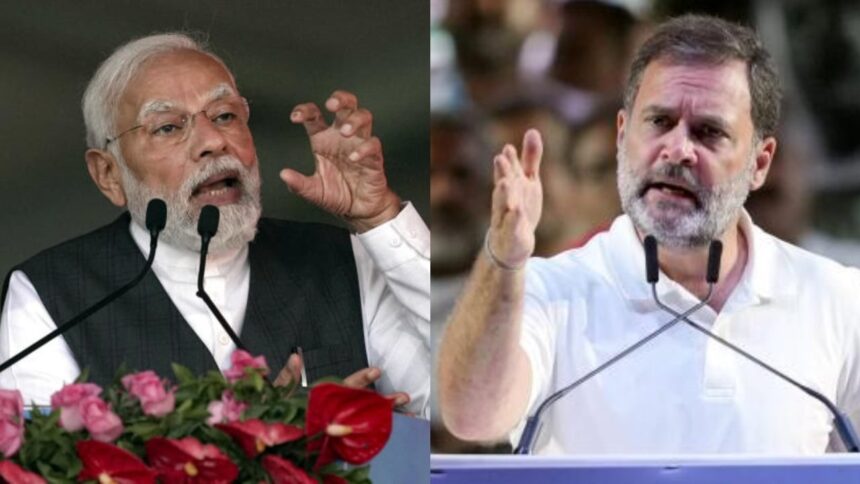
A political storm erupted in Bihar after the Bharatiya Janata Party (BJP) lodged a police complaint against Congress leader Rahul Gandhi, accusing him of making derogatory and abusive remarks against Prime Minister Narendra Modi during an opposition rally in Darbhanga. The controversy has intensified the ongoing political tussle in the poll-bound state, drawing sharp reactions from BJP leaders, Union Home Minister Amit Shah, and other senior figures, while Congress dismissed the allegations as attempts to divert attention from pressing issues. The filing of an FIR at Gandhi Maidan Police Station in Patna marks a significant escalation, raising questions about political discourse, accountability, and the standards of public debate in the run-up to Bihar’s crucial elections. As the BJP vowed to stop the INDIA bloc’s rally in the state, the incident has underscored the deepening political polarization and heightened sensitivities surrounding remarks directed at national leaders and their families.
Allegations of Abusive Remarks and BJP’s Legal Action
According to BJP leader Krishna Singh Kallu, a formal complaint has been lodged against Rahul Gandhi for allegedly making indecent remarks against PM Narendra Modi and his late mother during the INDIA bloc rally. Krishna Singh Kallu highlighted that the nature of the comments crossed moral and ethical boundaries, especially since they targeted a person no longer alive. “Through Lok Sabha Opposition Leader Rahul Gandhi, abusive comments against PM Modi and Union Home Minister Amit Shah are continuously being made. Today, in Darbhanga, at a decorated stage of the INDIA bloc, the way the mother of PM Narendra Modi was abused is very indecent. Abuses have been hurled in the name of a person who is not in the world anymore. If someone abuses our mother, we cannot tolerate it,” he said.
The BJP leader stated that the FIR had been registered at Gandhi Maidan Police Station in Patna and emphasized that the party would not allow Rahul Gandhi’s rally to proceed in Bihar. He further asserted that the people of Bihar would prevent the INDIA bloc’s program, stressing that the political environment should not allow such incidents to go unchecked. The move has been backed by multiple BJP leaders and state Chief Ministers, who joined in condemning the alleged abuses. They claimed that Congress and the RJD were lowering political standards by targeting the Prime Minister and his family and demanded formal apologies from Rahul Gandhi and Tejashwi Yadav for the comments made at the rally.
The legal action and public statements represent a broader strategy by the BJP to control political narratives ahead of the Bihar elections. By framing the issue as a moral and ethical violation, the party seeks to mobilize public sentiment against the Congress and the INDIA bloc while projecting itself as a defender of the dignity of national leaders and their families. The FIR serves both as a procedural step and a symbolic act, reinforcing the BJP’s stance on accountability and decorum in political discourse.
National Leaders Condemn Remarks, Congress Counters Allegations
Union Home Minister Amit Shah strongly criticized Rahul Gandhi, labeling the language used against Prime Minister Modi as a “stain on democracy.” He argued that under Rahul Gandhi’s leadership, Congress politics had reached “its lowest level” and highlighted the unacceptability of targeting the Prime Minister’s family. Shah also emphasized that the comments were offensive to the nation, framing them as an attack not just on an individual but on the respect accorded to national leadership. On his social media post, Shah remarked, “Under Rahul Gandhi’s leadership, Congress politics has reached its lowest level. They cannot tolerate how a poor mother’s son has been sitting in the Prime Minister’s chair for the past 11 years and is continuously taking the country forward under his leadership.”
BJP president JP Nadda also joined the chorus of criticism, asserting that the abuses hurled against PM Modi and his mother crossed all limits of decency. He called for Rahul Gandhi and Tejashwi Yadav to publicly apologize for the remarks, emphasizing that political rhetoric must adhere to ethical standards and respect for individuals. Nadda framed the issue as a test of political responsibility and decorum, warning that such comments erode public trust and damage democratic culture. The party’s leadership, therefore, positioned this episode as central to the ongoing discourse on political ethics and accountability in India.
On the other hand, Congress leaders, including Pawan Khera, rejected the BJP’s allegations, claiming that the party was raising “irrelevant” issues to distract the public from more pressing matters. Congress argued that the focus on alleged abuses was a diversionary tactic designed to shift attention away from substantive policy discussions and electoral concerns. The party maintained that debates on governance, development, and public welfare should take precedence over controversies about statements allegedly made during political rallies. This defensive posture by Congress reflects the high-stakes environment of the Bihar elections, where both national and regional parties are vying for public attention and political advantage.
The incident has triggered widespread media coverage, with national and regional outlets reporting extensively on the FIR, political statements, and the ensuing debate over ethics and responsibility in political discourse. Analysts note that such controversies often serve multiple strategic purposes, including mobilizing voter sentiment, consolidating party bases, and projecting moral authority. The BJP’s framing of the issue as a violation of decency, coupled with the call for legal action, seeks to generate both political pressure and public validation for its stance, while simultaneously placing the Congress on the defensive.
In addition to the FIR, the BJP’s stance has included calls to prevent the INDIA bloc’s rally in Bihar, reflecting a proactive approach to controlling the political narrative. By attempting to halt the rally, the BJP underscores the gravity it attributes to the incident and signals to voters that it prioritizes respect for national leadership and ethical conduct in political engagement. This approach blends legal, political, and public mobilization strategies, highlighting the multi-dimensional nature of election campaigning in contemporary India.
The controversy has also amplified discussions about the boundaries of political speech, particularly in the context of targeting elected officials and their families. Debates have emerged over the ethical limits of criticism, freedom of expression, and the responsibilities of public figures in shaping political dialogue. Scholars and commentators have pointed out that while political debate can be robust and even confrontational, targeting personal aspects of leaders or deceased family members crosses socially accepted norms and can have repercussions for public trust in political institutions.
As the FIR continues to make headlines, it is expected that legal proceedings may unfold in the coming weeks, potentially influencing the political climate in Bihar. The case also serves as a precedent in discussions about accountability for statements made during political rallies, emphasizing the intersection of law, politics, and societal norms. The BJP’s insistence on an apology from Rahul Gandhi and Tejashwi Yadav illustrates the party’s focus on both procedural justice and moral authority, seeking to hold opposition leaders accountable in the eyes of the public.
The ongoing political fallout highlights the polarization in Indian politics, where statements, speeches, and rallies are closely scrutinized and can become flashpoints for broader controversies. The Bihar elections, being highly contested, add urgency and intensity to the situation, as parties strive to maintain voter trust, demonstrate leadership, and assert ethical standards. The incident involving Rahul Gandhi’s alleged remarks serves as a lens through which broader questions about political culture, accountability, and the ethics of public discourse are being examined.
Beyond the immediate legal and political implications, the FIR against Rahul Gandhi raises questions about how political parties navigate conflicts between free speech, ethical standards, and electoral strategy. Observers note that managing these tensions requires careful calibration, as parties seek to defend their constituencies, uphold moral standards, and maintain public credibility simultaneously. The Bihar context, with its competitive electoral environment, amplifies these pressures, highlighting the intricate interplay between political rhetoric, legal accountability, and public perception.
The case has also sparked reactions from civil society, with several commentators discussing the potential impact of such incidents on democratic norms and public expectations of political conduct. While supporters of the BJP argue that the FIR is necessary to uphold ethical standards, critics contend that political controversies can sometimes be strategically exaggerated to serve electoral objectives. The discourse surrounding the FIR reflects the ongoing negotiation between legal processes, ethical norms, and political messaging in shaping contemporary democratic practice in India.
In the weeks leading to the Bihar elections, the political narrative is likely to remain focused on both governance issues and incidents such as the FIR against Rahul Gandhi. Parties will continue to use media channels, public statements, and rallies to influence voter perceptions, highlighting the interconnectedness of legal developments, political rhetoric, and electoral strategy. This event serves as a reminder of the centrality of ethical discourse and accountability in Indian politics, particularly in high-stakes electoral environments where public sentiment can be highly sensitive to allegations and perceived moral transgressions.
The controversy underscores the importance of maintaining decorum in political debates, with leaders across parties facing scrutiny for the content and tone of their public statements. The FIR against Rahul Gandhi represents a convergence of legal, ethical, and political challenges, providing a case study in the complexities of contemporary electoral politics in India. Analysts expect that the unfolding developments will continue to shape narratives around political responsibility, voter expectations, and the limits of acceptable discourse in the weeks leading up to the Bihar assembly elections.
By addressing these issues through both legal and public channels, the BJP aims to reinforce its stance on respect for national leaders and the ethical conduct of political figures. The party’s multi-pronged response, combining FIR registration, public condemnation, and efforts to prevent the rally, reflects a strategic approach to shaping political narratives and asserting authority in the context of competitive elections. The incident has already set the stage for extensive political debate, further emphasizing the intertwined nature of law, politics, and public perception in India’s democratic framework.
Ultimately, the FIR against Rahul Gandhi exemplifies how individual statements during political campaigns can become catalysts for broader controversies, influencing voter sentiment, party strategy, and national discourse. The Bihar elections, being highly competitive and politically significant, amplify the stakes and consequences of such incidents, making them central to the unfolding electoral narrative. The ongoing debate over accountability, ethical standards, and the role of legal mechanisms in addressing political rhetoric illustrates the complexities of democratic practice in India, highlighting the challenges and responsibilities of political leadership in maintaining both ethical integrity and public trust.
This controversy also serves as a reminder of the heightened sensitivities around political speech, particularly when it involves references to personal and family matters of national leaders. In this context, the FIR against Rahul Gandhi represents an important intersection of legal accountability, political strategy, and ethical discourse, shaping the ways in which parties conduct campaigns, manage public perception, and uphold democratic norms. The Bihar case will likely continue to influence political discourse, media coverage, and public debate in the coming weeks, serving as a touchstone for discussions on the balance between freedom of expression and respect for personal dignity in Indian politics.
The unfolding situation further highlights the tactical use of legal mechanisms in contemporary electoral politics. By filing an FIR, the BJP not only seeks to ensure accountability but also positions itself as a moral guardian of political ethics, leveraging legal processes to assert authority and influence public sentiment. This approach reflects broader trends in Indian politics, where law, morality, and strategy intersect to shape campaign dynamics, voter perceptions, and the overall political landscape.
As the Bihar elections approach, the case against Rahul Gandhi is expected to remain a focal point of discussion, influencing political narratives, media framing, and voter sentiment. Both the BJP and Congress are likely to continue leveraging the incident to their strategic advantage, reflecting the interplay of ethical, legal, and political considerations in high-stakes electoral environments. The ongoing debate underscores the critical importance of maintaining decorum, accountability, and ethical standards in political campaigns, highlighting the broader responsibilities of elected representatives and party leaders in shaping democratic culture.
The FIR incident involving Rahul Gandhi also illustrates the potential impact of political controversies on public perception, voter behavior, and party strategies. Political analysts suggest that managing such controversies effectively requires a careful blend of legal, ethical, and communication strategies, as parties aim to reinforce credibility, mobilize support, and maintain a competitive edge in closely contested elections. The Bihar case exemplifies how a single statement can catalyze multifaceted political reactions, influencing national discourse and electoral dynamics.
Moreover, the case highlights the delicate balance between freedom of expression and respect for individuals in the context of electoral campaigns. While public debate is essential for democratic engagement, targeting personal or family aspects of political leaders can cross ethical and legal boundaries, prompting interventions such as FIRs and public condemnation. This dynamic illustrates the tensions inherent in political communication and the responsibilities of leaders to uphold standards of civility, even in competitive and high-pressure environments.
The controversy also reflects the role of media and social platforms in amplifying political incidents. Coverage of the FIR, statements from BJP and Congress leaders, and social media discourse have magnified the reach and impact of the controversy, influencing public perception and shaping the narrative around political accountability, ethics, and electoral competition. In this context, the Bihar FIR against Rahul Gandhi serves as a case study in the interaction between media, politics, and legal accountability, demonstrating how public and political responses can intersect to shape electoral outcomes.