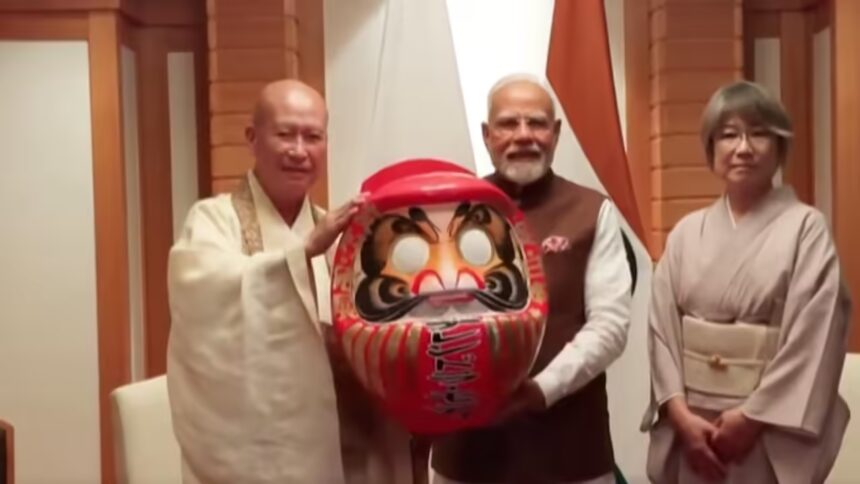
Prime Minister Narendra Modi embarked on a landmark official visit to Japan on August 29, marking his first standalone trip to the island nation in nearly seven years. This visit, scheduled for two days, is widely regarded as a crucial milestone in strengthening India-Japan relations, both bilaterally and multilaterally. PM Modi’s itinerary reflects the growing emphasis on emerging technologies, artificial intelligence, semiconductors, and the next phase of India’s Special Strategic and Global Partnership with Japan. Ahead of his departure, the Prime Minister highlighted that the trip will have a distinctly futuristic dimension, demonstrating the commitment of both nations to explore cooperation in high-tech sectors and foster deeper economic, strategic, and cultural ties. As PM Modi prepares to engage in high-level discussions with Japanese Prime Minister Shigeru Ishiba, the visit also underscores India’s intention to actively contribute to regional and global discussions on innovation, technology, and sustainable economic growth. This trip to Japan comes just before his attendance at the Shanghai Cooperation Organisation Summit in China, adding a broader multilateral dimension to the tour, signaling India’s intent to combine bilateral technological collaboration with engagement in global forums addressing pressing geopolitical and economic challenges.
Strengthening India-Japan Strategic and Technological Ties
During his Japan visit, Prime Minister Modi is slated to attend the 15th Annual India-Japan Summit, where he will hold comprehensive talks with Prime Minister Shigeru Ishiba. These discussions are expected to focus on enhancing the multi-faceted India-Japan relationship, which has evolved steadily over the last 11 months, encompassing strategic, economic, technological, and cultural dimensions. PM Modi has emphasized that the bilateral talks will delve into advancing Special Strategic and Global Partnership commitments, with particular attention to emerging technologies such as artificial intelligence, robotics, and semiconductor manufacturing. A highlight of the trip includes PM Modi’s planned visit to a semiconductor manufacturing facility in Sendai, where he will observe firsthand the production processes and innovations driving Japan’s technological leadership. This visit not only symbolizes India’s growing engagement with critical technology sectors but also reflects a shared commitment to innovation, research, and industrial collaboration in areas of mutual economic interest. By prioritizing sectors like AI and semiconductors, PM Modi aims to position India as a forward-looking partner capable of complementing Japan’s strengths while jointly developing strategies to address global technological challenges. The Prime Minister’s focus on technology demonstrates a clear vision of aligning bilateral cooperation with global trends in digital innovation, supply chain resilience, and sustainable industrial growth.
The India-Japan summit will also serve as a platform to launch new initiatives designed to strengthen economic, cultural, and technological linkages. PM Modi’s engagement with Japanese business leaders and captains of industry is expected to foster private sector collaboration, investment partnerships, and knowledge exchange in cutting-edge technological domains. Economic discussions will likely address critical supply chain considerations, semiconductor production, AI development, and joint research opportunities, ensuring that the India-Japan partnership remains competitive on a global scale. PM Modi’s visit also includes cultural engagements, which highlight the importance of people-to-people connections in sustaining long-term diplomatic and trade relationships. By integrating technological priorities with economic and cultural objectives, the Prime Minister aims to create a holistic framework for cooperation that is resilient, forward-looking, and mutually beneficial. The visit reflects India’s broader strategy of leveraging bilateral relationships to build a strong foundation in emerging technologies while simultaneously contributing to regional stability and global economic progress.
Global Engagement and Multilateral Dimension: SCO Summit in China
Following his Japan visit, Prime Minister Modi will travel to China from August 31 to September 1 to attend the Shanghai Cooperation Organisation Summit in Tianjin. This portion of the tour adds a significant multilateral dimension, allowing India to engage with member countries on regional security, economic collaboration, and technological initiatives. By combining bilateral engagements in Japan with multilateral interactions in China, PM Modi’s tour underscores India’s dual approach to global diplomacy: fostering strong, targeted partnerships while actively participating in larger regional and international forums. During the SCO Summit, discussions are expected to cover a wide array of issues including regional stability, counter-terrorism cooperation, trade facilitation, and digital infrastructure development. PM Modi’s participation signals India’s intent to play a proactive role in shaping regional policies, promoting innovation, and leveraging technology to address emerging challenges. The strategic timing of the Japan visit, immediately preceding the SCO Summit, ensures that India presents a coherent narrative of technological collaboration, economic growth, and geopolitical engagement, highlighting its dual commitment to innovation-driven partnerships and regional leadership.
Prime Minister Modi’s focus on AI, semiconductors, and futuristic technologies in Japan resonates with broader global trends emphasizing technological sovereignty, digital infrastructure, and industrial innovation. By actively engaging with Japanese counterparts in these domains, India seeks to position itself as a reliable partner for innovation, investment, and research collaboration. The visit also reinforces the significance of aligning bilateral technology cooperation with international discussions on emerging global challenges, ensuring that India’s policy initiatives are synchronized with both national priorities and global technological developments. The dual engagement in Japan and China reflects a comprehensive diplomatic approach, combining bilateral technology-driven collaboration with participation in multilateral discussions that address regional and global challenges. This strategy reinforces India’s global positioning, demonstrating that technological advancement, strategic diplomacy, and economic growth are mutually reinforcing elements in India’s foreign policy framework.
In addition to high-level diplomatic meetings, PM Modi’s Japan visit will provide opportunities for knowledge exchange, exposure to advanced technology ecosystems, and strategic engagement with industry experts and policy makers. Observing semiconductor manufacturing firsthand in Sendai is particularly significant, given the global importance of semiconductor supply chains and their role in enabling AI, digital infrastructure, and industrial innovation. By highlighting such technological dimensions, PM Modi aims to strengthen India’s capacity for research, development, and innovation, while fostering international partnerships that can enhance domestic technological capabilities. These engagements also underscore India’s commitment to ensuring that technological development aligns with global standards, supply chain security, and sustainable industrial practices. The Prime Minister’s approach exemplifies a blend of strategic foresight, innovation-centric diplomacy, and proactive engagement that is critical in the rapidly evolving global technological landscape.
Prime Minister Modi’s visit to Japan is not only a testament to the evolving India-Japan partnership but also an affirmation of India’s commitment to global innovation leadership. By emphasizing AI, semiconductors, and emerging technologies, PM Modi is positioning India as a credible and forward-looking partner capable of contributing to global technological advancements. The visit encapsulates a strategic vision that integrates diplomacy, economic growth, cultural exchange, and technological innovation into a coherent framework for bilateral and regional collaboration. As India continues to strengthen its Special Strategic and Global Partnership with Japan, the focus on technology, industry, and innovation ensures that the relationship remains relevant, resilient, and capable of addressing both present and future challenges.
The planned interactions with Japanese political and business leaders, coupled with visits to cutting-edge technology facilities, exemplify the multidimensional nature of contemporary diplomacy, where economic, technological, and strategic considerations intersect. PM Modi’s engagements underscore the importance of leveraging diplomatic visits to create tangible outcomes in trade, technology transfer, and innovation partnerships. These efforts are aligned with India’s broader foreign policy objectives, which aim to foster sustainable economic growth, enhance technological capabilities, and strengthen regional and global partnerships. By integrating high-level political discussions with practical engagements in technology and industry, the Prime Minister is advancing a model of diplomacy that is results-oriented, innovation-driven, and strategically focused.
The combination of bilateral and multilateral engagements during PM Modi’s visit reflects a nuanced understanding of global dynamics. While bilateral cooperation with Japan emphasizes technological and industrial collaboration, the SCO Summit engagement in China addresses regional stability, multilateral economic coordination, and shared technological initiatives. This dual-track approach ensures that India maintains a balanced foreign policy, capable of leveraging bilateral strengths while actively contributing to multilateral platforms. PM Modi’s strategy also demonstrates India’s ability to navigate complex geopolitical environments, promoting innovation, economic growth, and regional leadership simultaneously.
Throughout the visit, the focus on futuristic technologies such as AI and semiconductors serves as a symbolic and practical representation of India’s ambition to integrate technological advancement with strategic diplomacy. By highlighting these areas, PM Modi signals to international partners the critical importance India places on innovation-driven growth, collaborative industrial development, and resilient supply chains. The visit is thus both a demonstration of India’s capabilities and a platform for forging agreements, partnerships, and collaborative initiatives that can strengthen bilateral ties, enhance global competitiveness, and contribute to broader regional and international stability.
Prime Minister Modi’s official visit to Japan, followed by his participation in the SCO Summit in China, underscores India’s commitment to strengthening bilateral partnerships, advancing technological innovation, and engaging proactively in regional and global diplomacy. By emphasizing AI, semiconductors, and emerging technologies, PM Modi is shaping India’s strategic and economic agenda while reinforcing its role as a credible and forward-looking partner on the international stage. This tour highlights the intersection of diplomacy, technology, and economic strategy, demonstrating India’s capacity to combine innovation with leadership in both bilateral and multilateral contexts.