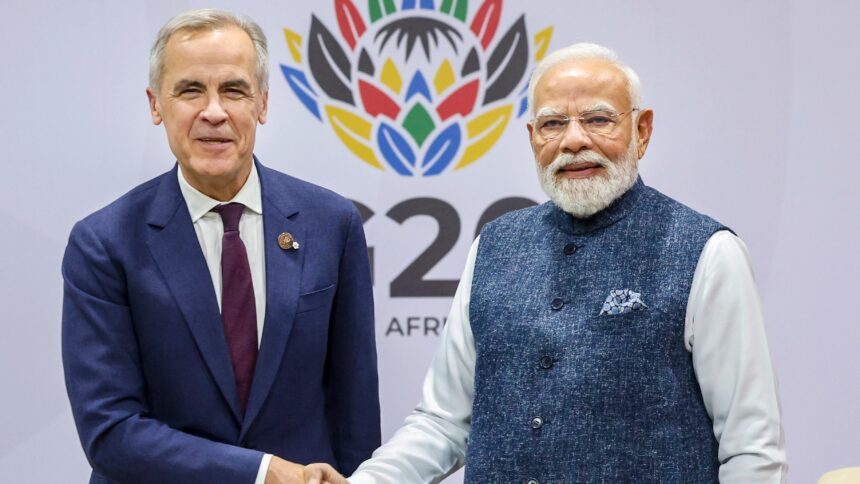
India and Canada have agreed to restart stalled trade negotiations, marking a significant step toward enhancing bilateral economic engagement and strengthening long-term commercial ties. The discussions, paused for nearly two years due to diplomatic tensions, resumed after constructive dialogue between Prime Minister Narendra Modi and Canadian Prime Minister Mark Carney on the sidelines of the G20 summit in Johannesburg, South Africa. Both nations emphasized the mutual benefits of a modernized trade framework that could expand market access, encourage investment flows, and support sustainable economic growth in an increasingly interconnected global economy.
Bilateral Dialogue and the Context of Renewed Trade Talks
The decision to restart negotiations comes after a prolonged hiatus, during which political and diplomatic differences had stalled progress on a comprehensive trade agreement. Previous talks had been initiated with the aim of enhancing trade in goods and services, promoting investment, and ensuring better protection of intellectual property rights for businesses in both countries. However, geopolitical disagreements and disagreements over market access created obstacles, delaying the realization of a mutually beneficial agreement. With global economic conditions evolving and supply chain dynamics shifting, both countries recognized the importance of reviving discussions to secure strategic economic interests and promote sustainable trade growth.
During the bilateral meeting at the G20 summit, both leaders underscored the importance of restoring trust and dialogue in order to facilitate the negotiation of a robust trade pact. Prime Minister Modi highlighted the potential for Indian exports in sectors such as information technology, pharmaceuticals, and engineering goods to benefit from improved market access in Canada. He also stressed the importance of attracting Canadian investment in India’s key growth sectors, including clean energy, infrastructure, and technology-driven industries. Prime Minister Carney, in turn, reiterated Canada’s interest in expanding access for Canadian businesses to the Indian market while also addressing regulatory and tariff concerns that had previously hindered bilateral commerce.
Both leaders agreed on the necessity of incorporating modern trade practices and sustainability measures into the agreement, reflecting global trends in trade policy and responsible business conduct. This approach aims to create a framework that not only supports commercial growth but also promotes environmental responsibility, social development, and ethical business practices. By aligning economic engagement with broader global standards, both nations intend to create a trade architecture that can withstand future market challenges and geopolitical uncertainties.
Economic and Strategic Implications of Resuming Trade Talks
The resumption of trade negotiations carries significant economic and strategic implications for both Canada and India. For India, a renewed trade deal offers the opportunity to diversify its export markets, secure foreign investment, and strengthen industrial sectors critical to the country’s economic development. Canadian companies could gain greater access to a rapidly expanding Indian consumer base, fostering partnerships in areas such as technology, renewable energy, and infrastructure development. These partnerships are expected to enhance bilateral economic interdependence and create new avenues for innovation, job creation, and knowledge transfer.
Experts note that this revival of trade talks also sends a strong signal to global markets that India and Canada are committed to multilateral engagement and economic cooperation. In an era marked by shifting trade alliances and protectionist tendencies, the willingness of both nations to re-engage diplomatically reinforces their shared interest in stable, rules-based trade systems. Investors and businesses on both sides are likely to respond positively, anticipating clearer guidelines, improved market predictability, and expanded opportunities for cross-border collaboration.
In addition to economic benefits, the negotiations carry broader geopolitical significance. Strengthened bilateral trade ties can help both nations enhance regional influence, foster collaboration on global challenges such as climate change and sustainable development, and contribute to a more balanced approach to multilateral trade governance. By coordinating on trade, investment, and regulatory standards, Canada and India aim to build a partnership that extends beyond commerce to strategic alignment in international economic forums.
The dialogue also presents an opportunity to address structural and regulatory barriers that had previously limited the growth of bilateral trade. Both countries are expected to discuss mechanisms for smoother customs procedures, harmonization of standards, and resolution of sector-specific challenges, particularly in agriculture, technology, and financial services. By addressing these challenges, the agreement could lay the groundwork for a more seamless trade relationship that benefits businesses, consumers, and governments alike.
As discussions progress, attention will focus on balancing the interests of domestic industries with the goals of promoting broader bilateral trade. Ensuring that small and medium enterprises, as well as emerging sectors, benefit from the agreement will be crucial to its long-term success. Stakeholders from both nations are likely to be engaged in consultations to ensure that the eventual pact reflects diverse economic priorities, fosters innovation, and strengthens the competitiveness of domestic industries while maintaining fair and equitable trade practices.
The resumption of talks also aligns with India’s broader trade strategy of diversifying its international partnerships and enhancing its participation in global supply chains. By forging stronger ties with Canada, India hopes to leverage investment and technology transfers that can contribute to industrial modernization, skill development, and sustainable growth. Similarly, Canada stands to benefit from access to a growing market, opportunities for collaboration in research and development, and increased bilateral investment flows, creating a mutually reinforcing cycle of economic growth.
As both nations embark on this renewed path of negotiation, the global business community and policymakers will closely monitor progress and outcomes. The success of these talks could serve as a model for other bilateral agreements, demonstrating the value of persistence, dialogue, and strategic alignment in overcoming previous diplomatic obstacles. By addressing past disagreements, embracing modern trade principles, and focusing on long-term economic and strategic interests, Canada and India have the opportunity to reshape their commercial relationship and set a benchmark for bilateral trade cooperation in the 21st century.
The renewed discussions also highlight the role of high-level diplomatic engagement in resolving complex trade issues. The personal interaction between Prime Minister Modi and Prime Minister Carney underscores the importance of leadership, trust-building, and direct dialogue in navigating sensitive economic negotiations. This approach, combining technical negotiation with diplomatic engagement, is expected to accelerate progress and provide a framework for addressing contentious issues constructively.
Overall, the decision to restart trade negotiations between Canada and India represents a pivotal moment in bilateral relations, with implications for economic growth, regional influence, and global trade standards. By fostering dialogue, addressing past obstacles, and prioritizing mutual benefit, both nations are positioning themselves to capitalize on opportunities in a rapidly evolving global economy, signaling a renewed commitment to partnership, stability, and shared prosperity.