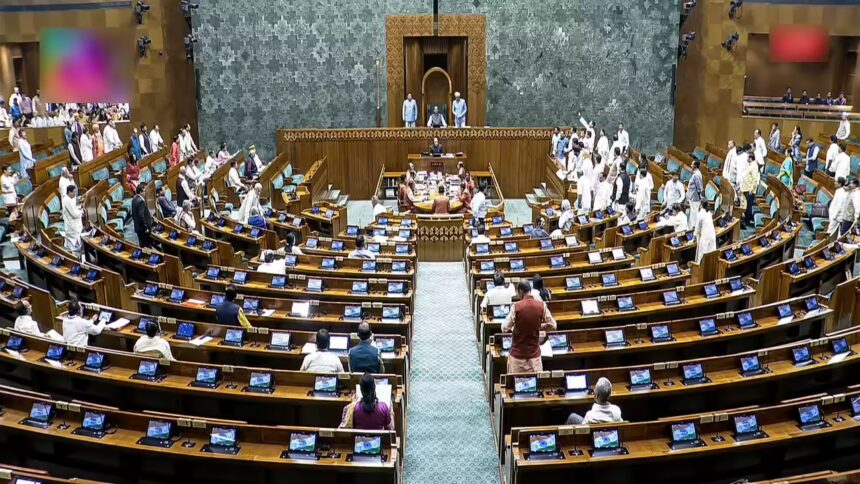
The Budget Session of Parliament is set to conclude today, marking the end of a crucial legislative period that saw important debates and the passage of key financial bills. The Rajya Sabha is expected to take up the Andhra Pradesh Reorganisation (Amendment) Bill, 2026, for consideration and passage on the final day of the session.
This session, which plays a vital role in shaping the government’s fiscal and legislative agenda, was conducted in two phases and witnessed significant discussions on national and international issues. It has not only served as a platform for legislative approvals but also as a forum for political debate, accountability, and policy articulation. As the session draws to a close, it reflects the functioning of parliamentary democracy in addressing economic priorities and responding to evolving global developments.
Two-phase session covered budget discussions and legislative approvals
The first phase of the Budget Session began on January 28 and continued until February 13. During this period, both Houses of Parliament held detailed discussions on the Motion of Thanks to the President’s Address, a key parliamentary tradition that outlines the government’s policy direction and governance priorities for the year ahead. Members from across political parties participated in these discussions, raising issues related to economic growth, social welfare, national security, and governance reforms.
The President’s Address serves as a roadmap for the government’s agenda, and the Motion of Thanks debate allows parliamentarians to deliberate on this vision. It also provides an opportunity for the opposition to critique government policies and present alternative perspectives. The Prime Minister’s reply to the debate is often seen as a significant political moment, where the government defends its record and outlines its future plans.
In addition to the Motion of Thanks, the first phase also saw extensive discussions on the Union Budget for 2026–27. Lawmakers examined various aspects of the budget, including taxation proposals, sectoral allocations, fiscal deficit targets, and policy initiatives aimed at boosting economic growth. The debates covered key sectors such as agriculture, infrastructure, healthcare, education, and employment, reflecting the diverse concerns of the country.
Members scrutinized the government’s approach to managing inflation, supporting farmers, creating jobs, and promoting industrial growth. Issues related to rural development, digital infrastructure, and social security schemes were also raised during the discussions. These debates are essential for ensuring transparency and accountability in the government’s financial planning.
The second phase of the session commenced on March 8 and focused largely on legislative business. One of the most significant developments during this phase was the passage of the Finance Bill 2026, which provides legal backing to the government’s taxation proposals outlined in the Union Budget. The bill includes provisions related to direct and indirect taxes, aimed at generating revenue and supporting economic activity.
Alongside the Finance Bill, Parliament also passed the Appropriation (No. 2) Bill 2026. This legislation authorizes the government to withdraw funds from the Consolidated Fund of India to meet its expenditure requirements for the financial year. The passage of this bill is crucial for ensuring that government operations and development programs continue without disruption.
The legislative process during this phase involved debates, discussions, and voting, reflecting the democratic nature of decision-making in Parliament. Members had the opportunity to propose amendments, express concerns, and seek clarifications from the government. The eventual passage of these bills signifies parliamentary approval of the government’s financial strategy.
Key debates included West Asia crisis and government’s policy stance
During the session, Prime Minister Narendra Modi addressed both Houses of Parliament, outlining the government’s position on the ongoing West Asia crisis. His statements highlighted India’s efforts to navigate the challenges posed by global geopolitical tensions while safeguarding national interests.
The discussions on the West Asia situation reflected concerns over its potential impact on India’s economy, particularly in areas such as energy security, trade, and supply chains. Members of Parliament raised questions about the availability of essential commodities, fuel prices, and the stability of international shipping routes.
The Prime Minister emphasized the government’s proactive approach in addressing these challenges, including measures to ensure the availability of critical resources and maintain economic stability. He also highlighted India’s diplomatic efforts to engage with international partners and contribute to peace and stability in the region.
The debate underscored the interconnected nature of global and domestic issues, demonstrating how international developments can influence national policy decisions. It also highlighted the role of Parliament in discussing and responding to such challenges, ensuring that the government remains accountable to the people.
As the session concludes, attention remains on the legislative agenda for the final day, particularly the Andhra Pradesh Reorganisation (Amendment) Bill, 2026. Its consideration in the Rajya Sabha underscores the government’s continued focus on regional development and administrative reforms. The bill is expected to address specific issues related to the reorganisation of Andhra Pradesh, reflecting ongoing efforts to refine governance structures and address regional concerns.
The concluding day of the session is likely to witness final discussions, procedural formalities, and the passage of pending legislation. It also marks the culmination of weeks of parliamentary activity, during which lawmakers engaged in debates, deliberations, and decision-making on critical issues.
The Budget Session of Parliament remains one of the most significant periods in India’s legislative calendar. It combines financial decision-making with policy discussions, shaping the country’s economic and governance framework for the year ahead. The session provides a platform for elected representatives to voice the concerns of their constituents, hold the government accountable, and contribute to the legislative process.
Beyond the passage of bills and debates, the session also reflects the functioning of democratic institutions and the importance of dialogue in governance. It highlights the role of Parliament as a forum for diverse viewpoints, where consensus and disagreement coexist as part of the democratic process.
The extended discussions during both phases of the session illustrate the complexity of policymaking in a diverse and dynamic country like India. From economic reforms to international relations, the issues addressed during the session have far-reaching implications for the nation’s development trajectory.
As lawmakers conclude this session, the outcomes of their deliberations will continue to influence policy implementation and governance in the coming months. The decisions taken during this period will shape the government’s approach to economic management, social welfare, and international engagement.
The conclusion of the Budget Session also sets the stage for future parliamentary engagements, where pending issues and new challenges will be taken up. It serves as a reminder of the continuous nature of governance, where each session builds upon the previous one to address the evolving needs of the country.
In essence, the Budget Session of Parliament is not just about passing financial bills but about defining the direction of the nation’s progress. The discussions, decisions, and debates that take place during this period play a crucial role in shaping India’s future, making it a cornerstone of the democratic process.