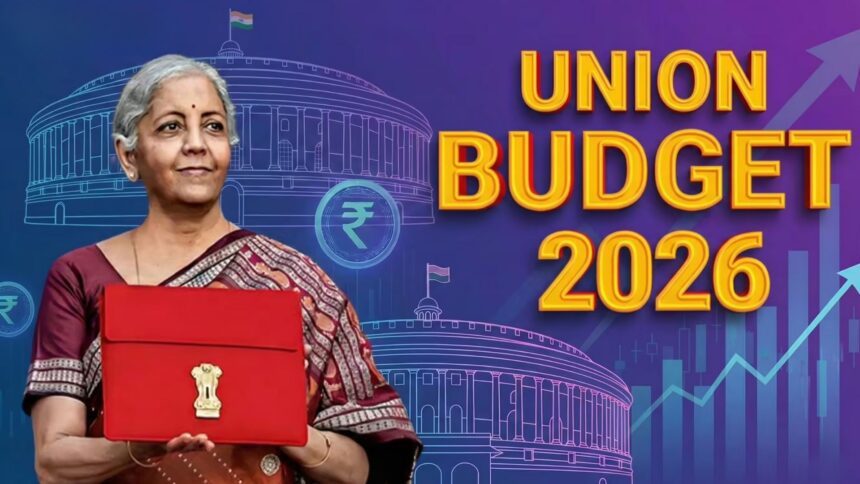
Industry leaders from the real estate and infrastructure sectors have welcomed the Union Budget 2026, describing it as a forward-looking roadmap aligned with the vision of Developed India 2047. The budget’s emphasis on productivity, competitiveness, infrastructure expansion, and balanced urban growth has been seen as a key enabler for long-term economic stability and sectoral confidence.
Budget 2026 Reaction: Praveen Jain, President, NAREDCO
Praveen Jain, President, NAREDCO, said that the budget presented by the Finance Minister reflects a clear commitment to the vision of Developed India 2047. According to him, the budget focuses on productivity, competitiveness, and sustained economic growth at a time when global uncertainties persist, with the objective of further strengthening India’s economy.
He highlighted that the emphasis on inclusive growth, ensuring opportunities across regions and sectors while addressing the aspirations of citizens, reinforces the principle of balanced development. The focus on “Sabka Saath, Sabka Vikas” underlines the government’s intent to ensure equitable access to growth opportunities across all sections of society.
From an urban development perspective, Praveen Jain described the decision to increase capital expenditure for FY 2026–27 from ₹11.2 lakh crore to ₹12.2 lakh crore as a visionary move. He noted that the special focus on cities with populations exceeding five lakh will significantly boost planned and balanced urban development. This, he said, will act as a catalyst for real estate growth in Tier-2 and Tier-3 cities, accelerating urbanisation beyond metro regions and easing pressure on large metropolitan centres.
He further pointed out that one of the most critical announcements for developers is the proposed Infrastructure Risk Guarantee Fund. This fund is expected to reduce project risks during the development and construction phases, enhance lender confidence in infrastructure projects, improve access to finance, and support timely project completion.
Praveen Jain also welcomed the proposal to establish dedicated REITs for recycling significant real estate assets of CPSEs. He stated that this step would promote efficient utilisation of assets, unlock capital, and create new investment avenues for the real estate sector. With continued government support for asset monetisation, he believes the budget creates a stable and reliable environment for real estate development.
Additionally, the announcement of seven high-speed railway corridors—including Mumbai–Pune, Pune–Hyderabad, Hyderabad–Bengaluru, Hyderabad–Chennai, Chennai–Bengaluru, Delhi–Varanasi, and Varanasi–Siliguri—was described as a major boost to infrastructure-led growth. These corridors are expected to enhance regional connectivity and stimulate the development of new real estate and industrial clusters along their routes.
Budget 2026 Reaction: Piyush Lohia, Director, Lohia Worldspace
Piyush Lohia, Director, Lohia Worldspace, said that the Union Budget 2026 sends a positive and reassuring signal for the real estate and infrastructure sectors. He noted that the budget reflects the government’s commitment to economic growth and the timely execution of large-scale projects.
He highlighted that the allocation of ₹12.2 lakh crore towards capital expenditure for public projects will significantly improve connectivity, accelerate project implementation, and strengthen overall infrastructure. According to him, robust infrastructure development has a direct impact on residential demand, as improved connectivity and amenities enhance homebuyer confidence.
Piyush Lohia also welcomed the proposal to establish separate REITs for land owned by Central Public Sector Enterprises (CPSEs). He said this initiative would enable better utilisation of underused assets while increasing transparency and liquidity in the commercial real estate market.
The announcement of the Infrastructure Risk Guarantee Fund was described as another important step that will help mitigate financial risks associated with large and long-gestation projects. He believes this will encourage private sector participation and attract long-term investments into infrastructure and real estate development.
Furthermore, he pointed out that the government’s plan to invest in city economic regions will provide Tier-3 cities with an opportunity for organised and balanced growth. These cities, he said, are increasingly emerging as new hubs for industry, employment, and housing.
Overall, Piyush Lohia stated that Budget 2026 provides much-needed stability, strengthens investor confidence, and lays a strong foundation for balanced and sustainable growth across residential, commercial, and infrastructure real estate segments.