The deadly terror attack at Australia’s Bondi beach has continued to reverberate across continents, as investigators piece together the background and motivations of the alleged gunmen while families mourn the victims of one of the country’s worst mass shootings in decades. As funerals began for those killed in the attack, Indian authorities revealed that the family of alleged attacker Sajid Akram, based in Hyderabad, had no prior knowledge of any radical ideology or extremist activities linked to him, adding another layer of complexity to an investigation that now spans multiple countries.
Unanswered questions around radicalisation and international links
Australian and Indian authorities are jointly examining the background of Sajid Akram, one of the two men alleged to have carried out the attack at a Hanukkah event at Bondi beach that left 15 people dead and dozens injured. Sajid Akram was shot dead by police during the incident, while his son, Naveed Akram, was also shot and taken into custody. Naveed later regained consciousness after being in a coma and is expected to face charges as investigators move closer to formally establishing responsibility for the attack.
According to police officials in the southern Indian state of Telangana, Sajid Akram’s family in Hyderabad appeared entirely unaware of any alleged radicalisation. Local police said there was no adverse record against him before he left India in 1998, and his relatives expressed shock upon learning of his alleged involvement in the violence. Officials stated that family members had no information suggesting that Akram harboured extremist views or had engaged in activities linked to radical ideology.
Sajid Akram, aged 50, had completed a degree in commerce in Hyderabad before migrating to Australia in November 1998 in search of employment. Over the years, he established his life there, marrying a woman of European origin and raising two children. Police records indicate that he returned to India on six occasions, largely for family-related reasons such as property matters and visits to his parents. Notably, he did not return to India when his father passed away, a detail investigators are examining as part of their broader timeline reconstruction.
Indian authorities have emphasised that there is no evidence to suggest that Akram’s alleged radicalisation had any connection to India or to local influences in Telangana. Officials have stated that the factors leading to his radical mindset appear to have developed entirely outside India, reinforcing the view that the roots of the attack lie elsewhere. This assessment has prompted closer scrutiny of Akram’s life in Australia and his recent movements abroad.
Australian police have confirmed that Sajid Akram and his son travelled to the Philippines last month, with the father using an Indian passport and the son travelling on an Australian passport. The purpose of the trip remains under investigation, and authorities have cautioned against drawing premature conclusions. While extremist groups are known to operate in parts of the Philippines, officials have said it is not yet established whether the two men had any contact with such organisations or received training during their visit.
New South Wales police commissioner Mal Lanyon said investigators waited until Naveed Akram was medically stable and able to consult a legal adviser before initiating formal questioning. He confirmed that custody procedures were carried out while Naveed remained hospitalised, and investigators expected to speak to him as soon as possible. Australian Prime Minister Anthony Albanese indicated that charges were likely to be laid within hours, underscoring the seriousness with which authorities are treating the case.
The attack, which targeted a Jewish community gathering, is being investigated as an act of terrorism. Officials have described it as Australia’s worst mass shooting in nearly 30 years, reigniting national debate about extremism, community safety, and the warning signs that may precede such acts of violence. As investigators examine digital records, travel histories, and personal associations, questions continue to mount about how and when Sajid Akram became radicalised without alerting family members or law enforcement agencies.
Nation mourns victims as funerals begin and communities unite
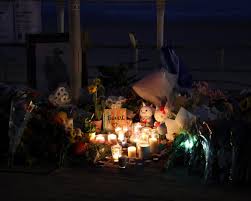
As investigators pursue answers, the human toll of the Bondi beach attack has become painfully visible through funerals, vigils, and public memorials held across Sydney. The first funerals for the victims were held on Wednesday, including services for Rabbi Eli Schlanger and Rabbi Yaakov Levitan. Rabbi Schlanger was associated with the Chabad of Bondi, which had hosted the Chanukah by the Sea event that became the site of the attack. His funeral was held just a short distance from where the violence unfolded, drawing mourners from across the city.
Twenty-two people wounded in the attack remained hospitalised across Sydney, with several still in critical condition. Medical authorities have said the coming days will be crucial for those most severely injured, while families wait anxiously for updates. Hospitals have reported an outpouring of support from the public, including blood donations and messages of solidarity, reflecting a collective effort to respond to the tragedy.
The attack has also prompted extraordinary scenes of interfaith unity. Vigils held in Sydney’s Hyde Park saw members of Jewish and Muslim communities standing together in grief and condemnation of violence. Religious leaders and community representatives emphasised shared humanity and rejected attempts to sow division through acts of terror. The embraces exchanged at these gatherings have become powerful symbols of resilience in the face of hatred.
Among the most heartbreaking moments was the tribute paid by the parents of the youngest victim, a 10-year-old girl named Matilda. Speaking at a memorial at Bondi beach, her parents shared that they had chosen her name because it felt deeply Australian, reflecting their hope and sense of belonging after immigrating from Ukraine. Overcome with emotion, they described the unimaginable pain of losing their daughter in what they believed to be a safe and welcoming place.
Other victims remembered include Holocaust survivor Alexander Kleytman, aged 87, whose life story embodied survival and resilience, and Marika Pogany, an 82-year-old community volunteer who died on what had been her favourite beach. The attack also claimed the lives of individuals who attempted to stop the violence, including Boris Gurman and his wife Sofia Gurman, who were shot while trying to disarm one of the attackers, and Reuven Morrison, who reportedly threw bricks in an attempt to intervene.
These stories have reinforced the perception that the victims represented a cross-section of society, united only by their presence at a community event that turned tragic. Political leaders, civil society groups, and ordinary citizens have called for reflection not only on security measures but also on the social conditions that allow extremist ideologies to take root.
The Bondi beach attack has already left a lasting impact on Australia’s national consciousness. As investigations continue, attention is likely to focus on intelligence-sharing, community engagement, and the early detection of radicalisation pathways. The revelation that Sajid Akram’s family in India had no awareness of his alleged extremist mindset highlights the difficulty of identifying warning signs, particularly when radicalisation occurs gradually and across borders.
While authorities work to establish accountability and prevent future attacks, the process of mourning and healing continues. Funerals, hospital vigils, and public memorials have become spaces where grief is shared and solidarity affirmed. In the absence of clear answers, these collective expressions of humanity stand as a counterpoint to the violence that shattered a peaceful gathering and left an indelible mark on Bondi beach.