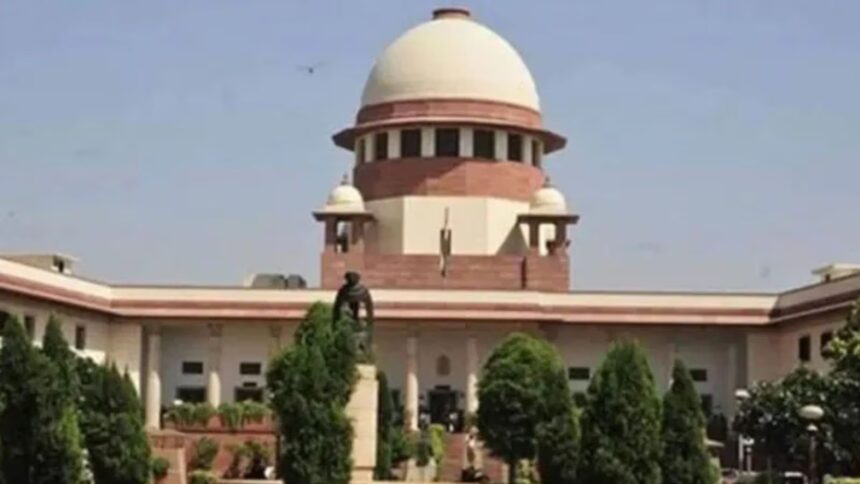
The Supreme Court of India has raised serious concerns over the delayed framing and implementation of laws governing the appointment of the Chief Election Commissioner (CEC) and Election Commissioners, calling the situation reflective of the “tyranny of the elected.” The remarks came during a hearing on petitions challenging the validity of the Chief Election Commissioner and Other Election Commissioners (Appointment, Conditions of Service and Term of Office) Act, 2023.
The case has placed renewed focus on how India appoints top officials of the Election Commission, a body central to ensuring free and fair elections in the world’s largest democracy. The petitions were filed by multiple parties, including the Association for Democratic Reforms (ADR), questioning whether the new law undermines institutional independence by excluding the Chief Justice of India from the selection panel.
A bench led by Justice Dipankar Datta made strong observations during the proceedings, reflecting broader judicial concern over delays in legislative action and the structure of the appointment process.
Court Questions Appointment Process and Legislative Delay
At the heart of the controversy is the CEC Appointment Act, 2023, which replaced the earlier judicially guided selection framework. Under the new law, appointments are made by a committee consisting of the Prime Minister, the Leader of Opposition, and a Union Cabinet Minister.
The petitions argue that this structure tilts the balance of power heavily in favor of the executive, reducing institutional independence. Senior advocate Prashant Bhushan, appearing for ADR, argued that the process lacks meaningful consultation and transparency.
The court also questioned why Parliament had not enacted a comprehensive law earlier, referring to the gap that existed until the Supreme Court’s intervention in the Anoop Baranwal judgment in 2023. In that ruling, the court had temporarily mandated a selection committee including the Prime Minister, Leader of Opposition, and the Chief Justice of India.
During the hearing, Justice Datta remarked that the absence of timely legislative action reflected a deeper systemic concern. The court also expressed that it would be preferable if judicial appointments followed similar speed and efficiency as election appointments, highlighting inconsistencies in institutional functioning.
Dispute Over Selection Committee and Appointment Timeline
A significant portion of the arguments focused on the selection process that led to the appointment of Chief Election Commissioner Gyanesh Kumar and Election Commissioner Sukhbir Sandhu.
Counsel for petitioner Jaya Thakur raised concerns over procedural fairness, arguing that the selection process in 2024 lacked effective consultation. It was alleged that the meeting of the selection committee was advanced, potentially to pre-empt judicial scrutiny.
According to the petitioners, a series of rapid developments took place in March 2024, including resignation, notification of vacancies, and a fast-tracked selection process completed within days. They argued that this raised concerns about transparency and meaningful deliberation.
Senior advocate Prashant Bhushan contended that providing a list of nearly 200 candidates just a day before final selection made genuine consultation impossible. He described the process as heavily concentrated in executive control, raising concerns about institutional independence.
However, the court noted that there was no concrete evidence to support claims that procedural changes were made to influence pending judicial applications. The bench maintained a cautious stance while examining the factual sequence of events.
“Tyranny of the Elected” Sparks Constitutional Debate
One of the most striking moments in the hearing came when Justice Datta referred to the concept of “tyranny of the elected,” expanding on concerns about majoritarian decision-making in a constitutional democracy.
The observation sparked an extended discussion on the balance between elected authority and institutional safeguards. Bhushan responded by referring to the idea of “tyranny of the majority,” emphasizing that India’s constitutional framework exists precisely to prevent unchecked power.
The discussion highlighted a fundamental constitutional tension: while elected governments derive legitimacy from the people, independent institutions like the Election Commission are designed to function without political influence.
The bench also reflected on historical concerns, referencing how constitutional framers, including Dr. B. R. Ambedkar, had warned about challenges facing democratic functioning in India.
These remarks underscored the broader philosophical debate at the heart of the case: how to balance democratic accountability with institutional independence in a rapidly evolving political system.
Implications for Election Commission Independence
The petitions challenging the CEC Appointment Act, 2023 have significant implications for the autonomy of the Election Commission of India. The Election Commission is responsible for conducting national and state elections, ensuring electoral integrity, and enforcing the Model Code of Conduct.
Critics of the current law argue that excluding the Chief Justice of India from the selection process weakens judicial oversight and increases executive dominance. Supporters, however, maintain that elected representatives should retain primary authority in appointments related to governance institutions.
The Supreme Court’s earlier ruling in the Anoop Baranwal case had attempted to create a temporary balanced mechanism until Parliament enacted a permanent law. The current challenge essentially questions whether the new law aligns with constitutional principles of fairness, independence, and transparency.
The case also brings attention to the broader issue of institutional design in India, particularly how independent constitutional bodies are structured to prevent political interference.
Broader Constitutional Questions Ahead
As hearings continue, the case is expected to shape the future framework of one of India’s most important democratic institutions. The court’s observations suggest that it is closely examining whether the current law meets constitutional standards of independence.
Legal experts believe the judgment could have long-term implications not just for the Election Commission, but also for how other constitutional bodies are structured and appointments are made in the future.
The outcome will likely determine whether the current system is upheld, modified, or sent back to Parliament for reconsideration.
For now, the Supreme Court’s strong observations have reignited national debate on institutional independence, democratic accountability, and the evolving nature of India’s constitutional democracy.