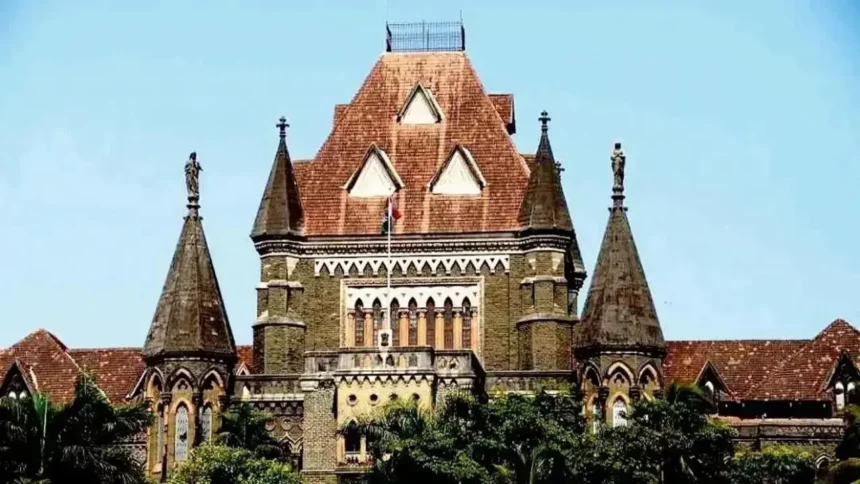
The Bombay High Court has refused to grant relief to Ramadas K S, a Dalit PhD student at the Tata Institute of Social Sciences (TISS), who was suspended for two years over allegations of participating in “anti-national” activities. The court upheld TISS’s decision, citing that his involvement in a politically motivated protest had brought disrepute to the institution.
A division bench comprising Justices A S Chandurkar and M M Sathaye dismissed Ramadas’s plea challenging the institute’s April 2024 suspension order. The court found no illegality or perversity in the decision, stating, “The order suspending the petitioner does not suffer from any illegality or perversity. We find that this is not a fit case to interfere. There is no merit in the petition, and the same is dismissed.”
Ramadas was accused of taking part in a protest march in New Delhi against the central government’s alleged “anti-student policies.” He was also accused of encouraging people to watch the documentary Ram Ke Naam during the consecration ceremony of the Ram Temple in Ayodhya. TISS claimed that his actions led the public to associate the institution with politically motivated protests, thereby tarnishing its reputation.
In its ruling, the court observed that the protest in question was “politically motivated” and agreed with TISS’s stance that Ramadas’s actions had created an impression that his views represented those of the institute. The judgment noted that while the student had the right to express his political beliefs, he could not do so under the banner of TISS without the institution’s consent. “Ramadas can have any political view of his choice, but so does the institute. The petitioner has full freedom of expressing his political view, but to do so under the banner of the respondent institute is what is objected to by the institute,” the court stated.
Ramadas, in his petition, argued that his suspension was unlawful and arbitrary. He also highlighted that his scholarship had been revoked as a result of the suspension, leading to financial difficulties. However, TISS countered this argument by stating that Ramadas had an alternative legal remedy, as he could appeal against the suspension before an internal committee. The student expressed concerns that he would not receive an independent hearing from the institute, but the court did not find these concerns sufficient to overturn the suspension.
The case has sparked discussions on the balance between academic freedom and institutional discipline. While student activism is often encouraged in academic spaces, institutions also maintain the right to distance themselves from politically charged movements. With the Bombay High Court’s decision, TISS’s action against Ramadas stands, reinforcing its stance on maintaining institutional neutrality in politically sensitive matters.