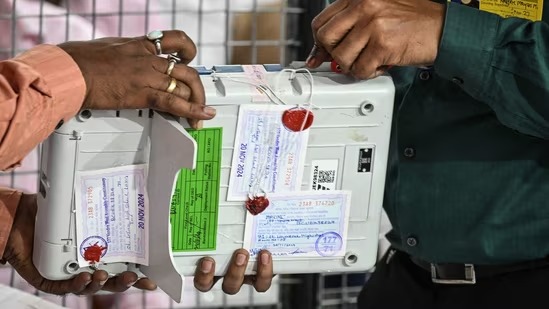
The Bihar Assembly Elections 2025 commenced on November 6 with the first phase of polling spread across 121 constituencies under heavy security arrangements. The state witnessed a surge of enthusiasm as over 3.75 crore voters took part in deciding the fate of 1,314 candidates, including major political figures such as Tejashwi Yadav, Samrat Choudhary, and Vijay Kumar Sinha. This election is being viewed as a decisive moment in Bihar’s political landscape, setting the tone for the final phase on November 11 and the results to be declared on November 14.
A Democratic Battle Between Political Titans
The first phase of the Bihar assembly elections 2025 has drawn national attention as the state becomes a political battlefield for two dominant alliances — the ruling National Democratic Alliance (NDA) and the opposition INDIA bloc. The NDA, led by the Bharatiya Janata Party (BJP) and Janata Dal (United), faces a strong challenge from the Mahagathbandhan alliance comprising the Rashtriya Janata Dal (RJD), Congress, and Left parties.
Chief Minister Nitish Kumar’s leadership and his alliance with the BJP are under scrutiny as Deputy Chief Ministers Samrat Choudhary and Vijay Kumar Sinha take on crucial contests in their respective constituencies. Sinha, contesting from Lakhisarai, seeks a fourth consecutive victory, while Choudhary, considered one of the BJP’s strongest leaders in Bihar, aims to consolidate the NDA’s presence across the first phase regions.
On the opposition front, Tejashwi Yadav, representing the INDIA bloc, is contesting as the alliance’s chief ministerial candidate. His campaign has centered on issues of unemployment, inflation, and governance, presenting himself as the face of change for Bihar’s youth and working class. Tejashwi’s appeal for maximum voter participation echoes his effort to mobilize younger and first-time voters who he believes can tilt the balance in favor of the opposition.
Prime Minister Narendra Modi, addressing the electorate through social media, described the Bihar elections as a “celebration of democracy.” He urged voters to exercise their franchise in large numbers, especially encouraging first-time voters to shape Bihar’s future through participation. His appeal was matched by Tejashwi Yadav’s emotional plea emphasizing the importance of voting for “democracy, the Constitution, and humanity.”
The Election Commission of India reported that polling began smoothly across all constituencies at 7 a.m. and will continue until 5 p.m. The state’s 90,712 polling stations have been equipped with enhanced security measures to ensure a free and fair electoral process. The Commission also confirmed that nearly 7.43 crore voters are registered for this two-phase election, with the first phase covering 121 seats and the second phase scheduled for November 11 across the remaining 122 constituencies.
The Scale, Security, and Spirit of Bihar’s Election
The sheer scale of the Bihar Assembly Elections 2025 underscores its democratic significance. With 243 constituencies in total and more than 7 crore registered voters, the two-phase election is one of the largest democratic exercises in India this year. The Election Commission’s meticulous planning includes the deployment of central armed police forces and the installation of surveillance cameras across sensitive polling booths to prevent any electoral malpractice.
Special attention has been given to the safety of women voters, with separate queues and all-women polling booths set up in many districts. In several constituencies, authorities have also established “green booths,” which are environment-friendly polling centers designed to promote eco-awareness during the elections.
Voter turnout in the morning hours indicated high enthusiasm, particularly among first-time voters. Music artist and youth icon Maithili Thakur also joined the appeal for voter participation through her social media platforms, urging young citizens to realize their civic responsibility. Her message resonated widely, symbolizing a cultural and civic movement encouraging political awareness among Bihar’s youth.
As polling progressed, reports from across the state suggested a largely peaceful voting process with only minor technical glitches reported from a few electronic voting machines (EVMs). The Election Commission assured immediate redressal, ensuring the continuity of the polling process without disruption.
Voters without a voter ID card were permitted to use alternative government-issued identification such as Aadhaar, PAN, passport, or driving licence, in accordance with ECI guidelines. Strict regulations were in place prohibiting mobile phones inside polling booths to maintain confidentiality and prevent misuse of electronic devices.
The ECI’s c-VIGIL mobile application also empowered citizens to report irregularities or any instances of malpractice in real-time. Complaints received through the app or the dedicated 1950 helpline were promptly addressed by district election officers, showcasing the Commission’s commitment to transparency and accountability in the electoral process.
The first phase of the elections featured several high-profile constituencies where both national and regional parties tested their ground strength. For the NDA, consolidating its base in urban centers and semi-urban belts remains critical, while the opposition bloc is banking on rural support, youth turnout, and anti-incumbency sentiments.
In constituencies such as Raghopur, Lakhisarai, and Barh, the contests have been particularly intense, reflecting a blend of local issues and statewide narratives. Analysts predict that the first phase will set the tone for the remaining electoral battle, potentially influencing voter sentiment in the final phase on November 11.
The Election Commission confirmed that the counting of votes will take place on November 14, 2025. All electronic voting machines will be stored in secured strongrooms monitored by CCTV and guarded by security personnel until the day of counting.
With the first phase now underway, Bihar stands at a critical political juncture where the aspirations of its people, the accountability of governance, and the strength of democracy intersect. Whether it is the ruling alliance’s promise of stability and progress or the opposition’s call for change and inclusion, the outcome will ultimately depend on the participation and choices of Bihar’s citizens, who once again prove that democracy in India is alive, vibrant, and evolving.