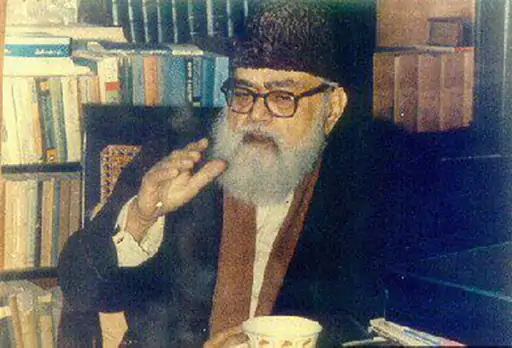
Bangladesh stands on the brink of a watershed moment as it prepares for its first national election since the political upheaval that ended the long rule of former prime minister Sheikh Hasina, with the Islamist party Jamaat-e-Islami emerging as a central contender for power, rapidly expanding its influence and campaigning vigorously across the country as the February 2026 polls approach.
The upcoming elections, scheduled for February 12, 2026, mark an unprecedented turning point in Bangladesh’s modern political history. They are taking place in the aftermath of widespread protests and the overthrow of the Hasina government during the mass uprising of 2024, which ushered in an interim government led by Nobel laureate Muhammad Yunus that is committed to holding free and fair elections. With the former ruling party, the Awami League, barred from participating, political dynamics have shifted dramatically, creating space for new and resurgent political forces. Among these, Jamaat-e-Islami, once banned and marginalised, has rapidly capitalised on the political vacuum, gaining support, forming alliances, and projecting itself as a credible choice for voters across Bangladesh’s districts.
For the first time in decades, Jamaat-e-Islami’s electoral prospects have moved beyond the fringes of Bangladesh’s political landscape, propelled by strategic campaigning, a rebranded public image, and alliances with other parties that amplify its reach. Its resurgence has sparked intense debate within Bangladesh and beyond, raising questions about the direction of the country’s governance, its commitment to pluralism, and how its growing influence could reshape domestic and regional politics.
Resurgence of Jamaat-e-Islami and its expanded electoral role
Once a deeply controversial force in Bangladesh, Jamaat-e-Islami has undergone a remarkable transformation from its earlier years of political exclusion to becoming a major contender in national elections. Historically, the party has attracted criticism for its ideological positions, including past opposition to Bangladesh’s independence and accusations of involvement in extremism and wartime atrocities during the 1971 liberation war. These aspects of its legacy led to prolonged political bans that barred it from contesting elections for over a decade, restricting its ability to influence national governance. However, the political landscape changed dramatically after the uprising that led to the ouster of Sheikh Hasina in 2024 and the subsequent lifting of the ban on Jamaat earlier restricted by previous government actions. This change restored the party’s formal political status and allowed it to prepare for the most significant electoral challenge in decades.
Since reentering formal politics, Jamaat-e-Islami has worked to recalibrate its public image, emphasising issues such as anti-corruption initiatives, transparency, social welfare outreach, and a renewed commitment to what it describes as inclusive governance. Its leadership and campaign strategists have sought to appeal beyond traditional conservative bases by adopting rhetoric that combines religious identity with promises to address economic concerns and governance failures. This approach has resonated with segments of the electorate that feel disillusioned by decades of political instability, economic stagnation, and perceived elite dominance. As a result, opinion polls and electoral analysis suggest that Jamaat is now positioned to contest a meaningful share of the 179 contested seats in the national legislature, presenting its strongest electoral showing to date.
Another factor bolstering Jamaat’s influence is its successful networking with like-minded parties and emerging political groups that have gained ground since the fall of the incumbent Awami League. The formation of coalitions and electoral alliances with smaller parties has allowed Jamaat to broaden its appeal and present a united platform on issues such as national reform, governance restructuring, and representation for disenfranchised communities. These alliances have also brought fresh organisational energy and added grassroots campaign capacity that traditional parties often struggle to mobilise effectively.
Yet the party’s resurgence has not come without controversy and resistance. Secularists, minority groups, and human rights advocates remain deeply wary of Jamaat’s rise. Critics argue that the party’s ideological foundations are at odds with Bangladesh’s secular constitution and warn that increased Islamist influence in government could undermine protections for religious minorities and civil liberties. These concerns have become especially potent in the context of a broader cultural shift in which political Islam is gaining traction among younger voters and communities seeking alternatives to established parties.
Beyond its ideological messaging, Jamaat’s leadership has also adapted its political strategy by engaging in outreach that attempts to soften its historical image and present itself as a pragmatic political force ready to participate constructively in governance. Public events, speeches, and campaign engagements increasingly highlight themes of national unity, economic opportunity, and social development. These efforts have made the party more palatable to voters who may previously have dismissed it as too extreme or unfit for national leadership.
The national debate over Jamaat’s role in Bangladesh’s future has captivated public attention, especially as the country grapples with broader questions about identity, governance, and the balance between religion and state. While supporters view the party’s rise as a legitimate expression of democratic choice and a response to grassroots aspirations, opponents fear that Jamaat’s growing influence could steer the country toward policies that prioritise religious conservatism over secular pluralism. Regardless of perspective, its dramatic ascent ahead of the election underscores the fluidity of Bangladesh’s political environment and the way major historical actors can quickly resurface with new momentum after periods of suppression.
Campaign dynamics, alliances and broader political impact
The political landscape in Bangladesh ahead of the 2026 elections reflects a complex interplay of emerging forces, shifting alliances, and uncertainty about future governance structures. A key factor driving the current campaign environment is the absence of the Awami League, a party that dominated Bangladeshi politics for decades under Sheikh Hasina, shaping policy and public sentiment through sustained periods in power. With that party excluded, traditional electoral equations have been disrupted, enabling a wider variety of parties to compete on relatively even footing. This has translated into a vibrant, if unpredictable, campaign atmosphere, with diverse voices and visions shaping public discourse.
Among the parties that have seized this moment is the Bangladesh Nationalist Party (BNP), which, after years of political exile for its leader, has attempted to reassert itself as a principal contender. The return of the BNP’s leadership to the domestic political scene has energized portions of the electorate. However, Jamaat’s downward pressure on the BNP’s traditional support base has complicated the opposition’s efforts to consolidate a unified front against other competitors. As one of the oldest Islamist parties in the region, Jamaat’s strategy has been less about isolating itself from mainstream politics and more about forging tactical alliances that increase its chances of legislative success.
One such strategic alliance involves cooperation with the National Citizen Party, a younger political formation born out of the student leadership of the 2024 uprising. This partnership, among others, has expanded Jamaat’s reach among segments of society that might not have been receptive to its traditional ideological stances, especially among young voters eager for reforms and change from the status quo. These alliances have thus served both symbolic and practical functions, broadening the party’s appeal while strengthening its organisational apparatus throughout key regions of the country.
The impact of these dynamics extends beyond party politics into the fabric of Bangladesh’s democratic process itself. With multiple parties engaging actively in campaigning across urban and rural constituencies, the electorate is witnessing a level of political mobilisation and debate that reflects the high stakes of the moment. Public rallies, campaign tours, and prominent debates on governance reforms have become central features of the political season, with each party vying to articulate its vision of Bangladesh’s future.
In this charged environment, Jamaat-e-Islami’s expanding narrative does not focus solely on religious identity. Instead, its messaging often combines appeals to anti-corruption, economic empowerment, and social cohesion, blending traditional values with promises of revitalised governance. By addressing grievances related to economic stagnation, governance inefficiencies, and perceptions of entrenched political privilege, Jamaat has tapped into broader public dissatisfaction that transcends religious lines, even as its Islamist roots remain a defining characteristic.
Yet questions about the implications of Jamaat’s rise continue to generate intense debate. Moderates and civil society voices worry that if the party attains substantial power or influence in government, it could initiate policies that reinforce religious conservatism in public life at the expense of secular constitutional norms. Concerns also persist about the party’s potential foreign policy orientation, given historical suspicions about its ideological leanings and past alignments.
As Bangladesh moves closer to the election date, the outcomes remain uncertain. Voters will ultimately decide how they perceive the competing visions for their country’s future, balancing desires for stability, reform, identity, and inclusion. Jamaat-e-Islami’s presence in this electoral contest highlights both the fluid nature of democratic competition in Bangladesh and the enduring impact of political movements that adapt and reframe themselves in response to shifting societal currents.