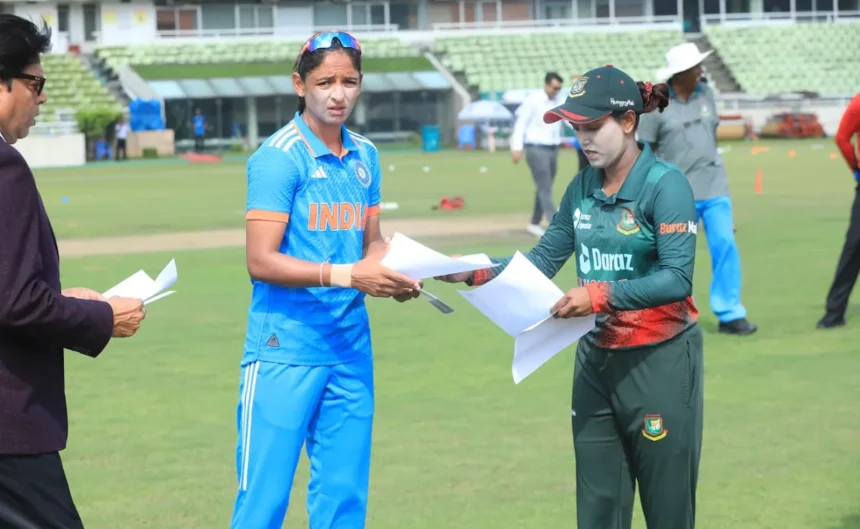
Bangladesh women’s cricket captain Nigar Sultana has publicly responded for the first time to accusations made by senior fast bowler Jahanara Alam, who alleged that the skipper physically assaulted junior cricketers within the national team setup. The allegations, which quickly attracted regional attention due to their seriousness and timing, have triggered debate within Bangladesh cricket circles. Nigar has now addressed the claims using a combination of denial, humour and an indirect reference to India captain Harmanpreet Kaur’s well-known on-field outburst in 2023.
The Allegations, Bangladesh Cricket Board’s Response and Nigar Sultana’s Firm Rebuttal
The controversy began when Jahanara Alam, who last represented Bangladesh in 2024, claimed in a media interview that Nigar Sultana, known widely by her nickname “Joty,” frequently mistreated and even beat junior players. According to Jahanara, such behaviour had taken place several times, and she suggested it was almost routine.
Her remarks quickly stirred the cricketing community. The allegations were serious enough to prompt questions around team culture, player safety and internal cohesion. However, the Bangladesh Cricket Board responded swiftly and categorically, rejecting all claims of misconduct. BCB officials expressed full confidence in their captain and insisted that neither management nor other players had reported anything resembling physical abuse.
Amid a growing wave of speculation, Nigar Sultana finally broke her silence. Her response, however, was far from defensive. Instead, she delivered a sharp and humorous rebuttal during an interview. She dismissed the accusations as baseless and questioned why she would ever physically assault any teammate.
Her most striking comments came when she referenced India captain Harmanpreet Kaur’s behaviour during a controversial 2023 ODI against Bangladesh, in which Harmanpreet angrily struck the stumps after being given out leg-before-wicket.
“Why would I hit anyone? Why would I strike the stumps with my bat? Am I Harmanpreet, that I would go around hitting the stumps like that?” Nigar asked, using humour to underline her point. She added that if she ever hit anything, it would only be in her personal space—something she considered entirely private and unrelated to professional behaviour.
She then challenged critics and teammates alike to verify whether she had ever physically harmed anyone. Her comments were pointed, direct and layered with sarcasm, indicating that she viewed the allegations as absurd rather than threatening.
Nigar’s remarks immediately generated widespread discussion across South Asian cricket circles, not only due to their content but also because she invoked the name of Harmanpreet Kaur, one of the most recognisable figures in women’s cricket. Her reference revived memories of the heated ODI in July 2023, when Harmanpreet reacted strongly to the umpire’s decision and later criticised officiating standards.
During that match, India were chasing a target of 226 but were bowled out for 225 in 49.3 overs, resulting in a tied series. Harmanpreet, frustrated with her dismissal, struck the stumps with her bat and later gestured towards the crowd. She was subsequently suspended for two matches by match officials.
In invoking that moment, Nigar positioned herself as someone who does not lose control on the field or cross physical boundaries with players. Her argument placed emphasis on temperament, leadership and conduct—qualities that captains are expected to uphold.
The Bangladesh Cricket Board’s firm stance backing their captain further reinforced her defence. Officials reiterated that they had reviewed team interactions and spoken with management members, and no evidence suggested any pattern of physical aggression. They emphasised trust in Nigar Sultana’s leadership and said the allegations had no merit.
The broader context, however, adds complexity. Bangladesh women’s cricket has undergone significant transitions in recent years, with issues of selection, leadership styles and internal dynamics occasionally surfacing. Jahanara Alam herself has been in and out of the squad, and her latest comments may reflect deeper tensions within the dressing room. Yet without corroboration from other players, the allegations remain unsubstantiated.
Nigar’s response, mixing humour and firmness, appears to be a calculated effort to deflate the controversy and shift attention away from sensationalism. Her remarks also reveal confidence that those who know her professionally will not believe the accusations.
The Harmanpreet Kaur Reference, Regional Cricketing Rivalries and the Larger Implications for Team Dynamics
The most widely discussed aspect of Nigar’s response is her comparison to Harmanpreet Kaur, which has reignited discussions about player behaviour, leadership standards and the pressures of elite competition.
The incident Nigar referenced took place during India’s 2023 tour of Bangladesh. After being given out LBW, Harmanpreet hit the stumps with her bat and exchanged words with the umpire. The moment went viral, with debates surrounding umpiring quality, player conduct and sportsmanship dominating regional cricket news.
By asking, “Am I Harmanpreet?” Nigar made a layered statement. On one hand, it underscored her denial of ever physically striking anyone. On the other, it highlighted that even top players can lose their temper under pressure—a reminder that behavioural controversies are not unique to Bangladesh cricket.
This comparison does not imply hostility but reflects the competitive and emotional nature of South Asian cricket, where rivalries are intense and incidents often become talking points beyond the boundary ropes. The reference also emphasises how public memory retains emotionally charged moments, especially when they involve major cricketing nations such as India.
The controversy surrounding Jahanara Alam’s accusation and Nigar Sultana’s rebuttal also brings focus to the internal relationships within the Bangladesh women’s team. Allegations of physical assault, even if unproven, can cast shadows over team morale and public perception. How a team addresses internal conflicts can shape its future trajectory, especially in a sport where unity and understanding are essential for performance.
Cricket boards across South Asia often face scrutiny regarding how they manage interpersonal issues, especially when senior and junior players have differing expectations of professionalism. Such matters can surface publicly during periods of transition, selection changes or competitive pressure.
Nigar’s decision to respond publicly indicates a desire to settle the matter openly rather than let speculation grow. She used humour strategically, subtly reminding critics of her calm leadership style and contrasting it with a high-profile incident involving a rival captain.
The broader sporting context shows how women’s cricket in Bangladesh has steadily gained visibility and competitiveness. Players are now under more public scrutiny, which means any internal disagreement can quickly snowball into national debate. Yet public controversies also point to the sport’s growing relevance.
The episode also highlights the pressure on captains to maintain emotional composure while balancing performance expectations, team management duties and external criticism. Nigar’s comparison between her private frustrations and professional behaviour suggests an awareness of these responsibilities.
Meanwhile, Jahanara Alam’s comments reveal a sense of frustration that may reflect selection challenges or interpersonal tensions. Without corroboration, however, they remain personal allegations rather than established facts. The BCB’s outright rejection suggests institutional confidence in the current leadership.
Harmanpreet Kaur’s 2023 incident—although unrelated to the current allegations—remains one of the most discussed moments in recent women’s cricket. It continues to shape narratives around player temperament and pressure. It also shows how moments of anger can linger in the public consciousness long after matches end.
In revisiting that moment, Nigar subtly redirected the conversation from allegations to the broader question of leadership conduct. She framed herself as someone who does not engage in such outbursts, thereby strengthening her denial.
This episode highlights the evolving landscape of women’s cricket in South Asia, where players increasingly face media attention similar to their male counterparts. Allegations, personality clashes and leadership debates are now part of the sport’s public discourse. As players and teams gain more prominence, every controversy becomes magnified.
The reaction from fans has been mixed, with some praising Nigar for defending herself confidently and others calling for deeper inquiry into team dynamics. Public opinion across cricketing nations often reflects broader sentiments about rivalry, national pride and emotional investment in the sport.
Nigar’s decision to confront the issue head-on may help draw boundaries around acceptable narratives. Her humorous jab at Harmanpreet served as both a deflection and a commentary on expectations placed on captains. The comparison, though light in tone, highlights the delicate balance between competitive emotion and professional behaviour.
As the Bangladesh women’s team continues to grow in competitiveness, managing internal relationships and public narratives will be crucial. The present controversy, while significant, also reflects the increasing complexity of the sport’s ecosystem.