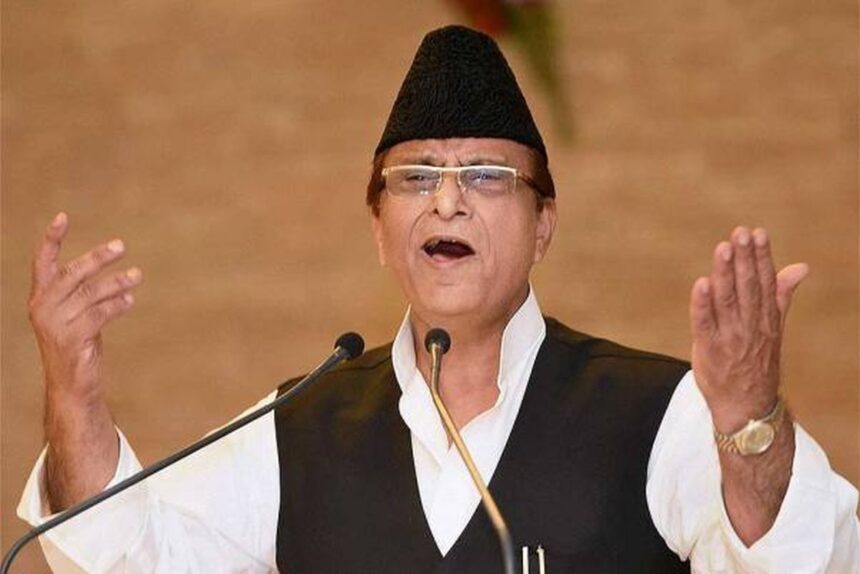
The release of Samajwadi Party veteran and Rampur strongman Azam Khan from Sitapur jail after nearly two years has reignited speculation about his political clout and the potential revival of the “Azam Khan factor” in western Uttar Pradesh. Political observers believe his freedom could provide a crucial push to the Samajwadi Party’s outreach, especially among Muslim voters, but questions remain about how far his influence can extend beyond Rampur as the state heads towards the 2027 Assembly elections.
Azam Khan’s enduring legacy in UP politics
For over three decades, Azam Khan has been one of the most influential Muslim leaders in Uttar Pradesh, particularly in Rampur and adjoining districts with large minority populations. A founding member of the Samajwadi Party alongside Mulayam Singh Yadav, Khan served as a ten-time MLA, a Member of Parliament, and a powerful cabinet minister in the 2012–2017 SP government. He was central to the party’s Muslim strategy, commanding grassroots loyalty through fiery speeches, strong organisational skills, and his ability to mobilise minority votes.
Political scientist Shashikant Pandey of Dr. Bhimrao Ambedkar University, Lucknow, argues that Khan’s charisma still holds sway. “The Azam Khan factor is very real. His personal appeal and ability to consolidate Muslim votes remain unmatched. If the SP projects him as a victim of political vendetta, it could work in their favour, particularly in western UP,” he said.
His release was marked by a show of strength: Khan left Sitapur jail in a 100-vehicle cavalcade, received by his sons Abdullah Azam and Adeeb, underscoring his symbolic significance for his supporters. Rumours of a shift to the Bahujan Samaj Party were quickly dismissed, with SP’s Shivpal Yadav reaffirming that “Azam Khan sahab has been and will always remain with the Samajwadi Party.”
The road ahead: Revival or limits to influence?
Khan’s return to active politics comes at a time when his family has been besieged by legal troubles. Since 2019, he, his wife Tazeen Fatima, and son Abdullah Azam have faced over 100 cases, ranging from land grabbing to hate speech. His flagship project, the Maulana Mohammad Ali Jauhar University, is under scrutiny and risks derecognition. These challenges weakened his political standing and created space for the BJP, which won the Rampur assembly bypoll by over 34,000 votes despite Muslims forming over 60 percent of the electorate.
The immediate test of Khan’s influence will come in the upcoming Swar bypoll, triggered by Abdullah Azam’s disqualification. A victory could reaffirm loyalty among the family’s support base, while a loss might expose the limits of the “Azam Khan factor.” Analysts caution that while Khan’s release may energise SP’s Muslim cadre, the party must broaden its appeal to Dalits and backward castes if it hopes to challenge the BJP effectively in 2027.
SP maintains that it has stood firmly with Khan, though some insiders admit support has often been symbolic and reactive. Party spokesperson Rajendra Chaudhary told News18, “We are there with Azam Khan, who is our seniormost member. He has been framed in false cases.” However, many in Rampur quietly question whether the party leadership distanced itself from him for political calculations, leaving him to fight most of his legal battles with limited institutional backing.
Khan’s release, therefore, presents both an opportunity and a dilemma for the SP. While his presence could galvanise Muslim voters in key districts like Rampur, Moradabad, Amroha, and Bijnor, whether this influence can be converted into a broader electoral coalition remains uncertain. With the BJP steadily expanding its footprint across Uttar Pradesh, the coming months will determine whether Azam Khan’s political comeback can genuinely reshape the state’s political landscape or remain confined to symbolism in his Rampur stronghold.