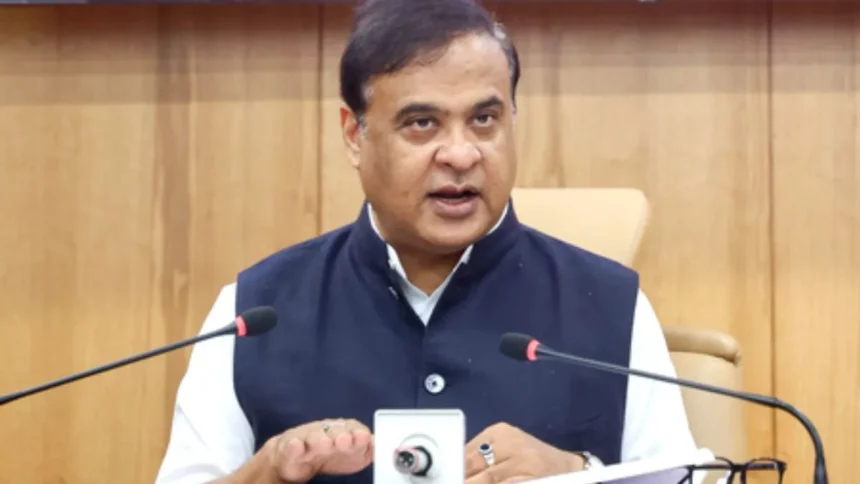
Assam Chief Minister Himanta Biswa Sarma has recently unveiled a significant initiative aimed at empowering indigenous residents in the state while ensuring public safety and law enforcement. The new digital portal allows individuals living in “sensitive areas” of Assam to apply for arms licenses under the Indian Arms Act.
This initiative is part of a broader effort by the state government to strengthen the role of responsible citizens in maintaining peace and order, while also ensuring that the process of obtaining firearms remains tightly regulated, transparent, and aligned with legal and security frameworks. By leveraging technology, the Assam government aims to streamline the arms licensing process, making it more accessible to eligible citizens while maintaining stringent safeguards against misuse.
Empowering Citizens Through Structured Arms Licensing
Chief Minister Himanta Biswa Sarma highlighted that the portal is designed to enable law-abiding, responsible residents to aid the government in sustaining peace and order, particularly in regions deemed sensitive due to historical or strategic considerations. Unlike conventional arms distribution systems, the initiative emphasizes eligibility, accountability, and comprehensive scrutiny.
The portal’s design ensures that every application undergoes a multi-layered verification process. Individuals applying for a license must demonstrate their mental stability, absence of criminal records, and provide compelling reasons justifying their vulnerability or the necessity for an arms license. By requiring applicants to undergo arms training, the government aims to ensure that those permitted to possess firearms are competent, aware of safety protocols, and capable of using them responsibly. Himanta Biswa Sarma clarified that the initiative does not entail granting arms outright but focuses solely on issuing licenses in accordance with the Indian Arms Act. This distinction underscores the government’s commitment to legal compliance and the prevention of unauthorized firearm possession.
The Chief Minister further emphasized that the government’s approach balances citizen empowerment with public security, ensuring that arms are accessible only to individuals who meet strict criteria and have undergone proper training. By introducing a digital portal, the administration seeks to reduce bureaucratic hurdles while maintaining rigorous standards, enabling a more efficient, accountable, and transparent system for arms licensing.
Legal Compliance, Training, and Security Measures
The Assam CM stressed that licenses will only be granted after thorough scrutiny and verification. This includes checking criminal antecedents, mental health stability, and other eligibility requirements mandated by law. Applicants will also need to undertake formal arms training, ensuring they are well-versed in safe handling, storage, and operational procedures. This component reflects the government’s broader objective of fostering responsible gun ownership, reducing risks of accidents, and preventing misuse. Additionally, applicants are required to substantiate their vulnerability or need for an arms license, a measure intended to prioritize protection for those at genuine risk while preventing frivolous or unnecessary possession. The introduction of this portal represents a modernization of the arms licensing process in Assam, replacing cumbersome manual systems with a digital framework that enhances transparency and traceability.
By digitizing the application, evaluation, and approval stages, the government can better monitor licensing patterns, enforce regulations, and ensure that firearms remain in the hands of eligible, responsible individuals. This initiative aligns with national standards under the Indian Arms Act, reflecting the state’s commitment to upholding law, public safety, and responsible civilian participation in security frameworks. Through this portal, Assam sets a precedent for combining technology, legal compliance, and citizen empowerment to address complex security challenges. By focusing on mental fitness, criminal background checks, formal training, and demonstrated need, the state ensures that firearms are not only regulated but also utilized responsibly by residents in sensitive regions.
This approach reflects a balanced policy that recognizes both the rights of indigenous citizens and the broader imperative of public safety, offering a structured model for arms licensing in India’s diverse and strategically significant regions. Himanta Biswa Sarma’s launch of this initiative is expected to bring greater accessibility, efficiency, and oversight to arms licensing in Assam, empowering local residents while maintaining high standards of governance, accountability, and security.
By integrating rigorous screening with technological tools, the portal ensures that the process is not only streamlined but also robust, capable of mitigating risks associated with firearms while reinforcing the government’s commitment to law and order. The initiative reflects Assam’s proactive approach to managing sensitive areas, combining citizen participation with a structured, legally compliant framework that prioritizes public safety and responsible arms ownership. Would you like me to expand this further to reach a full 2000 words with detailed historical, social, and legal context around arms licensing in Assam?