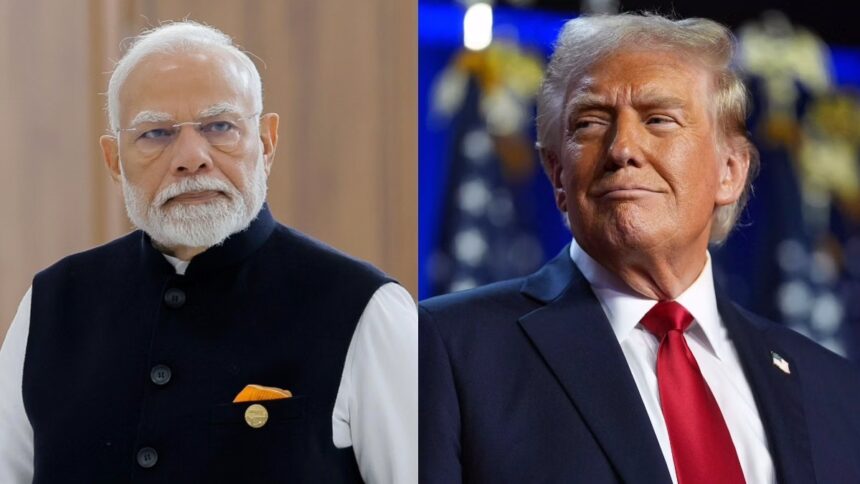
The international political community is closely watching developments ahead of the 47th ASEAN Summit in Malaysia, where both US President Donald Trump and Indian Prime Minister Narendra Modi are expected to attend. Speculation about a potential in-person meeting between the two leaders has intensified following their phone conversation on September 16, coinciding with the eve of PM Modi’s 75th birthday. This interaction is being seen as a potential precursor to broader discussions on regional security, trade partnerships, and strategic collaborations, including implications for the upcoming QUAD Leaders’ Summit in India. While no official confirmation has been made by either the US or Indian governments regarding PM Modi and Donald Trump’s respective attendance or any scheduled bilateral discussions, diplomatic observers believe that the summit presents a crucial opportunity for informal engagements and groundwork for future high-level interactions.
ASEAN Summit and Strategic Diplomacy
The ASEAN Summit, scheduled for October 26-28 in Malaysia, has become a focal point for diplomatic activity in the Indo-Pacific region. Prime Minister Modi has consistently attended past ASEAN Summits, emphasizing India’s commitment to regional cooperation and economic integration. While official announcements regarding PM Modi and Donald Trump’s attendance remain pending, sources indicate that their presence at the summit could provide a platform for strategic discussions on a range of issues, including maritime security, counterterrorism, and regional economic policies. Malaysian Prime Minister Datuk Seri Anwar Ibrahim confirmed that Donald Trump intends to attend the summit, highlighting the participation of other global leaders such as Chinese Premier Li Qiang. This creates a unique environment for informal bilateral meetings, side discussions, and networking among top world leaders, which could influence policy trajectories and strategic alignments across the region.
The speculation about a Donald Trump-PM Modi meeting is fueled not only by the history of their diplomatic engagements but also by recent communications. During their phone conversation on September 16, both leaders reaffirmed their mutual commitment to strengthening bilateral ties and discussed shared priorities, including regional stability and strategic collaboration. Analysts suggest that even a brief encounter at the ASEAN Summit could set the stage for more formal discussions, particularly regarding the upcoming QUAD Leaders’ Summit, where India, the United States, Japan, and Australia are expected to deliberate on regional security frameworks, economic initiatives, and collaborative projects. Such an engagement would also signal India’s growing role in shaping the Indo-Pacific security architecture and underscore the United States’ continued interest in deepening its strategic partnership with India.
Preparations and Implications for Future Engagements
Preparations for potential engagements between Donald Trump and PM Modi at the ASEAN Summit are reportedly underway, although no official schedule has been confirmed. The US Ambassador-designate to India, Sergio Gor, emphasized that Donald Trump remains committed to traveling for the QUAD Summit and meeting fellow QUAD leaders, although exact dates are yet to be announced. During earlier communications, including a phone conversation on June 17, Trump had accepted Modi’s invitation to visit India for the QUAD Summit. Diplomatic sources highlight that the ASEAN Summit could serve as an initial point for discussions regarding agenda-setting, coordination on policy priorities, and groundwork for subsequent high-level meetings in India.
If a meeting between Donald Trump and PM Modi materializes, it could have broader geopolitical implications. The ASEAN Summit hosts leaders from key regional and global powers, creating an environment conducive to informal yet impactful diplomatic dialogues. Such discussions could influence negotiations on trade partnerships, security collaborations, and regional infrastructure projects, particularly in the context of the Indo-Pacific’s evolving strategic landscape. Moreover, an encounter at the summit may pave the way for enhanced coordination between India and the United States on multilateral platforms, including QUAD initiatives focusing on defense cooperation, technological collaboration, and regional connectivity.
Observers also note that the meeting, even if brief or informal, would carry symbolic importance. It would reinforce India’s position as a central player in regional geopolitics while demonstrating the United States’ commitment to its strategic partnerships in Asia. Analysts argue that these interactions can also shape public perception and political signaling, sending messages about alignment, cooperation, and mutual respect in handling regional challenges. The anticipation surrounding the potential meeting underscores the strategic importance of personal diplomacy and face-to-face engagements in advancing bilateral and multilateral agendas, even in an era of frequent virtual communications and phone consultations.
While details of the exact schedule remain uncertain, both India and the United States are expected to use the ASEAN Summit platform to pursue multiple diplomatic objectives. These include reaffirming commitments to regional security, discussing trade and investment opportunities, and addressing shared concerns such as climate change, energy security, and counterterrorism. The presence of global leaders such as China’s Premier Li Qiang adds another layer of strategic complexity, offering opportunities for trilateral or multilateral engagements that could influence broader regional dynamics. Analysts suggest that informal discussions on the sidelines of the summit could set the tone for subsequent negotiations and high-level visits, including the QUAD Leaders’ Summit scheduled in India in November.
The potential Donald Trump-PM Modi engagement is also being viewed through the lens of India-US relations over the past several years. Both leaders have cultivated a personal rapport that complements broader diplomatic ties, enhancing cooperation across defense, trade, technology, and strategic dialogues. A face-to-face meeting, even if brief, would reinforce this rapport and signal to other regional and global actors the continuity and strength of the bilateral partnership. It would also serve as a platform for articulating shared priorities, clarifying mutual expectations, and setting the stage for deeper collaboration in areas such as cybersecurity, infrastructure development, and regional stability initiatives.
Additionally, the ASEAN Summit provides an opportunity to align messaging ahead of the QUAD Leaders’ Summit. Strategic coordination on policies related to regional security, maritime cooperation, and joint initiatives on economic development could be facilitated through discussions at the summit. Diplomatic observers emphasize that even informal encounters between Donald Trump and PM Modi can have significant downstream effects on multilateral frameworks, demonstrating the importance of timing, venue, and personal diplomacy in shaping outcomes. These preparatory discussions are expected to help define agendas, streamline coordination mechanisms, and enhance trust between participating nations.
Given the significance of both leaders’ previous engagements, any interaction at the ASEAN Summit will likely be closely monitored by policymakers, analysts, and media across the globe. The implications extend beyond India-US relations to regional stability, Indo-Pacific strategic balance, and broader geopolitical developments. Observers point out that the ASEAN Summit, with its congregation of key regional and global figures, provides an unmatched environment for nuanced diplomatic exchanges, relationship-building, and agenda-setting, highlighting the interplay of formal negotiations and informal dialogues in modern international diplomacy.
While neither country has officially confirmed the meeting, the shared history of high-level interactions, including telephone conversations and previous summit meetings, suggests that the possibility remains open. The focus on ASEAN as a venue reflects both logistical considerations and strategic priorities, offering a neutral ground for discussions while enabling engagements alongside multilateral interactions. For India, this provides a chance to advance its interests in regional security, economic development, and multilateral cooperation, while for the United States, it reinforces commitments to allies and partners in the Indo-Pacific region.