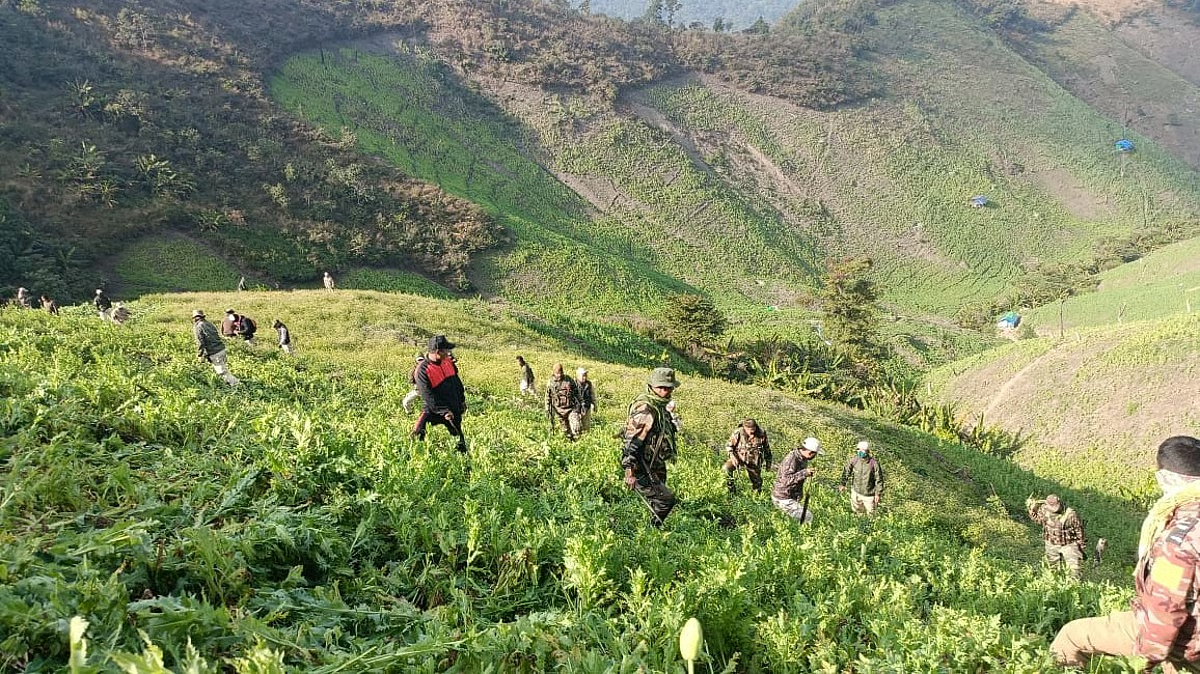
After two years of relentless ethnic violence, the people of Manipur are slowly reclaiming their lives, one paddy field at a time. In a poignant display of courage and resilience, Meitei and Kuki farmers have returned to work side by side in vulnerable areas, cultivating rice while guarded by security forces. Their cooperation in the fields, despite the deep scars of conflict, offers a rare glimpse of unity and a shared longing for peace.
The tranquil sight of farmers working shoulder to shoulder in Bishnupur district belies the simmering tension that still exists in the region. On July 14, a reminder of the fragility of this peace came when unidentified gunmen fired 10 rounds at a group of farmers in Imphal East’s Chanung area. Just a month earlier, a 60-year-old farmer was shot while working in the fields. Though no fatalities were reported in the latest attack, the incident reignited fears among those who have been trying to move on from the ethnic clashes that began in May 2023.
Fields of survival and trust
In a region where agricultural livelihood is vital, farmers have little choice but to brave the risks. A Kuki farmer, requesting anonymity, expressed cautious optimism: “We have suffered for too long. But now the violence is decreasing, and we must cultivate our land. Most Meitei villagers are known to us and we trust they won’t harm us. But there is always fear of outsiders.”
His words reflect a common sentiment shared by farmers across the state who depend on agriculture to survive. The deployment of security forces between villages of the two communities has allowed them to return to the fields, although the psychological scars are still fresh.
Manoj, a Meitei farmer from Phayeng, described how his paddy field turned into disputed territory. “There is even a burnt house behind me. But now with central forces present, we can work again. We want to farm freely like before, without fear or military protection.”
Since May 2023, when large-scale ethnic clashes erupted between the Meiteis, who largely reside in the Imphal valley, and the Kuki-Zo community inhabiting the surrounding hills, more than 260 people have lost their lives and over 1,500 have been injured. Thousands were forced to flee, many of whom still remain in relief camps.
Long road to healing and homecoming
For many displaced families, the possibility of returning home still feels distant. A Meitei woman in a relief camp in Imphal East has lived in temporary shelter for over two years. “We have suffered enough. We want to go back, but we need a guarantee from the government that we won’t face violence again,” she said.
Her voice resonates across the community. A Kuki elder from Kangpokpi echoed her plea. “We are tired of fear and uncertainty. Our children have lost a year of education. We’ve lost our homes and dignity. The government and leaders must now rebuild the trust.”
As part of peace-building efforts, the state government has announced a three-phase rehabilitation programme beginning in July, promising to close relief camps by December. Former Chief Secretary Prashant Kumar Singh said that displaced families unable to return to their original homes will be provided prefabricated housing units. The government has allocated over ₹375 crore to fund permanent homes and provide livelihood assistance for those affected.
Officials say the number of displaced individuals has dropped from 62,000 to 57,000, with many families having cautiously returned. At least 1,000 prefabricated houses are under construction to accommodate those who cannot yet return to their original villages.
Still, many believe that reconstruction efforts must go beyond providing homes and jobs. “Rehabilitation must include the rebuilding of relationships,” said a senior government official. “Without social healing, no amount of concrete or compensation will restore peace.”
In areas like Bishnupur and parts of Churachandpur, central forces continue to guard the buffer zones separating the two ethnic groups. In many places, roads remain blocked, and essential goods must pass through heavily fortified checkpoints. Even so, the slow return of dialogue between local leaders and the willingness of people to resume joint farming offer signs of progress.
Manipur has been under President’s Rule since February this year, following the resignation of Chief Minister N Biren Singh. His exit came after the Supreme Court demanded a report on leaked audio tapes in which he allegedly admitted to instigating the violence. The political vacuum has left the Union government responsible for both administrative stability and long-term peace strategies.
The Union government has signaled support for a peace and reconciliation mechanism, though political consensus remains elusive. Civil society groups, youth forums, and religious leaders have stepped in to fill the vacuum, initiating small dialogues at the community level to rebuild fractured ties.
While major breakthroughs may take time, the mood on the ground appears to be shifting. With farmers reclaiming their fields and displaced families expressing a desire to return, the state finds itself at a crossroads—between the ruins of mistrust and the hope of shared rebuilding. Whether this fragile calm evolves into lasting peace remains to be seen, but for now, the soil of Manipur is being tilled not just for rice, but for reconciliation.