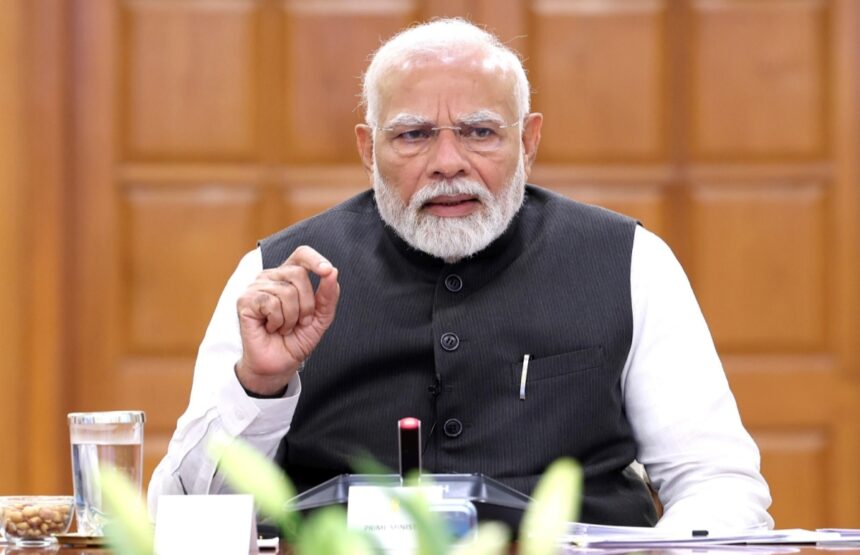
On National Startup Day, Prime Minister Narendra Modi extended his best wishes to India’s startup community while commemorating ten years of the Startup India programme, highlighting how a decade of policy support, innovation, and youthful enterprise has reshaped India’s economic landscape and strengthened its position as a global hub for entrepreneurship.
A decade of Startup India reshapes entrepreneurship, innovation culture, and youth participation
National Startup Day has evolved into a celebration of India’s entrepreneurial spirit, but this year’s observance carried special significance as it marked ten years since the launch of Startup India. The initiative, introduced to nurture innovation and reduce barriers for new enterprises, has grown into a nationwide movement that has changed how entrepreneurship is perceived and practiced across the country.
In his message, Prime Minister Narendra Modi reflected on the journey of Indian startups, noting that what began as an ambitious policy framework has matured into a dynamic ecosystem powered by young innovators, risk-takers, and problem-solvers. He emphasised that startups today are no longer confined to a few metropolitan centres or limited sectors, but are emerging from small towns and rural regions, addressing challenges across healthcare, education, agriculture, fintech, climate solutions, logistics, and advanced technologies.
The prime minister highlighted that the core strength of India’s startup ecosystem lies in its people, particularly the youth who have transformed from job seekers into job creators. Over the last decade, thousands of young founders have launched ventures that combine technological innovation with local insights, offering solutions that are both scalable and socially relevant. This shift has helped redefine economic aspirations, encouraging innovation-driven growth rather than dependency on traditional employment models.
Startup India was designed to simplify regulatory processes, improve access to capital, and provide mentorship and institutional support to early-stage ventures. Over time, these measures reduced entry barriers and encouraged experimentation. The prime minister noted that policy reforms, such as easier company registration, tax incentives, and intellectual property support, created an environment where ideas could move swiftly from concept to execution.
The expansion of incubators, accelerators, and innovation hubs played a critical role in this transformation. Universities, research institutions, and private sector partners became integral to the ecosystem, offering technical guidance, funding connections, and market exposure. This collaborative framework helped startups survive early challenges and scale more efficiently, contributing to job creation and regional development.
The prime minister also acknowledged the role of investors, mentors, and industry leaders who supported founders through capital, experience, and networks. Their participation strengthened the ecosystem’s resilience and ensured that innovation was backed by sustainable business models. Over time, India’s startup sector attracted significant domestic and international investment, reinforcing confidence in the country’s innovation potential.
National Startup Day, as described by the prime minister, symbolises this collective effort. It is not merely a day of recognition but a reminder of the values that underpin the startup movement—curiosity, resilience, collaboration, and a willingness to challenge conventions. By celebrating these values, the government aims to inspire the next generation of entrepreneurs to contribute to national progress.
Government support, ecosystem maturity, and the future direction of India’s startup movement
As Startup India enters its second decade, the focus has shifted from foundation-building to long-term sustainability and global competitiveness. The prime minister reiterated the government’s commitment to strengthening the ecosystem by supporting emerging sectors such as deep technology, space innovation, defence manufacturing, artificial intelligence, biotechnology, and clean energy. These areas, once considered inaccessible to startups, are now witnessing increased participation from Indian entrepreneurs.
The maturation of the startup ecosystem has also led to greater geographical diversity. States and union territories have developed their own startup policies, incubation centres, and funding mechanisms, ensuring that innovation is not limited to traditional technology hubs. This decentralisation has enabled local solutions to flourish and reduced regional disparities in economic opportunity.
Education and skill development have emerged as central pillars of this growth. By integrating entrepreneurship into academic curricula and promoting innovation challenges, hackathons, and research collaborations, the ecosystem has encouraged students to view startups as viable career paths. The prime minister stressed that such initiatives help build a culture of innovation from an early age, preparing young Indians to compete globally.
Another key aspect of the ecosystem’s evolution has been its contribution to social and environmental goals. Many startups focus on inclusive growth, addressing issues such as affordable healthcare, financial inclusion, sustainable agriculture, and clean energy access. These ventures align economic success with social impact, reinforcing the idea that entrepreneurship can be a powerful tool for nation-building.
The prime minister also highlighted the importance of continuous policy adaptation. As the ecosystem grows more complex, regulations and support mechanisms must evolve to address new challenges, including data governance, cybersecurity, ethical use of technology, and global market integration. By maintaining an open dialogue with entrepreneurs and stakeholders, the government aims to ensure that policies remain responsive and forward-looking.
Looking ahead, India’s startup ecosystem is poised to play a critical role in the country’s long-term development vision. Innovation-led growth is expected to drive productivity, enhance competitiveness, and generate employment opportunities across sectors. By fostering collaboration between government, industry, academia, and investors, the ecosystem can sustain momentum and adapt to global economic shifts.
National Startup Day, therefore, represents both reflection and resolve. It acknowledges a decade of achievements while reinforcing the commitment to build a future-ready innovation economy. As the prime minister noted, the success of Startup India lies not only in numbers or valuations, but in its ability to empower individuals, strengthen communities, and contribute meaningfully to India’s journey toward inclusive and sustainable development.