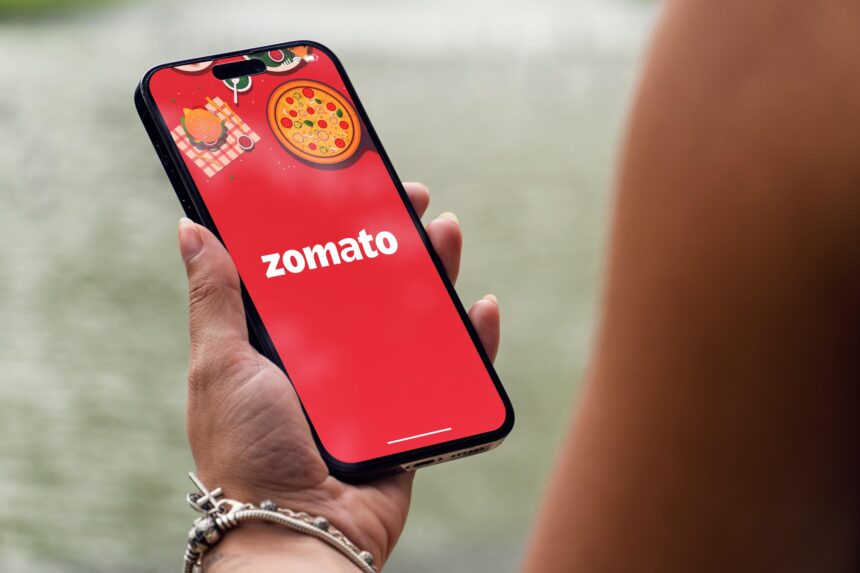
Ordering food online has become more expensive for millions of users as Zomato has increased its platform fee by 19%, raising it from ₹12.50 to ₹14.90 per order. The revised fee came into effect recently and applies to all orders placed on the platform, adding to the overall cost borne by customers. This move reflects the company’s ongoing efforts to improve profitability amid rising operational expenses and increasing competition in India’s food delivery market.
The platform fee is a fixed charge applied to every order and is separate from other costs such as GST, restaurant pricing, delivery charges, and surge fees. With Zomato handling approximately 20 to 25 lakh orders daily, even a small increase in the platform fee significantly impacts both the company’s revenue and the cost burden on consumers. The latest hike has once again brought attention to the pricing strategies adopted by food delivery platforms and their effect on user behavior.
Why Zomato Increased the Platform Fee
The decision to raise the platform fee is largely driven by rising operational costs, particularly fuel expenses linked to increasing crude oil prices. Higher fuel costs directly impact delivery logistics, increasing the expenses borne by delivery partners and, in turn, the company. By adjusting the platform fee, Zomato aims to offset these rising costs while maintaining service efficiency.
Another key factor behind the price hike is the company’s focus on achieving and sustaining profitability. Over the past few years, Zomato has gradually increased its platform fee in a phased manner. The fee was first introduced in August 2023 at ₹2 per order as part of a strategy to improve margins. Since then, it has seen multiple increments, reflecting the evolving cost structure of the business.
The company had previously raised the fee to ₹3 and then ₹4 in early 2024, followed by further increases to ₹7 and ₹12.50. The latest jump to ₹14.90 marks one of the most significant hikes, indicating a more aggressive approach toward revenue generation. This trend highlights how food delivery platforms are increasingly relying on additional charges to sustain their operations in a competitive market.
Competition with Swiggy and Market Trends
Zomato’s pricing decisions are closely watched in the context of its competition with Swiggy, its main rival in the Indian food delivery space. Currently, Swiggy charges a platform fee of around ₹14.99, including taxes, which is nearly identical to Zomato’s revised fee. Historically, both companies have shown a pattern of adjusting their pricing strategies in response to each other, often leading to similar fee structures.
This competitive dynamic means that changes introduced by one platform are often mirrored by the other, creating a standard pricing benchmark across the industry. For consumers, this reduces the possibility of switching platforms purely based on lower fees, as both companies tend to align their charges over time.
The broader trend in the food delivery industry indicates a shift from aggressive discounting strategies to a more sustainable, profit-focused approach. In earlier years, platforms relied heavily on discounts and promotional offers to attract users. However, as the market matures, companies are increasingly prioritizing financial stability, leading to the introduction and gradual increase of various charges, including platform fees.
Impact on Consumers and Ordering Behavior
The increase in platform fees is likely to have a direct impact on consumers, particularly those who frequently order food online. While the additional ₹2.40 per order may seem modest, it accumulates over multiple orders, making food delivery noticeably more expensive over time. For price-sensitive users, this could influence ordering behavior, leading to fewer orders or a shift toward alternative options such as dining out or home cooking.
At the same time, many users may continue to rely on food delivery services due to convenience, especially in urban areas where busy lifestyles limit the time available for cooking. The demand for quick and reliable food delivery remains strong, which gives companies like Zomato the flexibility to adjust pricing without significantly affecting overall order volumes.
However, there is also a growing expectation among consumers for transparency and value for money. As additional charges increase, users are likely to scrutinize the overall cost of orders more closely. This could push companies to enhance their service quality, delivery speed, and user experience to justify the higher costs.
Zomato’s Growth Journey and Business Strategy
Zomato’s evolution from a restaurant directory to a global food-tech platform reflects its adaptability and growth in a competitive industry. Founded in 2008 by Deepinder Goyal and Pankaj Chaddha as Foodiebay, the company quickly gained popularity in Delhi-NCR before rebranding as Zomato in 2010. Over the years, it expanded its presence across India and internationally, becoming one of the leading players in the food delivery sector.
The company achieved unicorn status and has continued to diversify its offerings, including the acquisition of Blinkit in 2022 to enter the quick commerce segment. This move reflects a broader strategy to expand beyond food delivery and tap into new revenue streams.
Zomato’s focus on profitability has become more pronounced in recent years. The company reported its first profit in the first quarter of the financial year 2024, marking a significant milestone in its journey. Since then, it has been implementing various measures to sustain profitability, including optimizing costs and increasing revenue through additional charges like the platform fee.
Future Outlook for Food Delivery Pricing
The latest platform fee hike by Zomato is indicative of a broader shift in the food delivery industry toward sustainable business models. As companies continue to face rising costs and competitive pressures, further adjustments in pricing structures are likely. This could include changes in delivery charges, subscription models, and promotional strategies.
For consumers, this means that food delivery may gradually become a premium service rather than a heavily subsidized convenience. While the industry will continue to innovate and improve services, the era of deep discounts and minimal charges appears to be fading.
At the same time, the competition between Zomato and Swiggy is expected to drive innovation and efficiency, benefiting users in terms of service quality. Companies will need to strike a balance between profitability and customer satisfaction to maintain their market position.
As the food delivery ecosystem evolves, both businesses and consumers will need to adapt to changing dynamics. The increase in platform fees is just one aspect of this transformation, reflecting the ongoing efforts of companies to build sustainable and resilient business models in a rapidly growing industry.