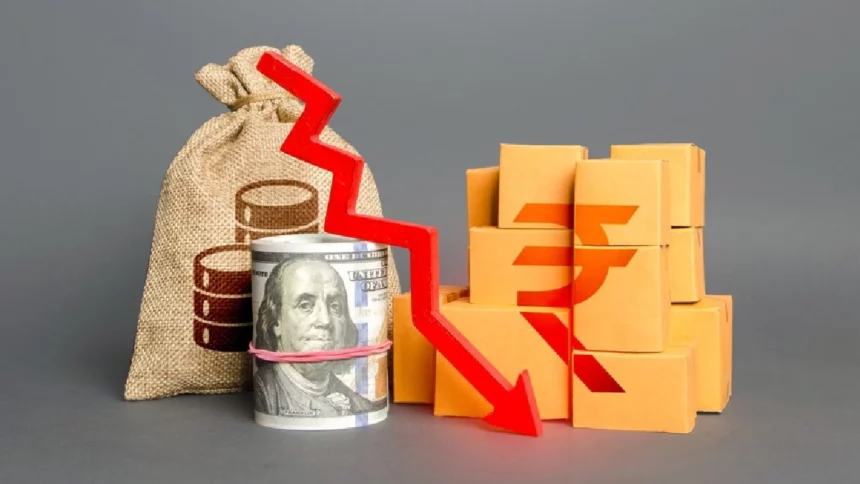
The Indian rupee has plunged to an all-time low, breaching the 93 mark against the US dollar for the first time in history and settling at 93.75 on March 20, 2026. This sharp depreciation reflects mounting pressure on the domestic currency driven by multiple global and domestic factors, including sustained foreign investor outflows, rising crude oil prices, and heightened geopolitical tensions. The decline marks a significant milestone in the rupee’s trajectory, highlighting the growing challenges faced by the Indian economy in a volatile global environment.
The weakening of the rupee has been gradual but persistent over recent months. After crossing the 90-per-dollar mark in December 2025, the currency has continued to slide, breaching another psychological level within just a few months. The rapid pace of depreciation has raised concerns among policymakers, investors, and businesses, as it directly impacts inflation, trade balances, and overall economic stability.
Key Factors Driving Rupee Depreciation
One of the primary reasons behind the rupee’s sharp fall is the continuous selling by foreign portfolio investors (FPIs). According to market data, FPIs have been offloading Indian equities at a significant pace, leading to capital outflows and increased demand for the US dollar. On a single day alone, foreign investors sold equities worth over ₹7,500 crore, reflecting a broader trend of risk aversion in global markets.
Another major factor contributing to the rupee’s weakness is the rise in crude oil prices. India, being one of the largest importers of crude oil, is highly sensitive to fluctuations in global energy prices. Higher oil prices increase the country’s import bill, leading to greater demand for dollars and putting downward pressure on the rupee. The ongoing geopolitical tensions in West Asia have further disrupted supply chains, adding to price volatility.
The strengthening of the US dollar has also played a crucial role. The dollar index, which measures the strength of the US currency against a basket of major global currencies, has remained firm. A stronger dollar typically leads to weaker emerging market currencies, including the rupee, as investors shift their funds to safer assets.
Global trade tensions and uncertainties have added another layer of complexity. Ongoing conflicts and disruptions in key regions have impacted investor sentiment, leading to increased volatility in currency markets. These factors combined have created a challenging environment for the rupee, pushing it to record lows.
Economic Impact: Benefits and Challenges
The depreciation of the rupee has both positive and negative implications for the Indian economy. On the positive side, a weaker rupee makes Indian exports more competitive in global markets. Export-oriented sectors such as textiles, pharmaceuticals, and IT services may benefit from increased demand, as their products become relatively cheaper for foreign buyers.
Additionally, the weaker currency can boost sectors like tourism and medical travel. India becomes a more affordable destination for foreign tourists, potentially increasing inflows and supporting the hospitality industry. Similarly, remittances from Indians working abroad become more valuable in rupee terms, providing additional income to households.
However, the negative impacts of rupee depreciation are significant and often outweigh the benefits. One of the most immediate consequences is rising inflation. As the cost of imports increases, prices of essential goods such as fuel, electronics, and raw materials go up, leading to higher overall inflation. This can erode purchasing power and affect household budgets.
The depreciation also makes overseas education and travel more expensive. Students planning to study abroad and individuals traveling internationally will have to bear higher costs, as the rupee buys fewer dollars. This could impact demand for foreign education and tourism.
Another concern is the potential impact on foreign investment. A weakening currency may deter investors, as it reduces the value of their returns in dollar terms. This could lead to further capital outflows, creating a cycle that puts additional pressure on the rupee.
Understanding Currency Depreciation and Market Dynamics
Currency depreciation occurs when the value of a country’s currency falls relative to another currency, in this case, the US dollar. Several factors influence exchange rates, including interest rates, inflation, trade balances, and foreign exchange reserves.
Foreign exchange reserves play a crucial role in maintaining currency stability. These reserves, held by the central bank, are used to manage exchange rate fluctuations and ensure smooth international trade. When reserves are strong, the central bank has greater capacity to intervene in the market and support the currency.
Demand and supply dynamics also determine currency value. When demand for dollars increases, either due to higher imports or capital outflows, the value of the rupee declines. Conversely, when there is higher demand for the rupee, such as through exports or foreign investments, the currency strengthens.
In the current scenario, the imbalance between dollar demand and rupee supply has contributed to the depreciation. The combination of high import bills, capital outflows, and global uncertainties has created a situation where the rupee is under sustained pressure.
Outlook and Policy Implications
The record low of the rupee raises important questions about the future trajectory of the currency and the measures needed to stabilize it. Policymakers, including the Reserve Bank of India, may consider various interventions to manage volatility. These could include using foreign exchange reserves to stabilize the market, adjusting interest rates, or implementing measures to attract foreign investment.
The government may also focus on reducing dependence on imports, particularly in sectors like energy, to mitigate the impact of global price fluctuations. Initiatives to boost domestic production and diversify energy sources could play a key role in strengthening the economy and reducing vulnerability to external shocks.
In the long term, structural reforms aimed at improving economic resilience will be crucial. Strengthening export competitiveness, enhancing investor confidence, and maintaining macroeconomic stability are essential for supporting the rupee.
As global conditions continue to evolve, the performance of the rupee will depend on a combination of domestic policies and external factors. While short-term volatility may persist, effective policy measures and economic fundamentals will play a critical role in determining the currency’s long-term trajectory.