Manipur is set to return to an elected government as senior Bharatiya Janata Party leader Yumnam Khemchand Singh prepares to take oath as the new chief minister, ending nearly a year of President’s Rule in a state deeply affected by ethnic violence, political instability, and prolonged uncertainty over leadership and governance.
Political decision and leadership transition after months of President’s Rule
The decision to appoint Yumnam Khemchand Singh as the next Chief Minister of Manipur was finalised after a crucial meeting of the BJP’s central leadership in New Delhi. The meeting was chaired by Amit Shah, with the participation of senior party leaders, including Nitin Nabin, central observer Tarun Chugh, and BJP legislators from Manipur. During the meeting, Singh was elected unopposed as the leader of the BJP legislative party, paving the way for his appointment as chief minister.
This development formally brings an end to President’s Rule in Manipur, which had been imposed in February 2025 following the resignation of former chief minister N Biren Singh amid escalating ethnic violence and political deadlock. The absence of an elected government for nearly a year had left the state under direct central administration, with governance overseen by the governor and the Union Home Ministry. The swearing-in of a new chief minister is therefore being viewed as a critical step toward restoring political normalcy and democratic accountability.
Sources within the party indicated that Singh is expected to take oath today, with a new council of ministers reflecting a balance of political experience and community representation. The proposed cabinet structure includes two deputy chief ministers, one of whom will be Nemcha Kipgen, while Govind Das is expected to take charge as the Home Minister. The composition of the leadership team signals an attempt by the BJP to project inclusiveness and administrative stability at a time when social cohesion remains fragile.
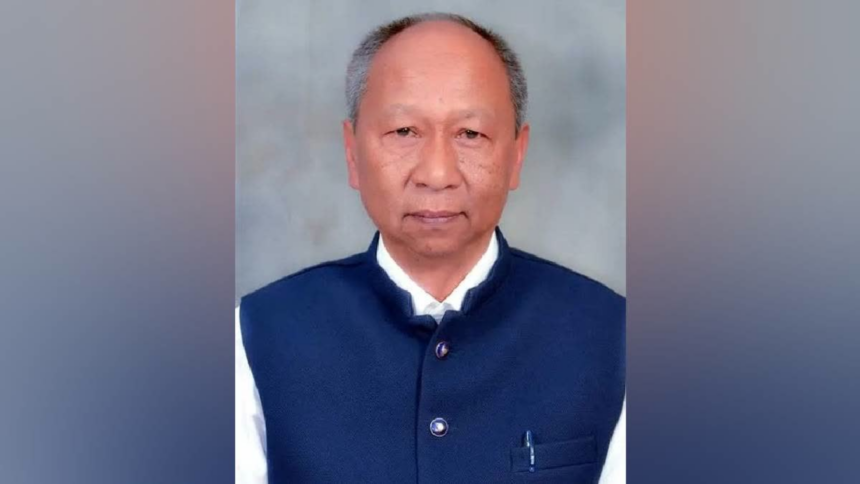
Singh, 62, is a two-time MLA and an engineer by profession. He has previously represented the Singjamei constituency and served as Minister of Municipal Administration in the earlier BJP government led by N Biren Singh. Known within political circles as an administrator with a technocratic approach, he was also considered a contender for the chief minister’s post following the 2022 assembly elections. Party leaders describe him as someone who enjoys support across communities and maintains working relationships with diverse political and social groups, qualities seen as essential for leading Manipur out of its current crisis.
Within the BJP, Singh’s elevation is also being interpreted as a clear political signal. He has been regarded as a rival to N Biren Singh in state politics, and his appointment is widely viewed as an effort by the party to reset its leadership approach in Manipur. By choosing a leader perceived as relatively neutral and broadly acceptable, the BJP appears to be positioning itself as committed to reconciliation, peace-building, and administrative reform in a state scarred by prolonged unrest.
Ethnic conflict background and challenges facing the new government
The leadership change comes against the backdrop of one of the most severe internal crises Manipur has faced in decades. Ethnic violence between the Meitei and Kuki-Zo communities erupted in May 2023 following a Tribal Solidarity March organised in the hill districts. The march was linked to demands by sections of the Meitei community for Scheduled Tribe status, a move strongly opposed by Kuki-Zo groups who feared it would dilute existing protections for tribal communities. What began as protests quickly escalated into widespread violence, arson, and displacement across several districts.
Over the course of the conflict, more than 300 people lost their lives, thousands were displaced, and entire villages were destroyed. The violence deeply polarised the state along ethnic lines, overwhelming local administrative capacity and drawing national and international attention. Despite repeated appeals for calm and multiple security interventions, tensions persisted, eventually leading to the resignation of the chief minister and the imposition of President’s Rule in February 2025.
During President’s Rule, the central government appointed Ajay Kumar Bhalla, a former Union Home Secretary, as the Governor of Manipur. After assuming charge, Bhalla initiated several measures aimed at restoring order, including confidence-building steps between communities, enhanced security deployment, and a drive for the surrender of looted arms and ammunition taken from security forces during the early stages of the violence. These efforts were intended to stabilise the situation enough to allow for the restoration of an elected government.
Parallel to administrative measures, a Commission of Inquiry was established to investigate the causes and handling of the ethnic violence. The commission’s mandate includes examining administrative lapses, the role of various actors, and the sequence of events that led to the breakdown of law and order. In December, Amit Shah extended the commission’s deadline until May 20, 2026, underlining the complexity and sensitivity of the issues involved. The findings of this inquiry are expected to play a significant role in shaping future policy and reconciliation efforts in the state.
Politically, the Manipur Legislative Assembly presents a complex landscape. The 60-member House includes 37 BJP MLAs, six from the National People’s Party, five from the Naga People’s Front, five from the Congress, two from the Kuki People’s Alliance, one from the Janata Dal (United), and three independents, with one seat currently vacant due to the death of an MLA. The BJP’s numerical strength gives it a clear advantage, but governing effectively in a deeply divided society poses challenges that go beyond legislative arithmetic.
A notable aspect of the recent BJP legislature party meeting was the presence of five of the party’s seven Kuki-Zo MLAs. Their attendance was seen as a positive signal, suggesting a willingness among sections of the Kuki-Zo leadership to re-engage with the political process despite lingering grievances. Observers believe this participation could help the new chief minister build bridges across communities, although expectations remain cautious given the depth of mistrust created by the violence.
For Yumnam Khemchand Singh, the immediate task will be to balance law and order, humanitarian relief, and political dialogue. Restoring faith in governance among displaced populations, ensuring the safe return or rehabilitation of affected families, and rebuilding destroyed infrastructure will require sustained administrative focus. At the same time, the government will need to engage with civil society groups, tribal organisations, and community leaders to create conditions for long-term peace.
Singh’s appointment is being closely watched both within Manipur and at the national level. Supporters see his technocratic background and reputation for consensus-building as assets in navigating a highly sensitive political environment. Critics, however, argue that structural issues underlying the conflict, including land rights, ethnic representation, and constitutional safeguards, will require more than a change in leadership. How the new government addresses these deeper questions will likely determine whether Manipur can move beyond crisis management toward durable stability.
As Manipur prepares for the swearing-in of a new chief minister, the transition marks a critical juncture. The return to an elected government offers hope of renewed dialogue and accountability, but it also places immense responsibility on the new leadership to heal divisions, uphold justice, and steer the state toward peace after years of violence and uncertainty.