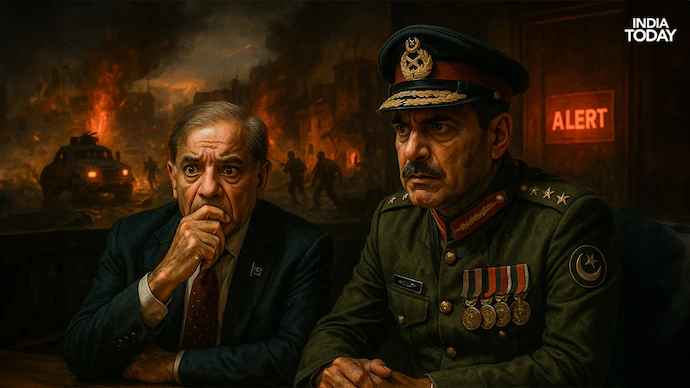
A group of 44 bipartisan US lawmakers has issued an urgent appeal to Secretary of State Marco Rubio, requesting sweeping sanctions against senior Pakistani officials in what they describe as a rapidly worsening human rights crisis under Prime Minister Shehbaz Sharif and Army Chief General Asim Munir. The lawmakers argue that Pakistan is experiencing an unprecedented escalation of repression that not only targets political opponents and journalists within its borders but also extends across international lines, affecting US citizens and residents who criticise Pakistan’s military establishment. The letter, which marks one of the strongest congressional interventions on Pakistan in recent years, highlights growing concerns in Washington over democratic backsliding, election irregularities and the continued detention of opposition leaders, including former Prime Minister Imran Khan. Their appeal brings renewed scrutiny to Pakistan’s governance and human rights record at a time of heightened geopolitical sensitivity.
The lawmakers’ letter outlines allegations of transnational repression involving threats, online harassment, coercion and retaliatory violence aimed at silencing members of the Pakistani diaspora. These individuals—many of whom are US citizens or permanent residents—have reportedly faced intimidation after voicing criticism of Pakistan’s military-backed government. Their relatives living in Pakistan have allegedly been subjected to surveillance, detention and pressure intended to silence dissent abroad. The congressional group warned that these actions reflect a systematic effort to suppress free expression, crush political opposition and restrict civic liberties, raising serious questions about Pakistan’s adherence to democratic norms and the rule of law.
US Lawmakers Detail Widespread Repression, Diaspora Intimidation and Violations of Civil Liberties Across Pakistan
According to the letter, transnational repression has become a defining feature of Pakistan’s security and governance practices in recent years. The lawmakers state that US residents and citizens with roots in Pakistan have increasingly faced threats, including intimidation campaigns coordinated through online networks and personal targeting of their relatives back home. They note that critics of the Pakistani military establishment have reported harassment ranging from digital surveillance to direct threats, with some individuals alleging that their families in Pakistan were subjected to retaliatory violence for comments made abroad. These practices, the lawmakers argue, represent a sophisticated and troubling form of authoritarian control that transcends national boundaries.
At the domestic level, the legislators describe a governance structure in Pakistan that, in their view, relies heavily on coercive mechanisms to maintain political authority. They argue that opposition leaders are routinely detained without charge, often denied access to fair judicial processes and held in prolonged pretrial confinement. They cite examples of journalists who have been abducted, harassed or forced into exile due to their reporting on the military or government corruption. Civil society voices—including academics, activists and independent observers—are frequently subjected to surveillance and intimidation. The lawmakers assert that everyday citizens face arrest for social media posts, while women, religious minority groups and ethnic communities, particularly in Balochistan, endure disproportionate levels of violence and state monitoring.
The letter identifies the controversial 2024 elections as a key example of Pakistan’s democratic deterioration. It highlights reports of electoral fraud, manipulation and procedural irregularities documented by independent monitoring organizations. According to the lawmakers, the elections produced a government that appears to function as a civilian facade while the military retains decisive control behind the scenes. They point out that even the US State Department expressed concern regarding the transparency and credibility of the elections, calling for a full investigation into the alleged irregularities. The lawmakers argue that these developments reflect a broader authoritarian consolidation and a shrinking space for meaningful political opposition.
The letter explicitly calls for the release of political prisoners, including former Prime Minister Imran Khan, who remains incarcerated amid ongoing legal battles. According to the lawmakers, Khan’s detention is emblematic of the systemic effort to eliminate political challengers through legal pressure, arbitrary incarceration and judicial manipulation. They contend that targeted sanctions—such as visa bans and asset freezes against officials enabling repression—would send a clear message that the United States will not hesitate to defend democratic norms and human rights, even when violations occur in strategically sensitive regions.
The lawmakers also emphasise the need for the US government to protect its residents from cross-border threats carried out by foreign state actors. They argue that Pakistan’s alleged use of intimidation and coercion against diaspora communities constitutes a serious breach of international conduct and an unacceptable infringement on American sovereignty. Sanctions, they contend, are not only a response to human rights violations in Pakistan but also a necessary step to safeguard the rights and safety of individuals residing in the United States.
Letter Urges Strong US Response, Sanctions and Pressure to Release Imran Khan and Other Political Prisoners
In their appeal to the State Department, the lawmakers propose the immediate imposition of targeted sanctions, including travel restrictions and asset freezes, against Pakistani officials accused of participating in or facilitating repression. They argue that such measures would reinforce the United States’ commitment to human rights and help deter further abuses by signaling that violations will have tangible consequences. The lawmakers also maintain that sanctions would bolster US national security interests by discouraging transnational repression and ensuring that political intimidation does not extend onto American soil.
A central demand in the letter is the release of political detainees, including Imran Khan, as well as other opposition leaders held without due process. According to the lawmakers, Pakistan’s judicial system is being undermined through manipulation and coercion, with courts pressured to deliver outcomes that align with the military establishment’s interests. They assert that a credible democratic system cannot function when major political figures are incarcerated, independent journalists face abduction and activists are threatened into silence.
The congressional group highlights that the deterioration of civil liberties and political freedoms has broader implications for regional stability. Pakistan, given its strategic location and history of military involvement in governance, plays a significant role in South Asian security dynamics. The lawmakers argue that unchecked repression could fuel further unrest, deepen political polarization and weaken institutions essential for long-term stability. They assert that the US response must therefore be robust, principled and aligned with long-standing commitments to democratic governance in the region.
The lawmakers’ appeal comes at a time when US–Pakistan relations remain complex, shaped by counterterrorism priorities, geopolitical calculations and concerns over Pakistan’s internal instability. While the US has historically balanced criticism of Pakistan’s governance with strategic engagement, the new letter indicates a shift in tone among lawmakers frustrated with persistent rights abuses. This development suggests growing bipartisan support within Congress for a more assertive human rights–based approach to US foreign policy, particularly in cases where transnational repression affects American citizens.
The letter concludes by reiterating that immediate action is essential to protect human rights, restore democratic processes and reaffirm US leadership in defending fundamental freedoms worldwide. The lawmakers express hope that sanctions, combined with international pressure for political reform, will push Pakistani authorities toward a more accountable and transparent governance model.