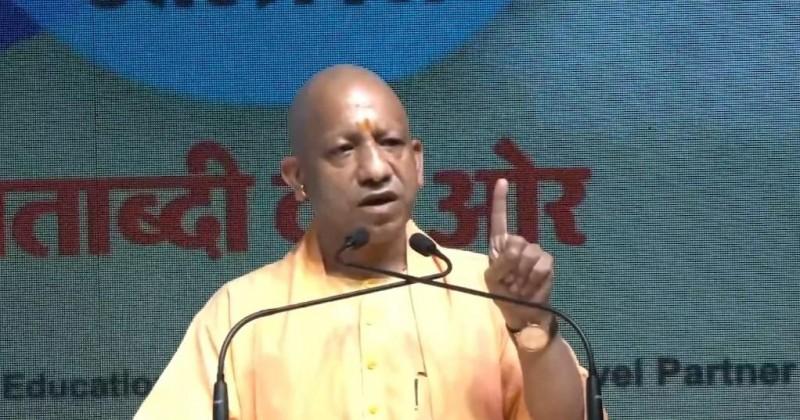
Ahead of the upcoming Bakrid celebrations, Yogi Adityanath has once again reiterated the Uttar Pradesh government’s firm stance against offering namaz on public roads. Speaking during an event in Lucknow, the Chief Minister emphasized that roads and public thoroughfares cannot be blocked for religious gatherings because such practices create inconvenience for ordinary citizens and disrupt public movement.
The remarks have attracted widespread political and public attention because they come only days before Bakrid, a festival that often witnesses large congregational prayers across several cities and towns. The Uttar Pradesh administration appears determined to ensure that public roads remain clear while religious activities are conducted in designated spaces without affecting traffic management and civic order.
During his address, Yogi Adityanath stated that religious practices must remain within the framework of law and public discipline. He argued that public infrastructure belongs equally to all citizens and therefore cannot be occupied in a manner that causes disruption to commuters, emergency services and daily economic activities.
The Chief Minister suggested that if large numbers of worshippers gather during Bakrid prayers, the administration and religious organizers should coordinate shift based prayer arrangements to avoid overcrowding and road blockages. According to him, such an arrangement would allow religious observance to continue peacefully while maintaining public convenience.
The Uttar Pradesh government has in recent years repeatedly issued instructions preventing religious gatherings from occupying roads and public spaces. The policy has been applied particularly during major festivals and prayer events where crowd management becomes a challenge for local authorities.
Yogi Adityanath also stressed that the administration would initially focus on persuasion and voluntary compliance before considering stronger enforcement measures. However, he warned that if individuals or groups ignored official directions, authorities possessed alternative legal and administrative mechanisms to ensure compliance with public order regulations.
His statement was later shared publicly through social media platforms where he reiterated that roads are meant for transportation and cannot be converted into permanent or temporary prayer spaces. The message was interpreted by supporters as a strong signal that the state government intends to maintain strict law and order arrangements during the Bakrid period.
The timing of the remarks is politically significant because Uttar Pradesh has witnessed intense debates over the use of public spaces for religious activities over the past several years. Roadside prayers, religious processions and festival gatherings have frequently become subjects of administrative monitoring and political controversy.
Supporters of the government argue that restrictions on road namaz are necessary for maintaining civic discipline, reducing traffic congestion and ensuring equal access to public infrastructure for all citizens. They contend that unrestricted occupation of roads for any activity, including religious events, creates inconvenience for ordinary people and affects emergency movement.
Critics and opposition parties, however, have accused the government of selectively targeting minority religious practices. Several opposition leaders claim that the administration’s messaging creates unnecessary polarization and should instead focus on promoting inclusive dialogue with all communities.
The state government has consistently rejected allegations of discrimination and maintained that the same administrative principles apply equally to all religious communities and public events. Officials often point to restrictions imposed on various processions, loudspeakers and public gatherings across communities as evidence of uniform enforcement.
The debate surrounding public religious gatherings is not new in India. Rapid urbanization, population growth and increasing pressure on urban infrastructure have intensified concerns regarding traffic management and public safety during large scale events. Authorities across multiple states have attempted to regulate the use of roads and open spaces for religious activities through permissions, designated zones and crowd management protocols.
In Uttar Pradesh, the issue has acquired additional political visibility because of Yogi Adityanath’s repeated emphasis on law enforcement and public discipline since assuming office. His administration has frequently highlighted governance measures aimed at improving traffic systems, reducing encroachments and strengthening state authority over public spaces.
Observers note that the Chief Minister’s latest remarks also reflect a broader political messaging strategy associated with his leadership style. Throughout his tenure, Yogi Adityanath has consistently projected a tough administrative image focused on strict implementation of rules and visible law and order management.
The remarks ahead of Bakrid also echo statements made by him during political campaigns in other states, including during the West Bengal Assembly election campaign earlier in twenty twenty six. During that period, he criticized what he described as selective restrictions on religious practices and alleged misuse of public spaces for prayers.
The legal dimension of the issue is equally important. Various courts in India have previously supported administrative restrictions on blocking public roads for religious gatherings, emphasizing that constitutional rights must be balanced with public convenience and civic order. Judicial observations in multiple cases have stated that public roads cannot be permanently occupied for religious or political purposes.
Legal experts often point out that while freedom of religion is protected under the Constitution, authorities also possess the responsibility to regulate public spaces in the interest of safety, mobility and administrative efficiency. This balance between individual rights and public order continues to shape policy debates across the country.
Bakrid, also known as Eid al Adha, is among the most significant Islamic festivals and traditionally involves large congregational prayers. In many urban areas, authorities typically prepare extensive security and traffic management plans ahead of the festival to prevent overcrowding and ensure smooth public movement.
The Uttar Pradesh administration has reportedly begun coordinating with district officials, police departments and local religious organizations to manage Bakrid arrangements peacefully. Officials are expected to identify designated prayer areas and implement crowd control measures in sensitive locations.
Security agencies also remain alert during major festivals because large public gatherings require careful monitoring to avoid traffic disruption, stampede risks and communal tensions. Authorities therefore often emphasize preventive administrative measures before festivals rather than reacting after problems emerge.
Public opinion regarding the issue remains divided. Some citizens strongly support restrictions on road prayers, arguing that roads should remain exclusively for transportation and emergency movement. Others believe authorities should adopt a more accommodative approach while ensuring that all communities receive equal treatment.
Religious leaders in several regions have occasionally expressed willingness to cooperate with administrative guidelines provided such rules are applied uniformly across communities and events. In previous years, local negotiations between authorities and community representatives have helped avoid major disputes in many districts.
Political analysts believe the issue will likely continue influencing public discourse because it intersects with questions of governance, secularism, urban management and identity politics. Statements related to religious gatherings often generate intense debate on social media and television platforms, especially during election cycles or major festivals.
The broader challenge for authorities lies in balancing constitutional freedoms with practical urban governance requirements. As cities become more crowded and transportation systems face increasing pressure, administrations are likely to continue imposing stricter regulations on the use of public roads for all forms of gatherings.
For Yogi Adityanath, maintaining a strong administrative image remains central to his political positioning. His repeated focus on law enforcement, anti encroachment drives and public discipline resonates strongly with sections of voters who prioritize governance and order.
At the same time, critics argue that public communication surrounding sensitive religious issues requires careful language to avoid social polarization. Political reactions to the latest remarks suggest that debates regarding religious freedoms and public space management will remain active in the coming weeks.
As Bakrid approaches, the Uttar Pradesh administration appears determined to avoid any large scale road blockages or disruptions during prayers. District authorities are expected to intensify coordination efforts to ensure peaceful celebrations while implementing the government’s directives regarding public spaces.
The coming days will therefore test the effectiveness of administrative planning, community cooperation and law enforcement preparedness across Uttar Pradesh. The issue also highlights the continuing national debate over how democratic societies should regulate religious practices within increasingly crowded urban environments while maintaining both constitutional rights and public convenience.