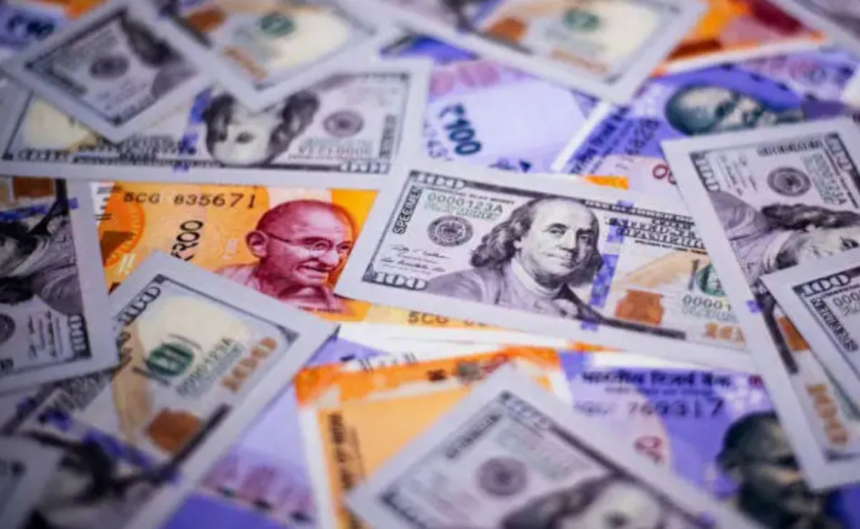
Concerns about the Indian rupee weakening sharply against the United States dollar have once again triggered widespread discussion across financial markets, business communities and among ordinary investors. Speculation regarding whether the rupee could fall to the psychologically important level of one hundred against the dollar within the next six months has intensified following global economic uncertainty, geopolitical tensions and fluctuating energy prices. However, most currency analysts and economic experts believe such a dramatic decline is unlikely in the near future.
According to economists, foreign exchange strategists and banking experts, the Indian rupee may continue facing periodic pressure because of global market volatility, but strong macroeconomic fundamentals, rising foreign exchange reserves, controlled inflation and continued policy intervention by the Reserve Bank of India are expected to prevent any sudden collapse in the currency.
The rupee has experienced gradual depreciation over the years against the dollar, largely reflecting differences in inflation, interest rates, trade deficits and global capital flows. However, experts argue that a movement toward the hundred mark within a short period would require extraordinary economic stress or a major global financial shock.
Several global developments have contributed to recent concerns regarding emerging market currencies including the Indian rupee. Rising geopolitical tensions in West Asia, fluctuations in crude oil prices, uncertainty surrounding global interest rates and concerns about slowing economic growth in advanced economies have all increased pressure on currency markets worldwide.
The United States dollar has remained relatively strong against several international currencies because of higher interest rates and continued investor preference for safe haven assets during uncertain economic periods. Whenever global investors move capital toward dollar denominated assets, emerging market currencies including the rupee often face depreciation pressure.
However, India’s economic position differs significantly from several vulnerable emerging economies that have historically experienced sharp currency collapses. India currently possesses one of the world’s largest foreign exchange reserve holdings, providing substantial stability to the financial system.
The Reserve Bank of India has repeatedly demonstrated its willingness and ability to intervene in currency markets whenever excessive volatility threatens financial stability. By utilizing foreign exchange reserves strategically, the central bank can moderate sharp currency fluctuations and reduce panic driven market movements.
Currency experts note that while gradual depreciation remains possible over the medium term, there is little indication of uncontrolled weakness severe enough to push the rupee immediately toward the hundred mark. Most analysts currently expect the currency to trade within a relatively manageable range over the coming months.
One of the most important factors influencing the rupee remains crude oil prices because India imports a significant portion of its energy requirements. A sustained increase in oil prices generally increases India’s import bill, widens the current account deficit and creates additional demand for dollars, thereby weakening the rupee.
Recent geopolitical instability in energy producing regions has therefore increased market nervousness regarding potential pressure on the Indian currency. However, experts point out that India has diversified its energy procurement strategy in recent years and improved external sector management compared to previous decades.
India’s export performance and service sector earnings also provide crucial support to the rupee. Information technology services, remittances from overseas Indians and growing manufacturing exports generate substantial foreign exchange inflows that help offset import related dollar demand.
Another major source of stability comes from foreign direct investment into India. Global companies continue viewing India as one of the most attractive long term investment destinations because of its large consumer market, digital expansion, manufacturing potential and economic growth prospects.
Despite occasional volatility in foreign portfolio investments, long term investment confidence in India remains relatively strong compared to many other developing economies. This investment inflow helps support currency stability and strengthens overall economic resilience.
Economic growth expectations also play a major role in determining currency sentiment. India continues to remain among the fastest growing major economies globally. Strong domestic consumption, infrastructure investment, manufacturing expansion and digital economic growth continue supporting broader macroeconomic stability.
Experts believe that unless India experiences a severe external shock such as an oil crisis, global recession or massive capital outflow event, the rupee is unlikely to witness a rapid uncontrolled depreciation. Even during periods of market stress, authorities have generally managed currency movements carefully to avoid destabilizing the broader economy.
Inflation management remains another important factor supporting the rupee. Countries facing persistently high inflation often experience faster currency depreciation because purchasing power declines over time. India’s inflation situation, while periodically elevated, has remained comparatively manageable due to monetary policy actions and supply side interventions.
The Reserve Bank of India continues monitoring inflation, liquidity conditions and capital flows closely while adjusting policy measures accordingly. Monetary stability strengthens investor confidence and reduces risks associated with sudden currency instability.
Experts also emphasize that exchange rates should not always be viewed purely as indicators of economic strength or weakness. Controlled depreciation can sometimes support export competitiveness by making domestic goods relatively cheaper in international markets. Many economies therefore allow gradual currency adjustments rather than rigid exchange rate management.
At the same time, excessive depreciation can increase imported inflation, raise borrowing costs and negatively affect investor confidence. Central banks therefore attempt to maintain balance by avoiding both extreme appreciation and disorderly weakening.
The psychological importance of the hundred rupee per dollar level has amplified public attention around the issue. Round number milestones often create strong emotional reactions in financial markets even when broader economic fundamentals remain stable. Analysts caution that speculation driven narratives can sometimes exaggerate realistic risks.
Historically, the rupee has steadily weakened against the dollar over decades rather than through sudden collapses. Long term depreciation trends largely reflect structural economic factors, inflation differentials and evolving global capital dynamics. Such gradual movement differs significantly from crisis driven currency collapses seen in some economies experiencing political instability or severe debt crises.
India’s external debt profile also remains relatively manageable compared to several countries facing currency crises. Foreign exchange reserves provide an additional safety buffer against external financing pressures and speculative attacks.
Banking sector stability further supports economic confidence. India’s financial system has strengthened significantly through regulatory reforms, improved capitalization and stronger oversight mechanisms. Stable banking conditions reduce risks of financial panic that could otherwise intensify currency pressure.
Global central bank policies will nevertheless continue influencing currency markets. Any major shift in United States interest rate policy could affect capital flows toward emerging economies. Higher American interest rates generally strengthen the dollar and pressure emerging market currencies, while easing monetary conditions can support riskier assets including developing market currencies.
International trade conditions and geopolitical developments will also remain important variables. Escalation in global conflicts, disruptions to energy supplies or sharp deterioration in international economic growth could create additional volatility across global currency markets including the rupee.
However, most experts maintain that India’s broader economic fundamentals currently remain strong enough to prevent extreme short term currency instability. Continued infrastructure spending, manufacturing incentives, digital growth and financial reforms are expected to support long term economic resilience.
The government’s focus on expanding domestic manufacturing through various industrial initiatives is also expected to gradually reduce dependence on imports over time. A stronger manufacturing base can improve trade balances and provide greater support for currency stability in the long run.
Financial market participants therefore believe that while the rupee may continue facing periodic depreciation pressure, predictions of an immediate fall toward one hundred per dollar appear exaggerated under current economic conditions.
Investors are generally advised to focus on long term economic trends rather than reacting emotionally to short term currency fluctuations. Exchange rates naturally move in response to changing global economic conditions, capital flows and geopolitical developments.
India’s policymakers remain aware of the importance of maintaining currency stability because excessive volatility can affect inflation, investment sentiment, external borrowing costs and overall economic confidence. The combination of foreign exchange reserves, monetary policy management and strong economic growth provides authorities with multiple tools to manage currency pressures effectively.
As global uncertainty continues influencing financial markets, discussions surrounding the rupee and dollar relationship are likely to remain active. However, the broader consensus among economists and market analysts suggests that while gradual fluctuations are expected, the likelihood of the rupee collapsing rapidly toward one hundred against the dollar within six