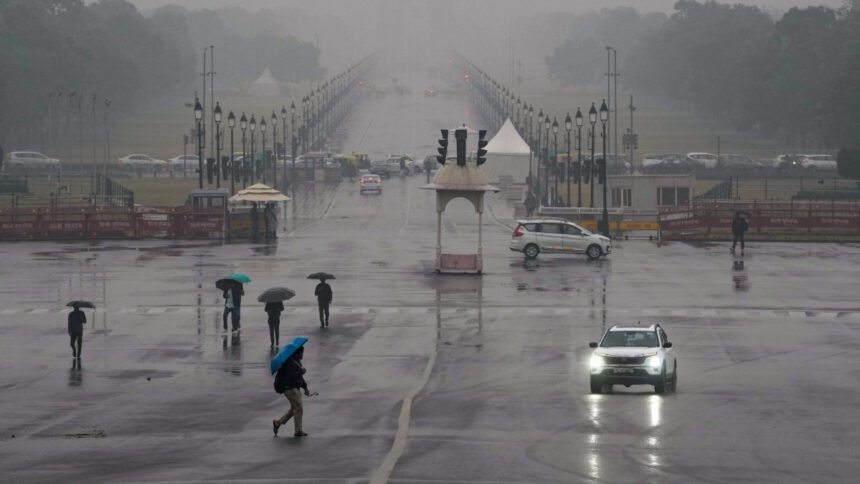
Delhi is set to experience a dynamic mix of weather patterns in the coming days, with the India Meteorological Department (IMD) issuing a yellow alert for the national capital. Light rain, moderate to dense fog, and a significant drop in temperatures have been forecasted, marking a shift in the city’s weather conditions.
According to the IMD, light rain is expected in Delhi during the early hours of Monday, providing much-needed relief from the persistent dryness of recent weeks. Temperatures during the period from January 6 to January 10 are anticipated to range between 7 degrees Celsius and 18 degrees Celsius. Dense fog is likely to dominate mornings and evenings from January 7 to January 9, potentially affecting visibility for commuters. Additionally, the IMD has predicted thundershowers around January 11, accompanied by cloudy skies throughout the week.
The yellow alert, issued specifically for dense fog, serves as a cautionary notice for residents, particularly those who commute during early morning and evening hours. These conditions, while posing challenges for transportation, are expected to contribute positively to air quality improvements in the region.
Recent air quality data has shown some signs of improvement, with Delhi’s Air Quality Index (AQI) moving from the ‘severe’ to the ‘very poor’ category. According to the System of Air Quality and Weather Forecasting and Research (SAFAR), the overall AQI stood at 317 on Monday, significantly better than the previous days when several areas recorded levels exceeding 400.
Despite this marginal improvement, major pollution hotspots in Delhi, such as Alipur, Anand Vihar, Jahangirpuri, and Narela, continue to report AQI levels above 350, highlighting the lingering severity of air pollution in these areas. Meanwhile, cities in the National Capital Region (NCR) showed relatively better air quality. Noida recorded an AQI of 188, Gurugram stood at 164, Greater Noida reported 151, and Ghaziabad registered 225.
The improvement in air quality can be attributed to stronger winds and favorable weather conditions observed over the weekend. These factors prompted the Commission for Air Quality Management (CAQM) to lift Stage III restrictions under the Graded Response Action Plan (GRAP) on Sunday. While the revocation of these measures offers some respite, the CAQM has warned that air quality is likely to remain in the ‘poor’ category over the next few days.
Meteorologists predict that the combination of light rain and stronger winds will further aid in dispersing pollutants, offering cleaner air to the region. However, residents, particularly those with pre-existing respiratory conditions, are advised to remain cautious as AQI levels, although improved, continue to hover within unhealthy ranges.
The interplay of fog, rain, and fluctuating temperatures will likely define Delhi’s weather in the coming days. As the city braces for these changes, authorities have urged residents to stay vigilant and prioritize safety, especially during peak commuting hours when dense fog is expected to reduce visibility.
The anticipated showers and enhanced wind activity are expected to provide temporary relief from Delhi’s infamous air pollution, offering a glimmer of hope for improved environmental conditions. Nonetheless, the challenges posed by extreme weather and persistent pollution underscore the need for sustained efforts toward long-term solutions to the capital’s air quality crisis.