Prime Minister Narendra Modi’s visit to Johannesburg for the G20 Summit began with a deeply emotional cultural moment as he witnessed the performance of the South African girmitiya song “Ganga Maiya,” a tribute to the resilience and cultural continuity of the early Indian community in South Africa. Modi, who shared the video online, described the experience as joyful, touching, and symbolic of the unbroken bond that the Indian diaspora has maintained with its roots despite generations of separation and hardship. His remarks, and the warm reception he received, highlighted the living connection between India and its global community.
Emotional impact of the girmitiya tribute and India’s cultural presence in South Africa
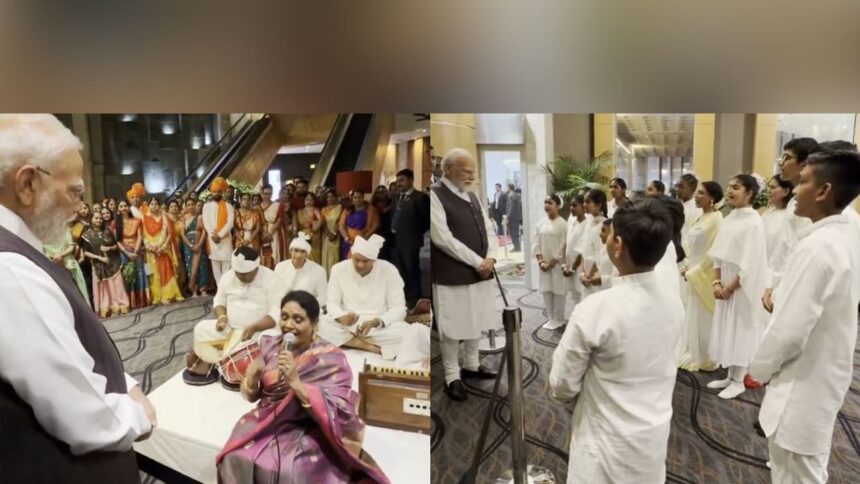
Upon his arrival in Johannesburg for the G20 Summit, Prime Minister Modi was welcomed with traditional dances and cultural performances that represented the artistic diversity of India. Among them, the performance of the historic girmitiya song “Ganga Maiya” stood out as a powerful symbol of cultural preservation. The song has been carried for generations by descendants of indentured laborers who were taken from India to South Africa more than a century ago. Modi said the performance stirred deep emotions, reminding him of the courage and endurance of those early migrants.
He noted that what made the presentation even more distinctive was the inclusion of a Tamil version of the song, which served as a tribute to the linguistic richness of the Indian-origin community in South Africa. This multilingual expression reflected how the diaspora has preserved its complex and diverse cultural identity, even as it adjusted to new lands and realities. Modi emphasized that the song represented the hope and determination of people who faced harsh conditions but were sustained by their cultural memory.
Modi shared that the early girmitiyas kept India alive in their hearts through songs, bhajans and prayer traditions. These cultural threads, passed from one generation to another, allowed their descendants to retain a strong sense of connection to India. He said that performances like this express not only nostalgia but the powerful emotional lineage of a community that continues to honor its origins.
As Modi proceeded to his hotel, he was greeted by a group of children who recited prayers to welcome him. The prime minister stopped to interact with them, appreciating their devotion as they chanted vedic mantras. He was also seen clapping along during musical performances and greeting members of the Indian community who enthusiastically chanted his name.
Modi later wrote that he was deeply touched by the affection shown by the Indian diaspora in Johannesburg. He said that their warmth reflected a bond strengthened by historical experiences, shared values and mutual respect. He described the cultural ties between India and South Africa as heartwarming and timeless, noting that these bonds continue to flourish through community celebrations, artistic expressions and traditional rituals.
These cultural connections were also visible at the programme “Rhythms of a United India,” where performers showcased folk dances from eleven Indian states including Bihar, Jharkhand, Odisha, West Bengal, Assam, Kerala, Tamil Nadu, Andhra Pradesh, Telangana, Maharashtra and Rajasthan. Modi praised the community for keeping Indian traditions alive and for presenting India’s cultural diversity with enthusiasm and authenticity. He noted that the diaspora plays a vital role in celebrating India’s heritage on the global stage.
Modi’s South Africa visit, G20 Summit participation and the significance of India–South Africa ties
Prime Minister Modi’s visit from November 21 to 23 marked an important chapter in India’s engagement with the Global South. This G20 Summit is the first ever to be held on the African continent, signaling a broad shift toward more inclusive global leadership. Modi’s participation underscores India’s growing role in shaping discussions on global governance, economic reforms, cultural cooperation and South–South solidarity.
Modi emphasized that his visit would focus on issues central to India as well as those affecting the Global South. These include sustainable development, equitable growth, technology access, climate resilience and strengthening multilateral institutions to reflect the needs of developing nations. His presence in South Africa highlighted India’s commitment to working alongside African countries and other emerging economies to build a more balanced global order.
This trip marks Modi’s fourth official visit to South Africa. He first visited the country in 2016 for a bilateral meeting and later participated in the BRICS Summits in 2018 and 2023. Each visit has contributed to strengthening India–South Africa relations, which are built on historical solidarity and shared aspirations. Both nations have experienced long struggles against colonialism and discrimination, and both advocate for reforms in global institutions such as the United Nations Security Council.
Modi’s repeated visits demonstrate a consistent diplomatic commitment toward deepening ties with African nations. During this visit, he also met Indian-origin communities, acknowledging the cultural and emotional bridges they create between the two countries. He said that the diaspora’s continued love for Indian traditions helps sustain a vibrant cultural exchange.
He added that the cultural dimension of India’s international engagement is as important as its political and economic diplomacy. The diaspora’s singing of prayers such as the Ganapati Prarthana and the Shanti Mantra, combined with their artistic presentations, reflects a continuity of heritage that enriches India’s relations with the world. Modi said that moments like these reaffirm the spiritual and cultural bonds that transcend geographical distance.
The prime minister also praised the Indian community for their pride in showcasing India’s traditions, noting that their enthusiasm reflects the unity in cultural diversity. He said that India’s heritage shines globally because its people carry their identity with devotion, whether they live within the country or thousands of miles away.
Modi highlighted that India’s engagement with the diaspora reinforces the broader message of unity, shared history and mutual respect that characterizes India–South Africa relations. His interactions in Johannesburg reflected not only diplomatic intent but also a celebration of cultural continuity, community pride and the emotional bonds that tie people together across continents.