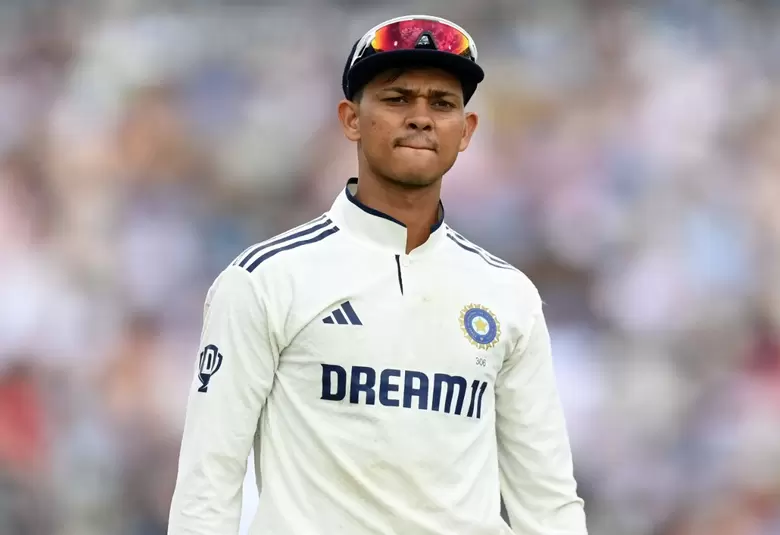
India’s defeat in the first Test against England has drawn criticism not only for the bowling effort but also for missed chances on the field, particularly from young opener Yashasvi Jaiswal. Despite a flurry of centuries from India’s top order, the match slipped through their hands—quite literally—as Yashasvi Jaiswal dropped four crucial catches, allowing England to chase down a stiff target of 371 with 84 balls to spare on Day 5. Now, former India fielder Mohammad Kaif has made a sensational claim, suggesting the tape on Yashasvi Jaiswal’s fingers may have been the reason behind those costly errors.
India’s batters shine, but fielding woes haunt
The first Test match was packed with standout individual performances from Indian batters. In the first innings, centuries from Yashasvi Jaiswal (101), Shubman Gill (147), and Rishabh Pant (134) gave India a commanding total. The second innings saw KL Rahul (137) and Pant (118) continue the dominance, but the impressive batting display was overshadowed by lapses in fielding.
England, set a target of 371, approached the chase with discipline and intent. Despite the pitch offering some wear and tear, India’s inability to hold onto chances proved fatal. Yashasvi Jaiswal’s dropped catches turned out to be momentum shifters. In the first innings, he spilled opportunities that gave Ollie Pope, Ben Duckett, and Harry Brook second lives. Pope went on to score 106 runs from 137 deliveries, Brook fell just short of a century with 99, and Duckett made 62.
The story repeated in the second innings. When Duckett was on 97, a sharp chance went down again off Yashasvi Jaiswal’s hands. Duckett went on to convert it into a match-winning 149, taking England home in what was otherwise a tight contest.
Kaif offers technical insight behind Yashasvi Jaiswal’s fumbles
As criticism mounted against the 22-year-old opener, Mohammad Kaif, one of India’s most respected fielders, stepped in with a detailed explanation that shifted the narrative slightly. In a video shared on X (formerly Twitter), Kaif explained that a technical issue might have been the cause of Yashasvi Jaiswal’s dropped catches.
“Why is Yashasvi Jaiswal dropping catches?” Kaif questioned. “We practice with the Duke’s ball. When players get hurt, they often wrap their fingers with tape. In such cases, fingers can get stuck and lose flexibility. The strap becomes sponge-like and takes away the natural feel of the ball. So when the ball comes, it doesn’t stick—it bounces off. That’s a drawback of taping fingers during a match.”
Kaif’s insight hinted that Yashasvi Jaiswal may have been dealing with discomfort or an injury that required taping, thus affecting his ability to cleanly grab fast-moving catches. While the explanation does not absolve the young player, it does offer a layer of context that fans and critics might have overlooked.
The dropped catches weren’t just statistical blemishes—they fundamentally altered the match’s outcome. England capitalized on every reprieve, especially in the second innings, where they batted with confidence and composure. With Duckett anchoring the chase and India failing to convert chances into wickets, the five-wicket defeat felt far heavier than the scorecard showed.
Yashasvi Jaiswal’s future in the team is far from uncertain, as his batting remains world-class. However, this episode has triggered a wider conversation about fielding discipline and injury management, especially in high-pressure home series against formidable opponents like England.